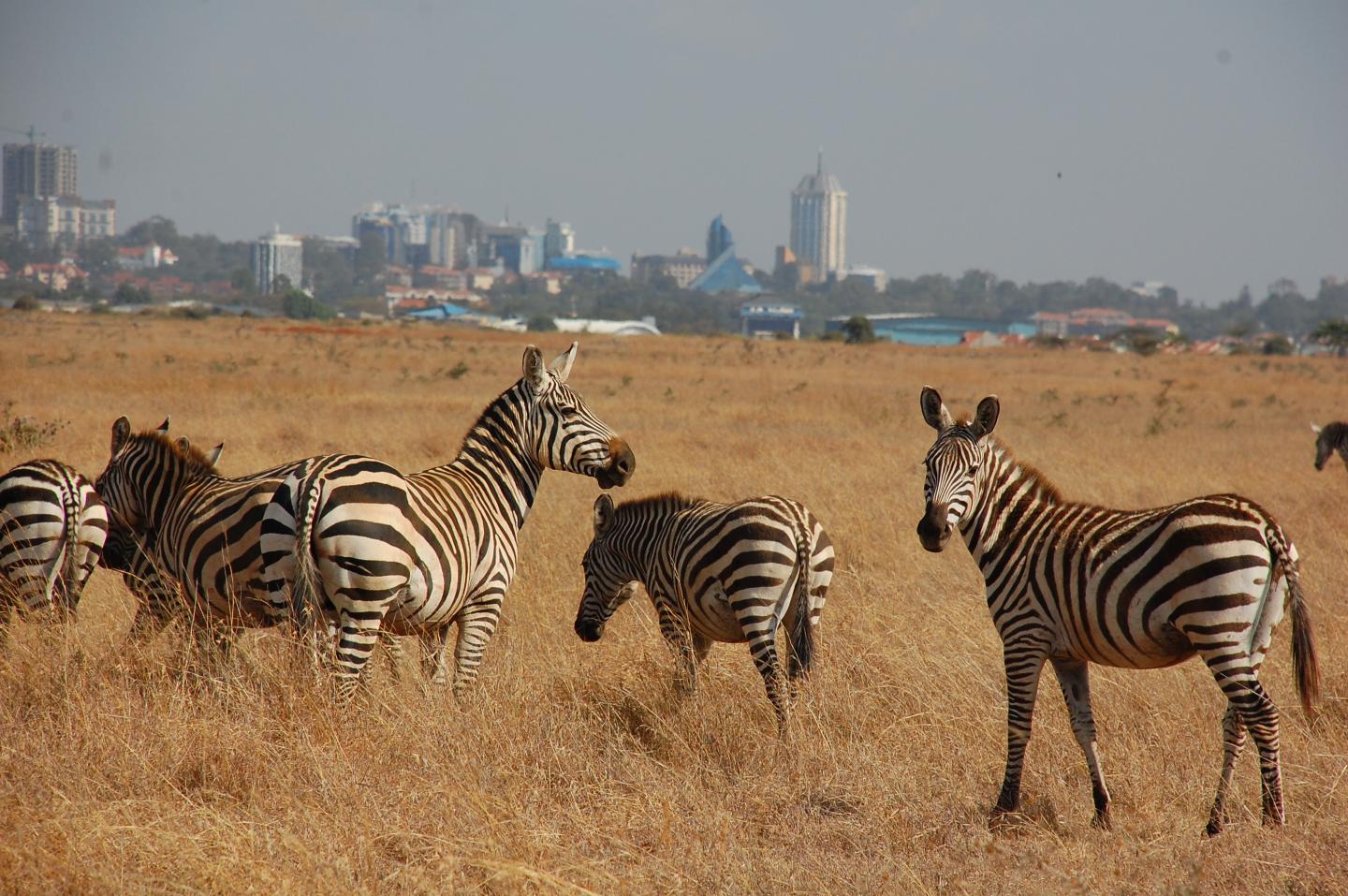
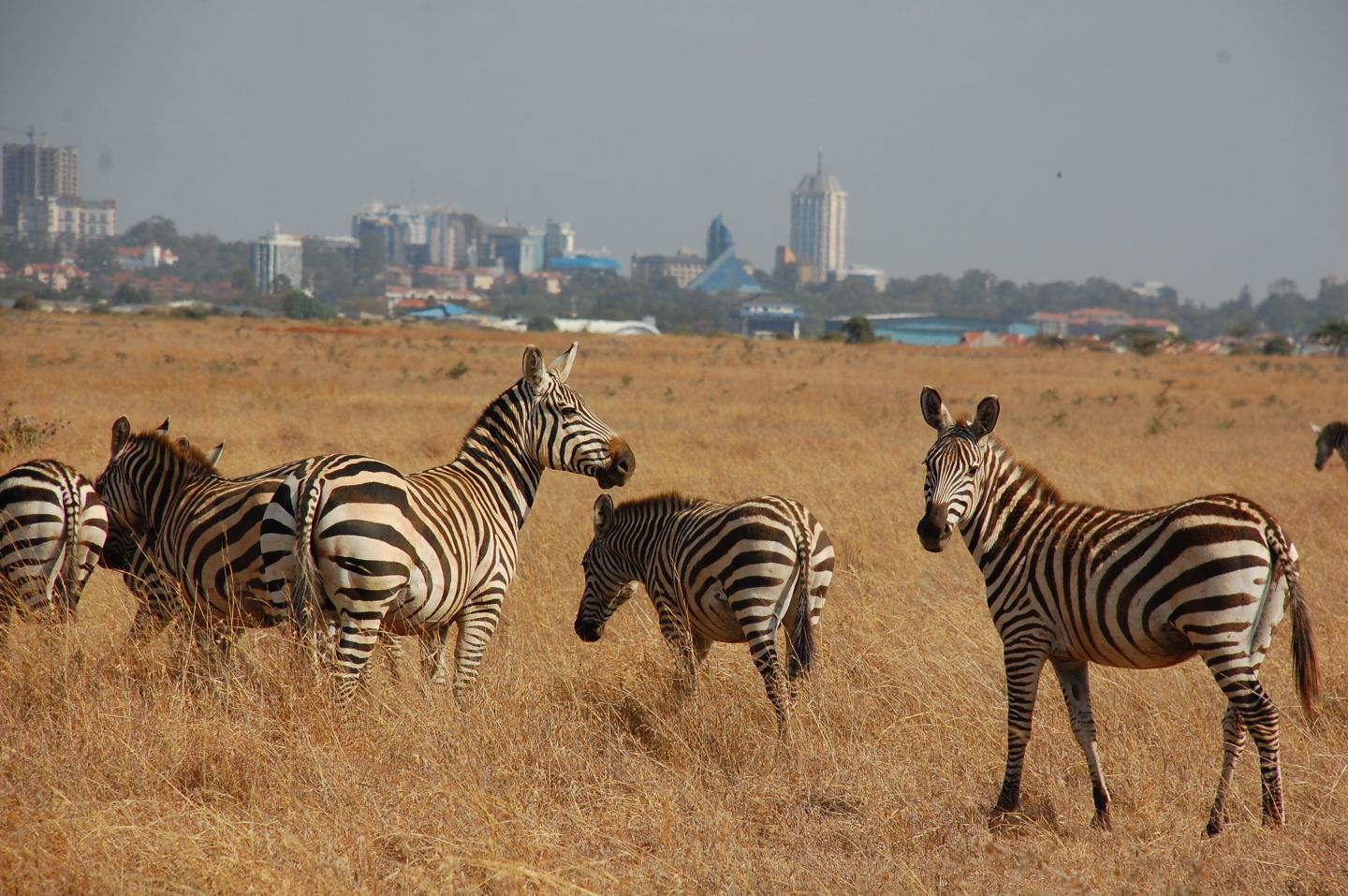
Credit: Dan Salkeld
Conservation projects that protect forests and encourage a diversity of plants and animals can provide many benefits to humans.
But improved human health is not among those benefits ? at least when health is measured through the lens of infectious disease. That's the main finding of a paper published April 24 in Philosophical Transactions of the Royal Society B, which analyzed the relationship between infectious diseases and their environmental, demographic and economic drivers in dozens of countries over 20 years.
The new study found that increased biodiversity ? measured as the number of species and amount of forested land ? was not associated with reduced levels of infectious disease. In some cases, disease burdens actually increased as areas became more forested over time.
"There are a lot of great reasons for conservation, but control of infectious disease isn't one of them," said lead author and parasite ecologist Chelsea Wood, an assistant professor in the School of Aquatic and Fishery Sciences at the University of Washington. "We're not going to improve public health by pushing a single button. This study clearly shows that ? at the country level ? conservation is not a disease-control tool."
Surprisingly, Wood said, the study also found that increasing urbanization reduced disease, probably because cities bring people closer to medical care and give them greater access to vaccinations, clean water and sanitation.
Even though cities crowd people together, the net benefit of their services results in reductions of infectious disease.
"It seems pretty clear that urbanization is good for people's health ? at least when it comes to infectious disease. And that's good news, because the world is rapidly urbanizing," Wood said.
The researchers relied on the UW-based Institute for Health Metrics and Evaluation's Global Burden of Disease database, a massive, worldwide effort to document premature death and disability from hundreds of diseases and injuries from 1990 to the present.
The study's authors compared data on 24 infectious diseases ? ranging from malaria, dengue and rabies to typhoid, tuberculosis and leprosy ? with separate, published data on population density, wealth, bird and mammal species richness, forest cover, precipitation and other environmental measures to analyze the effects these factors had, if any, on disease burden per country. This study is the first to look at the association between biodiversity and disease over time.
Most conservation decisions are made at the country level, so the researchers focused at that scale when analyzing whether conservation could be used as a tool for improving public health. Over the 20-year period, they saw no relationship between biodiversity (number of species present) and the overall burden of infectious disease. But for each individual disease, there was a unique set of drivers that were important in deciding whether burden increased or decreased over time.
For example, as rates of precipitation went up, so did the burden of "geohelminths" ? a group of gut parasites that includes hookworm, whipworm and roundworm. Together, the geohelminths affect 1.5 billion people.
Moist soil is an ideal environment for the development of these worms. Humans can become infected when they contact or accidentally ingest contaminated soil ? for example, on unwashed vegetables. As rates of precipitation increase with climate change, this public health threat should be acknowledged and accounted for, the researchers said.
The authors hope the disease-specific information included in this study reveals pathways toward effective control, and helps country officials to avoid inadvertently exacerbating existing public health problems.
"I hope this study encourages people to explicitly acknowledge the potential disease-related risks and benefits of conservation projects," Wood said. "The absolute last thing we want to do is a conservation project that gets people sick."
This paper is the concluding piece in an entire special edition dedicated to exploring whether conservation promotes or hinders infectious disease control. The edition's co-authors convened about two years ago to explore all sides of this controversial question, and the resulting papers examine specific diseases such as malaria, Lyme disease and schistosomiasis, as well as broader topics of policy and economics.
"The special issue arose from an interest in moving away from the very heated but some somewhat academic debate about the influence of 'biodiversity' on disease prevalence, to the more practical question about the efficacy of conservation action as a public health intervention strategy, particularly as compared to other intervention strategies," said paper co-author Hillary Young of the University of California, Santa Barbara, who is also an editor for the special edition.
###
Other co-authors are Alex McInturff of the University of California, Berkeley; DoHyung Kim of the University of Maryland; and Kevin Lafferty of the U.S. Geological Survey.
This study was supported by the Michigan Society of Fellows and the Department of Ecology and Evolutionary Biology at the University of Michigan, along with funding from the authors' institutions and agencies.
For more information, contact Wood at [email protected] or 206-685-2163.
Media Contact
Michelle Ma
[email protected]
206-543-2580
@UW
http://www.washington.edu/news/
Related Journal Article
http://dx.doi.org/10.1098/rstb.2016.0122