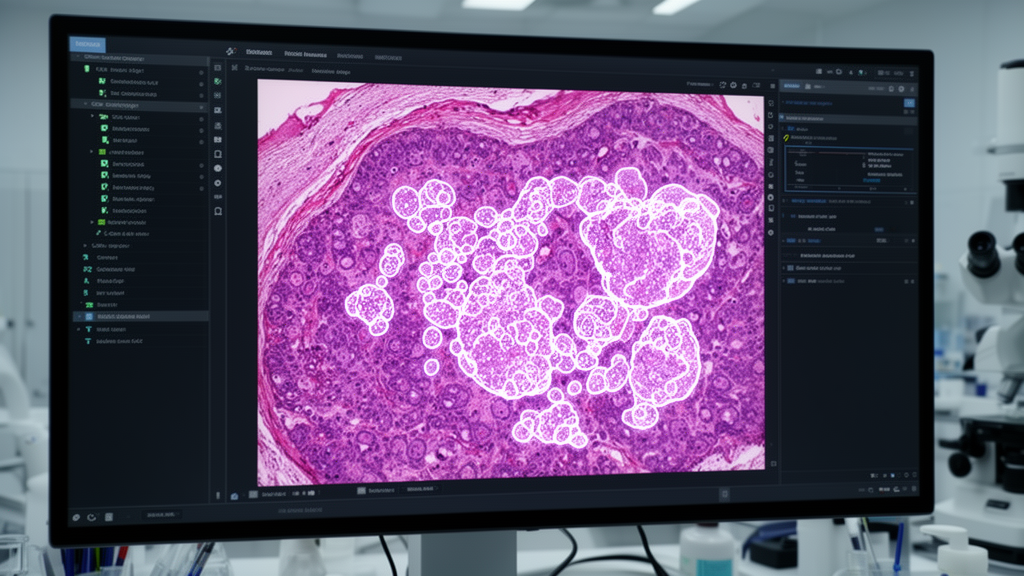
Accurate segmentation of pathological regions within whole-slide images is critical for disease diagnosis, clinical prognosis evaluation, and treatment planning in computational pathology. While deep neural networks have achieved notable success in medical image segmentation when trained with dense pixel-level annotations, constructing such datasets for gigapixel histopathology slides demands extensive time and effort from expert pathologists. To address this bottleneck, weakly supervised semantic segmentation approaches that rely exclusively on image-level labels have emerged as a scalable alternative, offering the ability to extract diagnostic insights directly from slide-level clinical diagnoses without requiring expensive manual delineation.
Despite their appeal, models trained solely with image-level supervision often face severe localization challenges. Standard classification-driven networks tend to focus disproportionately on the most discriminative visual features, leaving the true extent of lesions under-activated and incomplete. Furthermore, the intrinsic structural complexity of histopathology slides, including staining variations, heterogeneous tissue patterns, and extensive normal tissue backgrounds, frequently introduces spurious correlations into representation learning. In modern architectures based on Vision Transformers, the division of input images into non-overlapping patch tokens can also disrupt local spatial continuity, causing predicted segmentation masks to become fragmented.
Grounded in the concept of compressing irrelevant input information while preserving task-critical representations, IB-Path adapts this theoretical objective into a practical mask-guided spatial feature compression mechanism. Rather than attempting to optimize intractable high-dimensional mutual information objectives directly, the architecture implements a structured two-stage, coarse-to-refine learning paradigm designed to systematically filter out background noise while enhancing disease-related spatial structures.
In the first stage of the IB-Path framework, an initial Vision Transformer encoder extracts patch-level token representations from the input histopathology image to generate a coarse lesion localization mask. To reinforce representation robustness against noisy perturbations under weak supervision, the researchers introduced a token-level contrastive regularization strategy. An augmented token view is generated by randomly masking a portion of tokens during training, simulating incomplete visual observations. A shared decoder processes both original and augmented representations, and an auxiliary prediction-level contrastive consistency loss is computed over aggregated image-level prediction embeddings, penalizing inconsistency across views while stabilizing early localization cues.
The coarse mask produced in the first stage serves as explicit guidance for the second stage, establishing a spatial information bottleneck that refines token representations produced by the main encoder. The coarse prediction is averaged across class channels and passed through a sigmoid function to construct a soft spatial gating map. This gating map is multiplied element-wise with the main encoder token embeddings, dampening background-dominated activations from normal tissue while preserving lesion-related features. By stopping gradient propagation through the coarse mask during gating generation, the model avoids degenerate optimization feedback and ensures that the main encoder receives focused, task-relevant guidance.
To repair the local structural fragmentation commonly introduced by patch tokenization in Vision Transformers, IB-Path incorporates a lightweight convolutional enhancement module termed ConvUnit. The modulated token representations are reshaped back into a two-dimensional spatial feature grid and processed through sequential convolutional operations. The module utilizes spatial convolutions to aggregate neighboring pixel interactions alongside pointwise convolutions to facilitate cross-channel feature fusion. By restoring local spatial dependencies across adjacent tissue structures, the module enables the shared decoder to generate smooth, structurally coherent segmentation boundaries aligned with tissue morphology.
The complete architecture is trained in an end-to-end framework using only image-level supervision through a composite multi-task objective function. The primary segmentation prediction is converted into an image-level classification score via Normalized Global Weighted Pooling augmented with a focal-style regularization term, which counteracts severe class imbalance by emphasizing hard-to-detect minority tissues. The total optimization loss combines the primary binary cross-entropy loss with an auxiliary binary cross-entropy loss applied to the first-stage coarse prediction and the InfoNCE contrastive consistency loss, with dedicated weighting coefficients balancing the contribution of each stage.
The investigators rigorously evaluated IB-Path on two widely recognized public histopathology benchmarks: LUAD-HistoSeg, comprising lung adenocarcinoma tissue patches across four distinct tissue categories, and BCSS-WSSS, derived from breast cancer whole-slide images. On the LUAD-HistoSeg benchmark, IB-Path attained a state-of-the-art mean intersection-over-union of 77.61 percent, outperforming preceding weakly supervised techniques including PDSeg, TPRO, and WSSS-Tissue, while recording an intersection-over-union of 73.82 percent on tumor-associated stroma. On the BCSS-WSSS dataset, the model demonstrated superior accuracy with a mean intersection-over-union of 71.40 percent, achieving a top score of 69.74 percent on necrotic tissue regions that typically present irregular, highly variable morphology.
Comprehensive ablation studies confirmed that every architectural component within IB-Path contributes substantially to overall segmentation quality. Removing the ConvUnit module decreased the mean intersection-over-union from 77.61 percent to 75.38 percent on LUAD-HistoSeg and from 69.94 percent to 68.71 percent on BCSS-WSSS, confirming the vital importance of local spatial context modeling. Similarly, eliminating contrastive learning degraded performance to 75.89 percent and 69.55 percent across the two benchmarks, respectively. Interestingly, moving the contrastive objective into the second stage diminished its utility, demonstrating that contrastive regularization is primarily effective when stabilizing unconstrained representations during early localization, whereas the explicit spatial bottleneck dominates the refinement stage.
Detailed hyperparameter analyses underscored the critical influence of training configurations on segmentation stability. Systematic evaluations indicated that balancing coefficients governing the auxiliary classification loss and contrastive supervision require careful tuning to prevent optimization interference. Empirical testing also revealed that kernel sizes within the ConvUnit are sensitive to tissue characteristics: a three-by-three kernel proved optimal for resolving fine-grained structures in lung adenocarcinoma, whereas a larger nine-by-nine kernel improved performance on breast cancer tissues featuring broader, homogeneous tissue regions. Furthermore, evaluations across varying token masking ratios demonstrated that moderate masking during training effectively promotes robust contextual learning.
Despite achieving robust improvements over existing baselines, qualitative failure analysis revealed remaining boundaries where weakly supervised models still struggle. In complex histopathology scenes characterized by dense mixtures of cell nuclei, red blood cells, stroma, and empty background space, severe tissue heterogeneity and inconsistent staining intensity can blur structural borders and trigger mis-segmentations. In statistical significance evaluations over three random seeds, IB-Path demonstrated a mean intersection-over-union of 76.73 percent compared to 76.64 percent for FProtoSeg, reflecting competitive but non-statistically significant variance. The researchers noted that future investigations will focus on integrating pathology-specific foundation models, region-level contrastive objectives, and sparse annotations to further advance weakly supervised diagnostic precision.
A detailed examination of the experimental setup underscores the specific scale and structure of the evaluation datasets. For the LUAD-HistoSeg dataset, the investigation utilized 17,285 total image patches measuring 224 by 224 pixels, divided into a training partition of 16,678 images with image-level labels only, alongside 300 validation images and 307 test images equipped with pixel-level ground-truth annotations for performance verification. The dataset distinguishes four specific tissue categories: tumor epithelial, tumor-associated stroma, lymphocyte, and necrosis. On this benchmark, the full IB-Path framework registered 78.87 percent intersection-over-union for tumor epithelial tissue and 77.04 percent for lymphocyte regions, supporting the model’s capacity to maintain balanced classification across distinct cellular compartments.
The breast cancer benchmark, BCSS-WSSS, supplied a comparable four-category classification structure encompassing tumor, stroma, lymphocytic infiltrate, and necrosis across 31,826 image patches measuring 224 by 224 pixels. The experimental partition allocated 23,422 patches for model training, 3,418 for validation, and 4,986 for testing, with full pixel-level ground truth reserved strictly for validation and testing phases. Under this regime, the system achieved 80.38 percent intersection-over-union on tumor tissue, 74.11 percent on stroma, and 61.38 percent on lymphocytic infiltrate. Standalone evaluations of the initial coarse segmentation mask generated by the first-stage encoder recorded an initial mean intersection-over-union of 67.60 percent on BCSS-WSSS and 74.75 percent on LUAD-HistoSeg, demonstrating that spatial guidance maps provide meaningful baseline localization prior to feature modulation.
Hardware implementations and parameter sensitivity evaluations further clarify the computational dynamics governing the architecture. The researchers implemented all baseline comparisons and framework variants using PyTorch on a single NVIDIA RTX 3090Ti graphics processing unit. The underlying Vision Transformer backbones operate with a patch dimension of 16 and a token embedding dimension of 384 across 12 attention layers initialized from ImageNet checkpoints, coupled with a two-layer reconstruction decoder optimized via the Adam algorithm. When adjusting batch sizes and initial learning rates, the team discovered that a batch size of 32 paired with a learning rate of 1e−2 provided optimal stability, while elevating the learning rate to 5e−2 destabilized convergence, dropping mean intersection-over-union down to 60.08 percent on LUAD-HistoSeg and 10.76 percent on BCSS-WSSS.
The authors also established that tissue distribution imbalances heavily influence the tuning of the focal weighting parameter within the global pooling function. In LUAD-HistoSeg, lymphocyte patches numbered only 697 compared to 13,151 tumor epithelial and 13,443 tumor-associated stroma samples, while BCSS-WSSS contained 2,884 necrosis patches alongside 15,232 tumor and 16,254 stroma instances. Setting the focal balance coefficient to 1.0 yielded the peak mean intersection-over-union of 77.61 percent on LUAD-HistoSeg, whereas a coefficient of 0.3 achieved the best balance on BCSS-WSSS at 70.36 percent.
Subject of Research: Weakly supervised histopathology image segmentation using information bottleneck principles
Article Title: IB-Path: Information bottleneck-inspired mask-guided spatial-contextual enhancement for weakly supervised pathological image segmentation
Article References: Zhang, X., Lu, W., Wang, B., Liu, Y., Wei, C., Zhang, X., & Li, C. (2026). IB-Path: Information bottleneck-inspired mask-guided spatial-contextual enhancement for weakly supervised pathological image segmentation. Journal of King Saud University Computer and Information Sciences, 38(9), Article 988. https://doi.org/10.1007/s44443-026-01388-w
Image Credits: AI Generated
DOI: 10.1007/s44443-026-01388-w
Keywords: computational pathology, weakly supervised segmentation, histopathology, information bottleneck, vision transformer, image-level supervision, whole-slide images, semantic segmentation, LUAD-HistoSeg, BCSS-WSSS, contrastive learning, deep learning, medical image analysis, class activation maps, spatial feature compression, digital pathology
News Source: Denise Maddox. (November 21, 2026). Information Bottleneck Framework Improves Weakly Supervised Histopathology Image Segmentation. Scienmag.