Credit: Nationwide Children's Hospital
(COLUMBUS, Ohio) – A new study published online today by Pediatrics and conducted by the Center for Injury Research and Policy and the Central Ohio Poison Center at Nationwide Children's Hospital found that there were more than 188,000 calls to US Poison Control Centers for pediatric exposure to opioids from January 2000 through December 2015, averaging 32 calls a day or one every 45 minutes.
The good news is that thanks to recognition of the problem and efforts from many organizations, the number and rate of exposures to most opioids has been steadily decreasing since 2009. One notable exception is buprenorphine, a medication primarily used to treat people for addiction to heroin and other opioids. While exposures to most other opioids have declined, pediatric buprenorphine exposures continue to climb, which is concerning given that almost half (47%) result in admission to a health care facility.
"As physicians, we need to find a balance between making sure that we are helping our patients manage their pain, and making sure we don't prescribe more or stronger medication than they need," said Gary Smith, MD, DrPH, the senior author of the study and director of the Center for Injury Research and Policy at Nationwide Children's Hospital. "While overall rates of exposure to opioids among children are going down, they are still too high. We need to continue to examine our prescription practices and to increase education to parents about safe ways to store these medications at home to keep them out of the hands of children."
Overall, most of the exposures occurred among children younger than five years of age (60%) followed by teenagers (30%). The medications leading to the most calls were hydrocodone (29%), oxycodone (18%), and codeine (17%). The reason for and the severity of the exposure varied by age.
Among younger children (0-5 years), most opioid exposures occurred at home and were managed there without serious medical outcome. Most were unintentional non-therapeutic exposures likely caused by exploratory behaviors.
Among teenagers, on the other hand, more than two-thirds of the exposures were intentional. Of particular concern was the more than 50% increase in the rate of prescription opioid-related suspected suicides among teenagers during the 16-year study period. Teens also had greater odds of being admitted to a health care facility and experiencing serious outcomes than younger children. Parents need to be aware of these trends among teens, given that 70 percent of teenagers that use prescription medication without a physician's order get them from friends or family.
"The opioid crisis which has been affecting our adult population has now trickled down to our children," said Dr. Marcel Casavant, study author, medical director of the Central Ohio Poison Center, and chief toxicologist at Nationwide Children's Hospital. "When adults bring these medications into their homes, they can become a danger to the children that live there. It is important that these medications are stored up, away and out of sight of kids of all ages, in a locked cabinet is best."
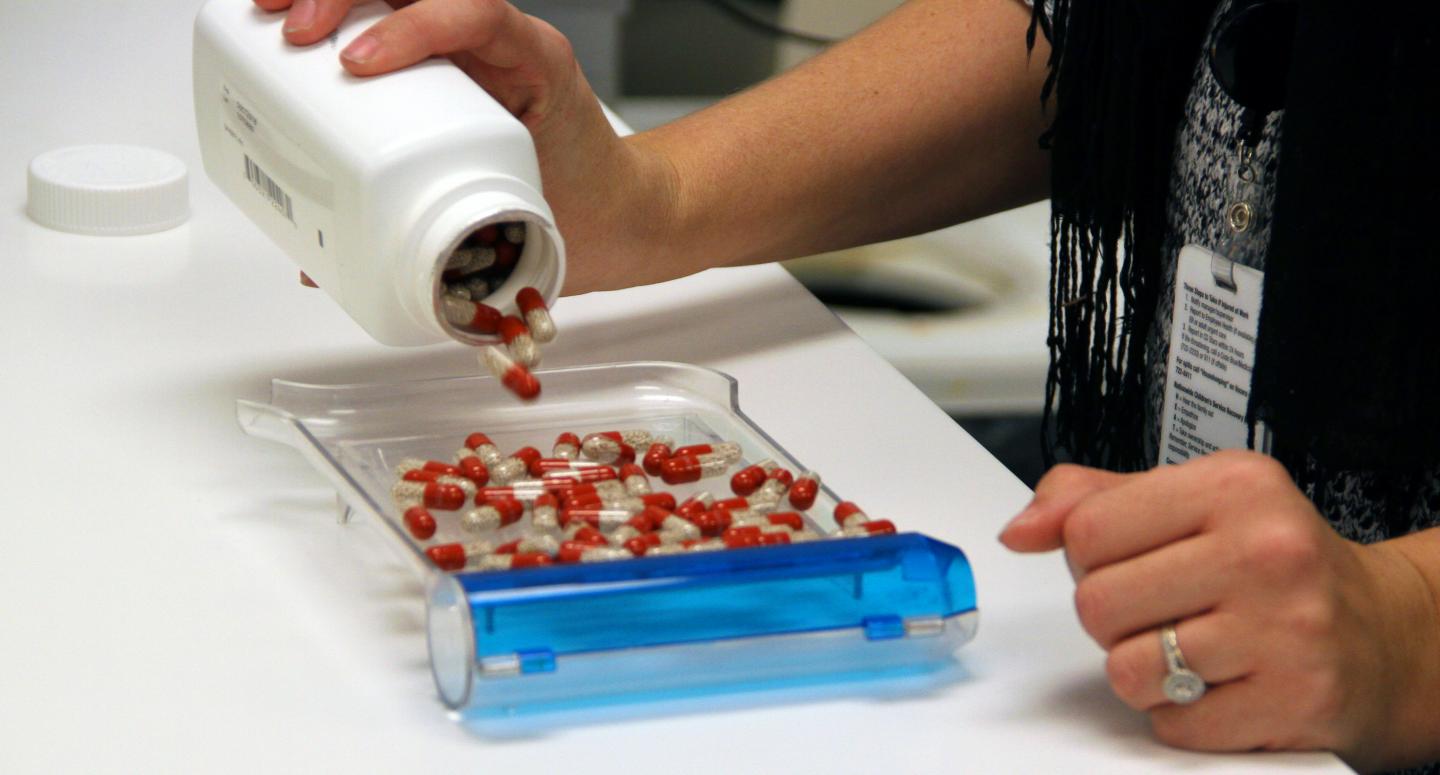
The researchers are also calling for prescription opioids to be packaged more frequently in blister packs or single-dose packaging instead of having the entire prescription filled as loose pills in one prescription bottle. This would make unintentional overdoses more unlikely.
Data for this study were obtained from the National Poison Data System, which is maintained by the American Association of Poison Control Centers (AAPCC). The AAPCC receives data on calls to participating poison control centers that serve the US and its territories. Poison control centers receive phone calls through the Poison Help Line and document information about the product, route of exposure, individual exposed, exposure scenario, and other data.
###
The Central Ohio Poison Center provides state-of-the-art poison prevention, assessment and treatment to residents in 64 of Ohio's 88 counties. The center services are available to the public, medical professionals, industry, and human service agencies. The Poison Center handles more than 42,000 poison exposure calls annually, and confidential, free emergency poisoning treatment advice is available 24/7. To learn more about the Poison Center, visit http://www.bepoisonsmart.org.
The Center for Injury Research and Policy (CIRP) of The Research Institute at Nationwide Children's Hospital works globally to reduce injury-related pediatric death and disabilities. With innovative research at its core, CIRP works to continually improve the scientific understanding of the epidemiology, biomechanics, prevention, acute treatment, and rehabilitation of injuries. CIRP serves as a pioneer by translating cutting edge injury research into education, policy, and advances in clinical care. For related injury prevention materials or to learn more about CIRP, visit http://www.injurycenter.org.
Media Contact
Gina Bericchia
[email protected]
614-355-0495
@NationwideKids
http://www.NationwideChildrens.org