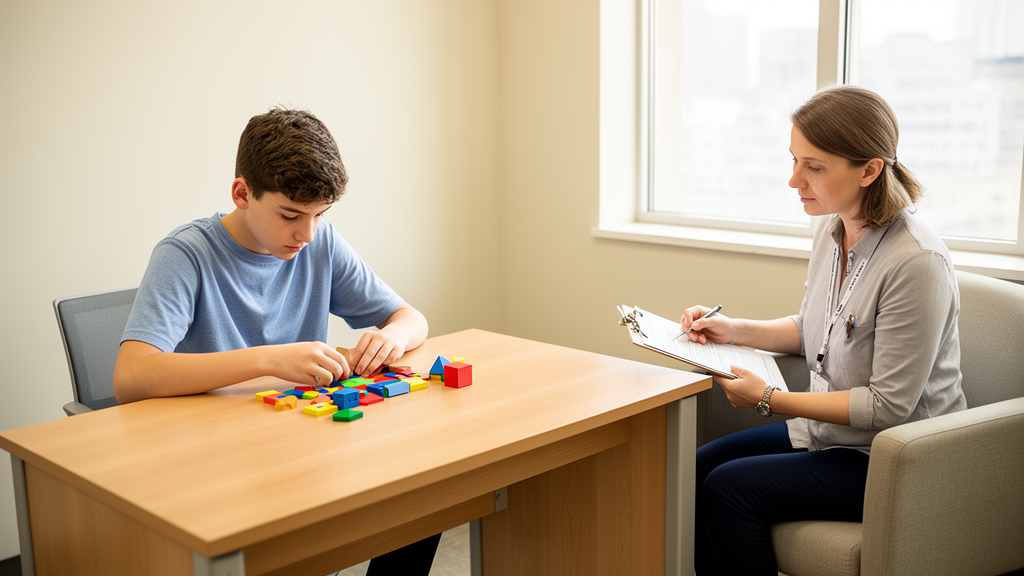
A letter to the editor published in the Journal of Clinical Sleep Medicine on 18 November 2026 raises a critical interpretive question regarding recent population-level research on adolescent sleep health. Joris Taneo, Eva Kartika Wulan Sari, and Erly Oviane Malelak argue that associations between sleep health and serious cognitive difficulty, as reported by caregivers, may not accurately reflect direct neuropsychological performance. The authors question to what extent these associations reflect cognitive performance itself, rather than difficulties in everyday functioning as perceived by caregivers.
The critique centers on a study by Knowlden titled “Multidimensional sleep health and serious cognitive difficulty among US adolescents,” which provided evidence linking sleep health with caregiver-reported cognitive difficulties. The authors of the letter acknowledge the value of this population-level evidence but point out that the outcome measure used in Knowlden’s study is not a direct assessment of neuropsychological performance. Instead, the study operationalized serious cognitive difficulty through caregiver reports of adolescents’ difficulties concentrating, remembering, or making decisions due to physical, mental, or emotional conditions. Although this measure is meaningful for population surveillance, the authors state it should not be interpreted as equivalent to objectively measured cognitive performance.
To support their argument, Taneo and colleagues cite a meta-analysis of 36 studies conducted by Foster et al., which found a modest overall association between objective working-memory performance and subjective ratings, with a correlation coefficient of r = − 0.23. The correspondence between these measures varied depending on the informant. Similarly, De Los Reyes et al. synthesized evidence from 341 studies and demonstrated that reports from different informants in child and adolescent mental health assessments often provide non-equivalent perspectives. Although these studies examine different constructs, they support the broader principle that subjective reports and performance-based assessments capture related but distinct aspects of functioning.
An alternative interpretation proposed by the authors is that the associations observed by Knowlden may reflect sleep-related difficulties in everyday functioning as perceived by caregivers, objectively measured cognitive performance, or a combination of both. Everyday functioning is influenced by factors such as fatigue and contextual demands that are not fully represented by performance on a specific cognitive task. Conversely, standardized testing may fail to capture the full range of difficulties experienced in daily life. These possibilities are not mutually exclusive, but Knowlden’s data cannot determine their relative contributions.
The importance of distinguishing between different assessment methods is further reinforced by research on sleep measurement. Paulsrud et al. conducted a systematic review and meta-analysis of 74 pediatric studies, finding that the correspondence between subjective and objective sleep measures varied across different sleep dimensions. These findings suggest that measurement approaches should not automatically be treated as interchangeable.
The authors suggest that future studies should combine device-based sleep assessment, caregiver and adolescent reports of everyday functioning, and standardized cognitive measures. Such an approach could test whether sleep–cognition associations converge across different methods or reflect different dimensions of adolescent functioning.
Knowlden’s findings remain valuable for understanding population-level cognitive difficulties associated with sleep health, according to the letter. However, distinguishing perceived everyday functional difficulties from objectively assessed cognitive performance would refine the interpretation of these associations. This distinction would help clarify which specific aspects of adolescent functioning are related to sleep health, thereby enhancing the utility of population-based surveillance research. The authors emphasize that such an approach would complement, rather than diminish, the contribution of population-based surveillance research.
Subject of Research: Interpretive limitations of caregiver-reported cognitive difficulties in adolescent sleep health research
Article Title: When sleep and cognition measures diverge: a cross-source perspective on adolescent neurobehavioral research
Article References: Taneo, J., Sari, E. K. W., & Malelak, E. O. (2026). When sleep and cognition measures diverge: a cross-source perspective on adolescent neurobehavioral research. Journal of Clinical Sleep Medicine, 22(1), Article 225. https://doi.org/10.1007/s44470-026-00235-z
Image Credits: AI Generated
DOI: 10.1007/s44470-026-00235-z
Keywords: adolescent sleep health, caregiver reports, cognitive performance, neuropsychological assessment, subjective ratings, working memory, informant discrepancy, population surveillance, sleep measurement, pediatric studies, everyday functioning, cognitive difficulty, meta-analysis, systematic review, Journal of Clinical Sleep Medicine, adolescent neurobehavioral research, objective sleep measures, standardized testing, interpretive boundaries, multi-method assessment
News Source: Ophelia Keating. (November 21, 2026). Letter Cautions Against Equating Caregiver Reports With Objective Adolescent Cognitive Performance. Scienmag.