In protein engineering, navigating the astronomical breadth of sequence space presents a fundamental hurdle because discovering functional variants among vast combinatorial pools remains extraordinarily difficult. The natural amino acid sequence directly dictates protein structure and function, with each residue position capable of being occupied by at least twenty distinct amino acid possibilities. Consequently, the potential sequence space scales to twenty raised to the power of N, where N represents the number of residues, yielding an astronomical theoretical landscape. Crucially, the actual functional landscape within this expanse is exceptionally sparse, meaning only a tiny subset of possible sequence combinations produces active, stably folded proteins. Because rational identification of functional variants across this sparse domain is frequently unfeasible, engineers must artificially construct massive mutant libraries and implement high-throughput screening technologies to isolate variants displaying targeted biological or catalytic activities.
To successfully enrich rare functional proteins from artificially generated diversity through directed evolution, experimental platforms require a physical linkage connecting the expressed functional phenotype to its underlying encoding genotype. Early demonstrations established this link by displaying target proteins on biological carriers such as bacteriophages or bacterial outer membranes, embedding the protein of interest within coat or membrane architectures to keep encoding genetic material physically unified with the displayed molecule. However, bacterial expression platforms present significant limitations for complex protein engineering. Bacteria exhibit variable expression when handling intricately folded eukaryotic molecules such as full-length antibodies, largely lack the post-translational processing machinery often vital for proper eukaryotic protein maturation, and offer limited physical surface area to display substantial copy numbers due to their comparatively small particle dimensions.
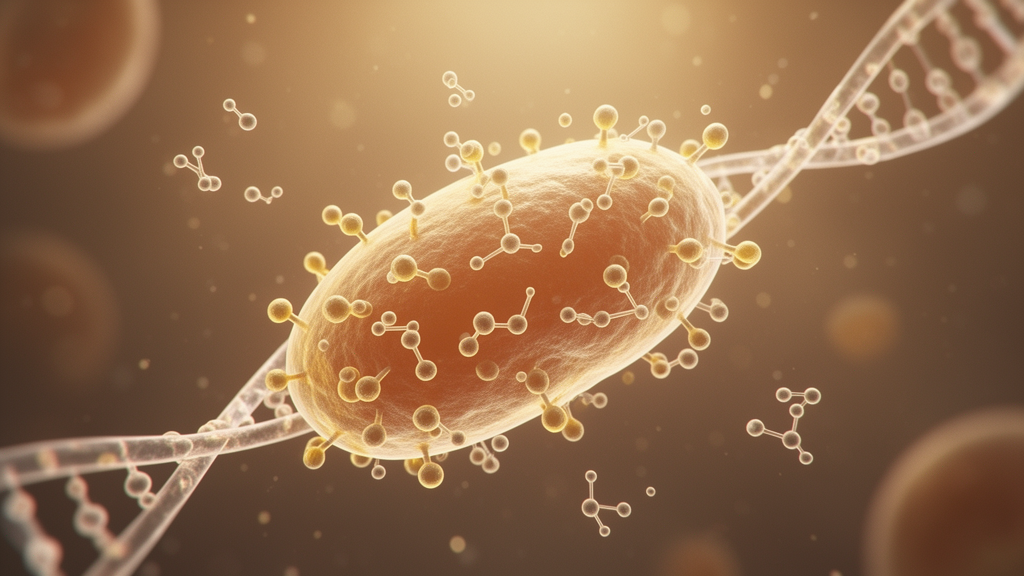
To overcome the intrinsic bottlenecks of prokaryotic display platforms, chemical engineers Boder and Wittrup established yeast surface display in 1997 using the eukaryotic baker’s yeast, Saccharomyces cerevisiae. Their design adapted the native two-subunit cell-surface mating receptor a-agglutinin, which consists of a cell-surface-anchoring subunit known as Aga1p covalently linked through two disulfide bonds to its smaller soluble binding partner, Aga2p. Target proteins are genetically fused directly to Aga2p and typically flanked by specific epitope tags, which permit researchers to verify expression levels, screen out prematurely truncated proteins, and avoid artificial selection biases favoring clones that merely express at higher surface densities. This multi-subunit Aga1p:Aga2p architecture remains widely adopted across academia and industry because it provides structural flexibility supporting both amino-terminal and carboxyl-terminal fusions, a versatility absent in single-domain display receptors that helps preserve native protein folding and functional integrity.
Initial implementations of yeast surface display concentrated primarily on optimizing protein binding affinities against soluble molecular targets through iterative rounds of screening. Target variants expressed on the yeast outer wall are incubated with fluorescently labeled antigens, allowing fluorescence-activated cell sorting to quantify both surface expression and antigen binding at single-cell resolution. Depending on baseline kinetic parameters, researchers apply equilibrium screens using very low antigen concentrations to enrich high-affinity binders or execute kinetic off-rate screens by monitoring dissociation rates over extended incubation windows. By physically isolating the most fluorescent cells across sequential sorting cycles, the methodology reliably generates engineered single-domain antibody fragments and alternative binding scaffolds displaying binding affinities that reach into the femtomolar range.
Beyond single-chain binding entities, yeast surface display methodologies have expanded to accommodate the presentation of complex multi-subunit binding complexes on the cell envelope. Structural biologists and antibody engineers display these sophisticated multi-chain architectures by co-expressing soluble partner subunits that assemble intracellularly with a membrane-anchored fragment prior to cell wall export. Alternatively, display systems capture secreted full-length multi-subunit proteins directly onto the outer yeast surface using localized capture motifs.
The operational scope of yeast surface display has further extended into the functional optimization and directed evolution of biocatalysts exhibiting enhanced reaction kinetics. Engineering catalytic enzymes on yeast introduces unique challenges because screening requires an assay architecture capable of coupling enzymatic turnover or substrate selectivity directly to a detectable fluorescent phenotype on the cell surface. Historically, this requirement restricted screenable enzyme classes to those capable of modifying Aga1p, Aga2p, or an attached peptide linker. For example, intracellular protease screening platforms position a target cleavage sequence between Aga2p and an endoplasmic reticulum retention signal, such that elevated catalytic cleavage releases the retention sequence and consequently increases overall surface display. In transpeptidase engineering, researchers implement dual display of the enzyme and one substrate on the cell surface, monitoring catalytic activity by the incorporation of a fluorescently modified second substrate.
In addition to optimizing binding affinity and enzymatic turnover rates, yeast surface display facilitates the direct selection of critical secondary biophysical traits, notably protein thermostability. The platform harnesses the endogenous quality control machinery of the eukaryotic endoplasmic reticulum, where misfolded, unstable, or aberrant polypeptide chains are recognized, retained, and redirected to degradation pathways rather than transported to the cell surface. By performing yeast growth, thermal challenge, and display induction at elevated operational temperatures, stably folded variants that resist thermal denaturation evade endoplasmic degradation and achieve higher surface display densities. These stabilized variants can subsequently be separated and isolated through high-throughput fluorescence sorting.
Despite its proven versatility across protein engineering disciplines, yeast surface display faces practical throughput bottlenecks imposed by yeast transformation efficiency and cytometric sorting speeds. Interrogating an entire naive yeast library containing one billion cells to capture rare clones often demands an entire day of continuous fluorescence-activated cell sorting. To mitigate this operational bottleneck, researchers frequently implement a preliminary magnetic-activated cell sorting enrichment step, which rapidly depletes non-functional clones and reduces subsequent sorting volume by up to two orders of magnitude.
Recent developments in computational biology, machine learning, and artificial intelligence have enabled single-shot de novo computational protein design, yet physical yeast surface display remains indispensable for validating and maturing designed candidates. Because de novo design success rates for complex macromolecular architectures like enzymes and antibodies remain limited, computational pipelines continue to rely on yeast surface display to screen computationally predicted pools. In recent demonstrations, yeast surface display was deployed to screen libraries of approximately nine thousand computationally designed de novo antibodies across multiple distinct epitopes, followed by directed affinity maturation that produced functional antigen-binding fragments exhibiting single-digit nanomolar affinities.
Three decades after its introduction by Boder and Wittrup, yeast surface display remains an established standard for biopanning, directed evolution, and protein therapeutic optimization. Its widespread longevity across academic laboratories and commercial biotechnology pipelines stems from its technical accessibility, robust phenotypic coupling, and intrinsic eukaryotic post-translational processing environment. As protein biologics and computationally generated macromolecules assume greater roles in combating human disease, yeast surface display continues to serve as an essential screening bridge that converts synthetic and computational sequence diversity into therapeutically viable molecular candidates.
Subject of Research: Protein engineering via yeast surface display and directed evolution
Article Title: Putting proteins on display
Article References: Goncalves, A. G., Stohr, A. M., & Chen, W. (2026). Putting proteins on display. Nature Chemical Engineering. https://doi.org/10.1038/s44286-026-00457-1
Image Credits: AI Generated
DOI: 10.1038/s44286-026-00457-1
Keywords: yeast surface display, directed evolution, protein engineering, Saccharomyces cerevisiae, Aga1p, Aga2p, fluorescence-activated cell sorting, magnetic-activated cell sorting, biocatalyst engineering, affinity maturation, OrthoRep, antibody engineering, de novo protein design, thermostability screening, biologics development, bacteriophage display
News Source: Denise Maddox. (November 21, 2026). Yeast Surface Display Advances Directed Evolution and Biocatalyst Engineering Across Decades. Scienmag.