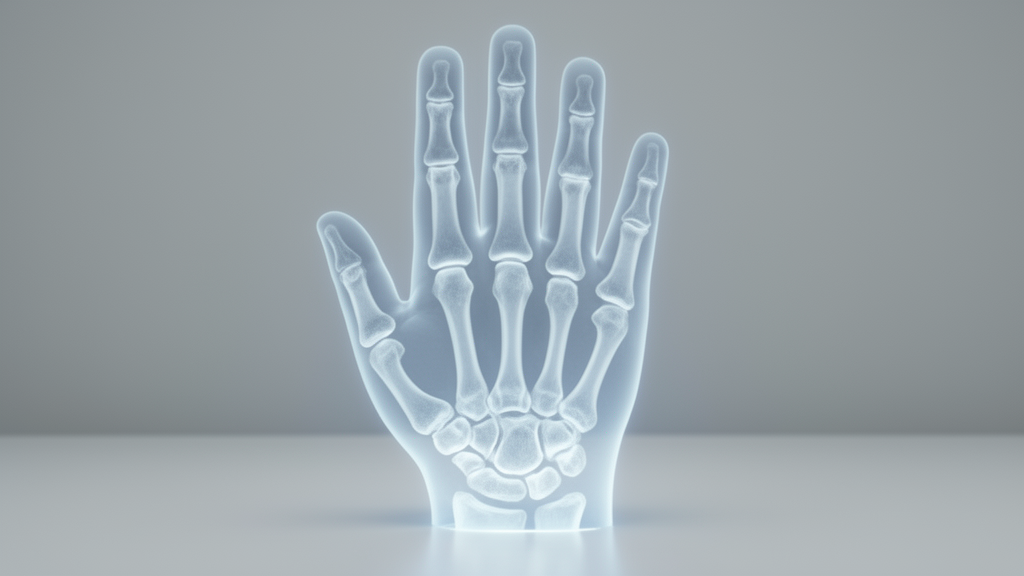
In a matters arising critique published in Pediatric Radiology, researcher Ehsan Khodamoradi addressed an evaluation by Somasundaram and colleagues that examined the agreement between three deep learning bone age models and chronological age across a substantial contemporary pediatric cohort. While recognizing the assembly of this large cohort and the systematic assessment of three independent artificial intelligence systems, the correspondence identified a critical conceptual and methodological limitation missing from the original study’s limitations section that materially alters how reported findings should be interpreted.
The central concern centers on using chronological age as the primary reference standard when testing automated bone age estimation algorithms. All three deep learning models under investigation were developed and trained specifically to reproduce the Greulich and Pyle atlas-based standard of bone age. Under clinical and developmental definitions, the Greulich and Pyle method serves as an explicit measure of skeletal maturity rather than an empirical predictor of chronological age.
Skeletal maturity and chronological age constitute distinct biological and clinical constructs that do not necessarily coincide, even among healthy children undergoing normal growth. Consequently, numerical differences observed between deep learning model outputs and the actual chronological ages of pediatric subjects cannot, on their own, prove model error, algorithmic flaw, or systemic bias.
Instead of demonstrating algorithmic failures, divergence between model estimates and chronological age can naturally stem from genuine biological discordance between skeletal maturation and calendar time. Furthermore, discrepancies may reflect secular trends in skeletal maturity where contemporary pediatric populations develop at rates different from the historical reference cohort originally utilized to establish the Greulich and Pyle atlas decades ago.
Although the original authors noted within their discussion that contemporary children might exhibit more advanced skeletal maturation when compared with historical baseline reference populations, their results and conclusions nonetheless framed the observed discrepancies as evidence of systematic model overestimation and algorithmic bias.
To rigorously evaluate how well deep learning bone age models conform to established Greulich and Pyle standards, investigators must compare algorithm predictions against an authentic gold standard composed of expert radiologist Greulich and Pyle assessments conducted on the exact same clinical images. Without using expert manual interpretations as the baseline comparator, an investigation cannot differentiate between genuine algorithmic error and broader population-level shifts in skeletal maturation.
Clarifying whether discrepancies originate from algorithmic defects or biological changes determines whether developers must recalibrate deep learning models or whether medical societies should instead revise and modernize the underlying Greulich and Pyle reference standards that guide clinical care.
The critique also raised an additional methodological concern regarding image laterality and preprocessing in the study cohort. The analyzed dataset comprised 4,103 right-hand and 3,086 left-hand radiographic examinations. However, all three deep learning models had been trained exclusively on left-hand radiographs obtained from the Radiological Society of North America dataset. Although Somasundaram and colleagues noted negligible differences in mean bias between left and right sides, their publication did not state whether right-hand images were horizontally mirrored prior to analysis.
If right-hand radiographs were evaluated without mirroring, the models received input data possessing a distribution fundamentally different from their training baseline, potentially introducing systematic errors that aggregate mean bias metrics fail to capture. The critique concluded that conducting a reanalysis using expert radiologist Greulich and Pyle readings alongside transparent documentation of image preprocessing would substantially strengthen the study’s conclusions and clinical relevance.
Subject of Research: Methodological evaluation of deep learning bone age models against chronological age
Article Title: Agreement between deep learning bone age models and chronological age: a conceptual and methodological concern: reply to Somasundaram et al
Article References: Khodamoradi, E. (2026). Agreement between deep learning bone age models and chronological age: a conceptual and methodological concern: reply to Somasundaram et al. Pediatric Radiology. https://doi.org/10.1007/s00247-026-06840-7
Image Credits: AI Generated
DOI: 10.1007/s00247-026-06840-7
Keywords: Pediatric Radiology, bone age assessment, deep learning models, chronological age, skeletal maturity, Greulich and Pyle atlas, reference standards, pediatric imaging, radiological evaluation, RSNA dataset, hand radiographs, laterality, image preprocessing, model bias, algorithmic validation, maturation discordance, contemporary cohorts
News Source: Blake Davidson. (November 20, 2026). Bone Age Deep Learning Model Evaluations Require Skeletal Rather Than Chronological Standards. Scienmag.