Credit: University of Michigan
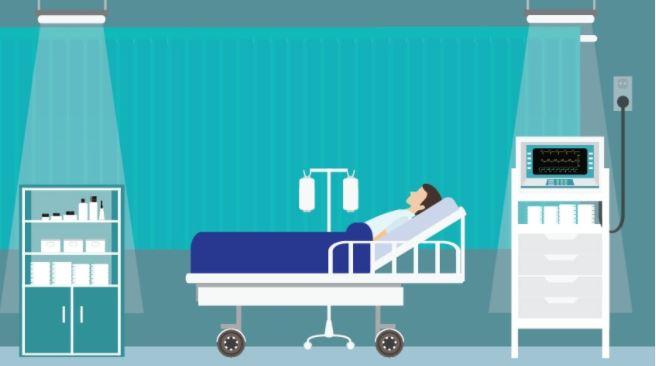
A new study uncovers changes in the makeup of the cardiac intensive care unit as more patients are primarily diagnosed with noncardiac conditions.
The cardiac intensive care unit is no longer only a place for patients recovering from heart attacks, like the coronary care units of decades past. A new University of Michigan study finds slightly more than half of heart patients are admitted to the CICU for noncardiac conditions, such as sepsis or renal failure, rather than for a heart condition.
"It's an opportunity for providers to assess training and staffing models," says lead author Shashank S. Sinha, M.D., M.Sc., an advanced heart failure and cardiac transplantation fellow at U-M's Frankel Cardiovascular Center. The study was recently published in Circulation: Cardiovascular Quality and Outcomes.
"In order to get admitted to a CICU, you either have a primary cardiac condition – such as a heart attack or heart failure – or you have a sick heart from a prior event and now are admitted with a primary noncardiac condition – such as sepsis or lung or kidney failure," Sinha says. "We found a remarkable rise in primary noncardiac conditions associated with a rise in secondary cardiac comorbidities. This suggests patients with sick hearts from prior disease are now getting admitted to CICUs with conditions that anyone can get."
Sinha says this is the first data on numbers, types and outcomes of elderly CICU patients across the U.S., although others have reported similar findings at single academic centers.
"It's useful to understand what types of patients are now getting admitted to the ICU to ensure that all staff, from nurses to respiratory support to physicians, are appropriately trained to manage them," says co-author Michael Sjoding, M.D., M.Sc., an assistant professor of internal medicine and pulmonologist at Michigan Medicine.
Methodology
The researchers combed through Medicare data from 3.4 million CICU admissions between 2003 and 2013. They report 51.7 percent of admissions represented a primary noncardiac diagnosis in 2013, up from just 38 percent in 2003.
Rates of infectious diseases (15.1 percent) and respiratory diseases (7.6 percent) were the fastest-growing noncardiac reasons for admittance. Meanwhile, the CICU was seeing fewer patients with a primary diagnosis of coronary artery disease, as patients are living longer with chronic heart conditions.
Across the board, patients had increased rates of comorbidities including heart failure, pulmonary vascular disease, valvular heart disease and renal failure.
Sinha says, "Although patients with primary noncardiac diagnoses appear to be more complex and require more procedures, the outcomes haven't suggested overall care is compromised in the present configuration."
"Among the patients in the CICU, we're seeing the same trend that we see overall in intensive care, which is sepsis and respiratory failure are becoming more common," says Sjoding, a member of U-M's Institute for Healthcare Policy and Innovation. He says the data provides another reminder that sepsis has become such an important diagnosis, particularly for the critically ill.
'A call to action'
Sinha says anecdotal experience was motivating physicians primarily taking care of these patients in the CICU to start talking about the changing case mix, yet data lagged behind.
The American Heart Association recognized this in 2012, when it published a scientific statement on the need to train cardiologists on managing these noncardiac conditions they are likely to encounter in the CICU. In 2015, the American College of Cardiology enhanced training requirements, including requiring critical care cardiology trainees to learn ventilator management.
Researchers say the future critical care cardiology workforce could be different in many ways, including training cardiologists to develop additional expertise in critical care or bringing in intensivists to co-manage those patients with noncardiac conditions such as infectious diseases or respiratory failure.
Sjoding says it's important to ensure that these complex patients, wherever they are getting admitted, receive optimal care.
"It's a call to action," says Sinha, also a member of U-M IHPI. "The question is: How do we change?"
###
Additional authors include Colin Cooke, M.D., M.Sc., M.S., Devraj Sukul, M.D., Hallie C. Prescott, M.D., M.Sc., Jack Iwashyna, M.D., Ph.D., Hitinder S. Gurm, M.D., and Brahmajee K. Nallamothu, M.D., MPH.
Media Contact
Haley Otman
[email protected]
734-764-2220
@umichmedicine
http://www.med.umich.edu
Original Source
http://michmed.org/MY645 http://dx.doi.org/10.1161/CIRCOUTCOMES.117.003616