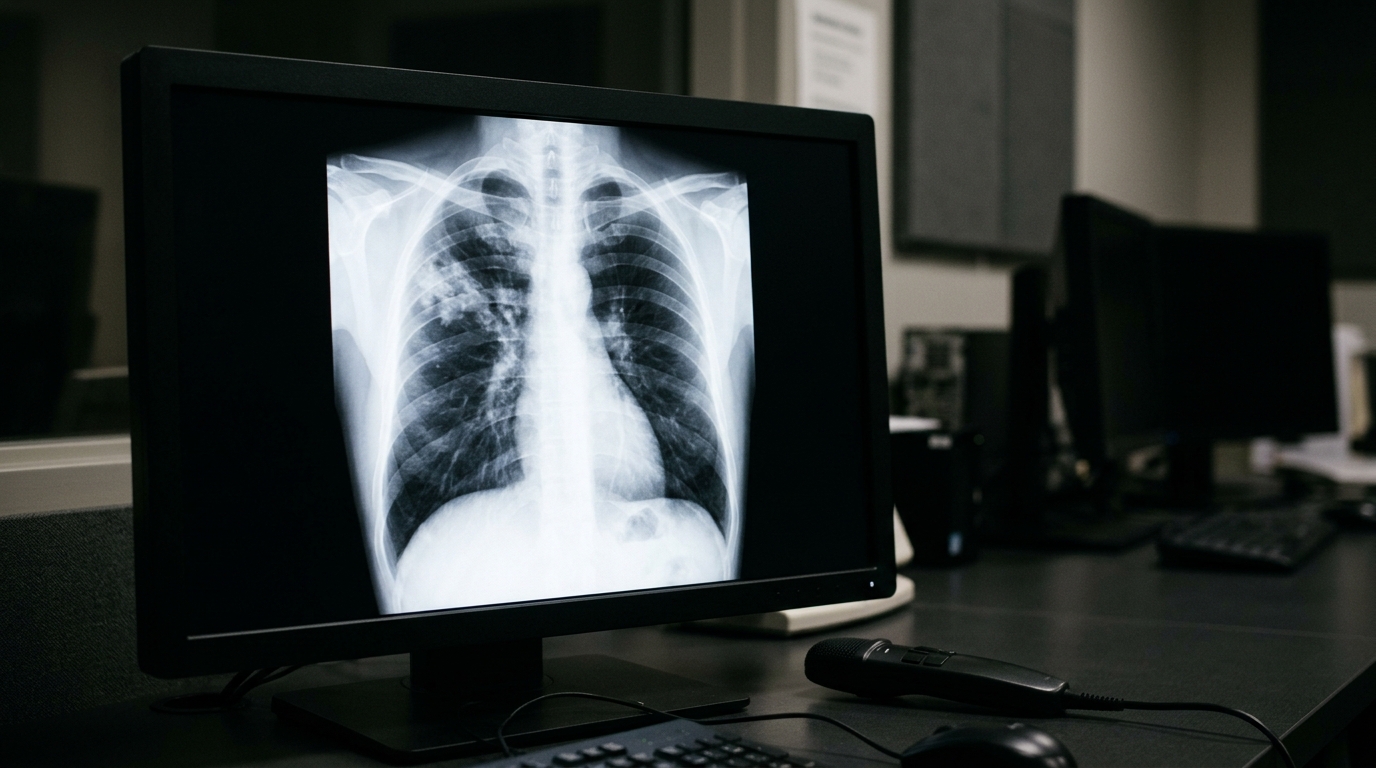
Deep learning and machine learning algorithms are reshaping tuberculosis detection by matching or exceeding expert performance across radiological and genomic data, according to a review published in Molecular Medicine. The synthesized evidence demonstrates that artificial intelligence models evaluating chest radiographs achieve near-expert diagnostic accuracy, reporting area under the receiver operating characteristic curve values approaching 0.95 to 0.99. In parallel, computational prediction systems analyzing whole-genome sequencing datasets identify complex bacterial drug-resistance profiles with F1-scores surpassing 90 percent. These computational advances provide automated, scalable methods designed to address long-standing diagnostic gaps that currently delay treatment and drive disease transmission worldwide.
Tuberculosis remains one of the leading global health challenges, causing more than ten million active cases each year. Conventional clinical workflows continue to rely on traditional diagnostic techniques, including sputum microscopy, microbiological culture, and nucleic acid amplification assays. However, these established diagnostic tools face persistent operational limitations, such as suboptimal sensitivity, prolonged turnaround times, substantial infrastructure requirements, and a continuous dependence on highly trained laboratory personnel. These systemic constraints disproportionately affect high-burden and resource-limited regions, where diagnostic delays significantly hinder case detection, prolong community transmission, and impair overarching disease control initiatives.
Within diagnostic radiology, deep learning architectures applied to chest radiographs provide rapid image interpretation that matches human expertise.
Beyond radiological screening, machine learning platforms applied to genomic data offer an alternative pathway for characterizing Mycobacterium tuberculosis infections. Traditional phenotypic drug-susceptibility testing is often limited by slow turnaround times and demanding laboratory infrastructure. In contrast, artificial intelligence systems trained on whole-genome sequencing data predict antimicrobial resistance patterns with F1-scores exceeding 90 percent, matching or exceeding 90 percent prediction accuracy. This computational approach provides a faster, more comprehensive diagnostic option than conventional culture-based susceptibility testing, facilitating prompt selection of appropriate treatment regimens.
To further enhance diagnostic precision, researchers are developing integrative multimodal frameworks that combine radiological imaging, whole-genome sequencing, and clinical parameters into unified predictive pipelines. These multifaceted artificial intelligence models synthesize disparate clinical and biological data streams to deliver earlier, patient-specific diagnostic assessments. By integrating imaging observations with genomic profiles and individual patient features, multimodal systems support personalized therapy selection and real-time clinical risk stratification.
Despite these documented technical achievements, the review highlights substantial ethical, regulatory, and practical barriers that currently impede the translation of artificial intelligence into routine clinical practice. The authors also identify a widespread lack of regulatory harmonization across international jurisdictions, creating major obstacles to the equitable, standardized deployment of artificial intelligence software in global tuberculosis care.
Overcoming these deployment hurdles requires robust governance structures, transparent model validation, and representative clinical training datasets. Successful, sustainable adoption will ultimately depend on structured multidisciplinary collaboration among clinicians, microbiologists, data scientists, engineers, and public health policymakers. With thoughtful governance and context-sensitive implementation, artificial intelligence has the potential to transform tuberculosis diagnosis into an accurate, efficient, unbiased, and patient-centered continuum, supporting international efforts toward global tuberculosis elimination by 2030.
Subject of Research: Artificial intelligence applications and implementation challenges in tuberculosis diagnostics
Article Title: Methods and applications of artificial intelligence in tuberculosis diagnostics: advances, opportunities, and challenges
Article References: Ali, W., Prandiyal, S., Alam, A., Shariq, M., Ehtesham, N. Z., Hasnain, S. E., & Ahmad, S. (2026). Methods and applications of artificial intelligence in tuberculosis diagnostics: advances, opportunities, and challenges. Molecular Medicine. https://doi.org/10.1186/s10020-026-01580-8
Image Credits: AI Generated
DOI: 10.1186/s10020-026-01580-8
Keywords: tuberculosis diagnostics, artificial intelligence, deep learning, machine learning, chest radiography, whole-genome sequencing, drug-susceptibility testing, drug resistance, multimodal integration, sputum microscopy, nucleic acid amplification tests, algorithmic bias, data heterogeneity, federated learning, model interpretability, regulatory harmonization, resource-limited settings
News Source: Blake Davidson. (November 20, 2026). Artificial Intelligence Matches Expert Performance in Tuberculosis Radiography and Genomic Diagnostics. Scienmag.