• HOME
  • NEWS
  • EXPLORE
    • CAREER
      • Companies
      • Jobs
    • EVENTS
    • iGEM
      • News
      • Team
    • PHOTOS
    • VIDEO
    • WIKI
  • BLOG
  • COMMUNITY
    • FACEBOOK
    • INSTAGRAM
    • TWITTER
Saturday, November 21, 2026
BIOENGINEER.ORG
No Result
View All Result
  • Login
  • HOME
  • NEWS
  • EXPLORE
    • CAREER
      • Companies
      • Jobs
        • Lecturer
        • PhD Studentship
        • Postdoc
        • Research Assistant
    • EVENTS
    • iGEM
      • News
      • Team
    • PHOTOS
    • VIDEO
    • WIKI
  • BLOG
  • COMMUNITY
    • FACEBOOK
    • INSTAGRAM
    • TWITTER
No Result
View All Result
Bioengineer.org
No Result
View All Result
Home NEWS Science News Biology

Pupil Dilation Patterns Track Uncertainty During Human Probability Learning

by
November 20, 2026
in Biology
Reading Time: 2 mins read
0
Pupil Dilation Patterns Track Uncertainty During Human Probability Learning

Pupil Dilation Patterns Track Uncertainty During Human Probability Learning

Share on FacebookShare on TwitterShare on LinkedinShare on RedditShare on Telegram

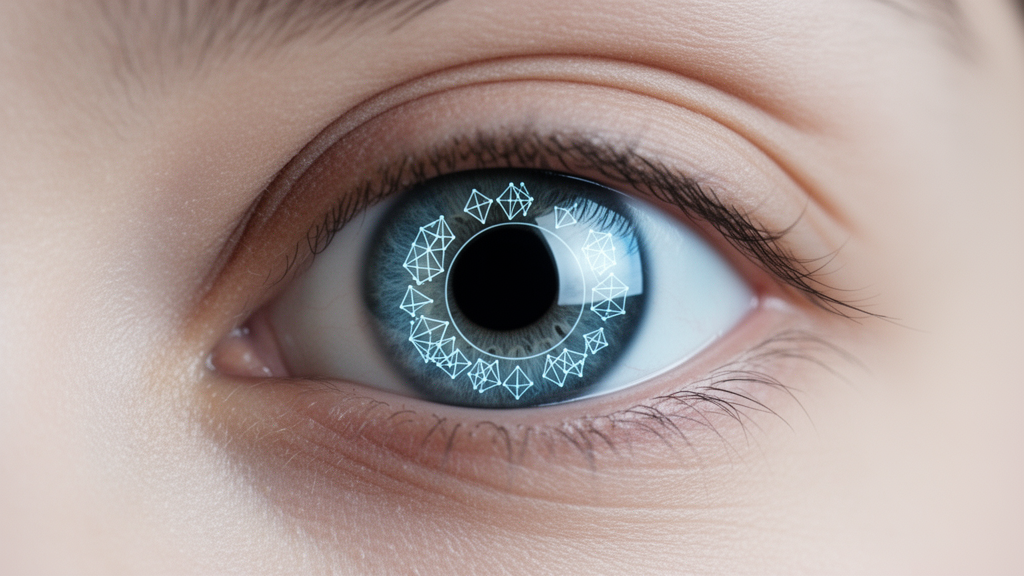
Human probability learning in changing environments relies on distinct pupil dilation patterns that reflect internal computations of uncertainty, according to a computational study conducted by Aaron Greenhouse-Tucknott, Cedric Foucault, Anne Buot, and Florent Meyniel. By tracking arousal-mediated changes in pupil diameter during a dynamic estimation task, the researchers investigated how the brain represents and responds to statistical shifts when changes are difficult to detect.

In the experiment, human participants completed a probability learning task where they estimated a hidden generative probability of stimuli that changed abruptly and unpredictably over time. To analyze learning dynamics, the team applied a Bayesian ideal observer model to estimate trial-by-trial learning rates alongside two specific uncertainty-associated factors: change point probability, defined as the likelihood that the generative process had abruptly shifted, and prior uncertainty regarding current beliefs about that process.

The behavioral data showed that participants relied on prior uncertainty to adjust their learning rates in line with normative theory. Pupillometric analyses revealed that the nervous system organized these computational signals into temporally distinct physiological representations. Specifically, rapid phasic pupil dilations tracked change point probability during stimulus presentation, while slower baseline tonic pupil dilations tracked the participants’ accumulated prior uncertainty.

Statistical mediation analyses further indicated that both phasic and tonic pupil signals partially carried the respective effects of change point probability and prior uncertainty on subsequent learning adjustments. These physiological signals demonstrated that autonomic arousal systems actively contribute to the translation of latent statistical assessments into measurable updates in human belief formation during volatile learning conditions.

Critically, the investigators discovered that high tonic arousal weakened the coupling between phasic pupil responses and change point probability, which was accompanied by a diminished influence of change point probability on learning updates. The authors concluded that probability learning in volatile settings is underpinned by computationally rational integration of latent uncertainty factors regulated through distinct arousal-associated physiological responses.

Subject of Research: Pupillary representations of uncertainty during dynamic probability learning in humans

Article Title: Pupil dynamics reflect uncertainty-driven adjustments of probability learning

Article References: Greenhouse-Tucknott, A., Foucault, C., Buot, A., & Meyniel, F. (2026). Pupil dynamics reflect uncertainty-driven adjustments of probability learning. PLOS Computational Biology, 22(11), e1014064. https://doi.org/10.1371/journal.pcbi.1014064

Image Credits: AI Generated

DOI: 10.1371/journal.pcbi.1014064

Keywords: pupillometry, probability learning, uncertainty, change point probability, prior uncertainty, Bayesian ideal observer model, learning rate, tonic arousal, phasic pupil dilation, tonic pupil dilation, belief updating, cognitive computational neuroscience, arousal systems, dynamic environments, mediation analysis, normative theory

News Source: Drew Townsend. (November 20, 2026). Pupil Dilation Patterns Track Uncertainty During Human Probability Learning. Scienmag.
Tags: arousal systemsBayesian ideal observer modelbelief updatingchange point probabilitycognitive computational neuroscienceDynamic environmentslearning ratemediation analysisnormative theoryphasic pupil dilationprior uncertaintyprobability learningpupillometrytonic arousaltonic pupil dilationUncertainty
Share12Tweet7Share2ShareShareShare1

Related Posts

Arginine Starvation Blocks Myxoma Virus Replication by Halting Core Disassociation

Arginine Starvation Blocks Myxoma Virus Replication by Halting Core Disassociation

November 21, 2026
Review Highlights Molecular Arms Race and Emerging Genomic Tools Against Aphids

Review Highlights Molecular Arms Race and Emerging Genomic Tools Against Aphids

November 21, 2026

Short-Tailed Shearwaters Deepen and Lengthen Dives on Distant Foraging Trips

November 21, 2026

Mosquito Surveillance Identifies Co-Circulating West Nile Virus Lineages in Portuguese Wetlands

November 21, 2026

POPULAR NEWS

  • Synthetic Microbial Communities Offer New Pathways for Climate Resilient Forest Management

    Synthetic Microbial Communities Offer New Pathways for Climate Resilient Forest Management

    29 shares
    Share 12 Tweet 7
  • Gut Microbiota Composition Predicts Systemic Inflammation Better Than Chronological Age

    29 shares
    Share 12 Tweet 7
  • Citrus Transcription Factor CsHAT14 Regulates Chlorophyll Breakdown and Fruit Degreening

    29 shares
    Share 12 Tweet 7
  • Topical Timolol Linked to Clinically Significant Bradyarrhythmias in Systematic Review

    29 shares
    Share 12 Tweet 7

About

We bring you the latest biotechnology news from best research centers and universities around the world. Check our website.

Follow us

Recent News

Deep Learning Models Show High Preliminary Accuracy Differentiating Eczema and Scabies

Near-Peer Nursing Model Linked to Higher Undergraduate Clinical Scores

Study Profiles Genetic Spectrum of Primary Ciliary Dyskinesia in Southwestern China

Subscribe to Blog via Email

Enter your email address to subscribe to this blog and receive notifications of new posts by email.

Join 89 other subscribers
  • Contact Us

Bioengineer.org © Copyright 2023 All Rights Reserved.

Welcome Back!

Login to your account below

Forgotten Password?

Retrieve your password

Please enter your username or email address to reset your password.

Log In
No Result
View All Result
  • Homepages
    • Home Page 1
    • Home Page 2
  • News
  • National
  • Business
  • Health
  • Lifestyle
  • Science

Bioengineer.org © Copyright 2023 All Rights Reserved.