A comprehensive systematic review and meta-analysis evaluating the application of deep learning algorithms to electroencephalography signals has determined that artificial intelligence models achieve high statistical accuracy in identifying autism spectrum disorder, yet substantial methodological limitations prevent their current translation into clinical practice. Across thirty-four primary investigation papers published between 2018 and 2024 satisfying qualitative systematic criteria, fifteen studies provided adequate quantitative data for bivariate random-effects meta-analytic synthesis. When evaluating all identified deep learning architectures simultaneously, pooled diagnostic sensitivity reached 0.94 with a ninety-five percent confidence interval of 0.92 to 0.96, while pooled diagnostic specificity reached 0.87 with a ninety-five percent confidence interval of 0.83 to 0.90. These summary metrics demonstrate that deep neural networks can successfully identify distinctive electrophysiological brain patterns separating autistic individuals from comparison cohorts. However, the researchers emphasized that pronounced between-study heterogeneity, small sample sizes, inconsistent validation designs, and potential algorithmic overfitting preclude definitive conclusions regarding immediate clinical readiness or superiority over established diagnostic tools.
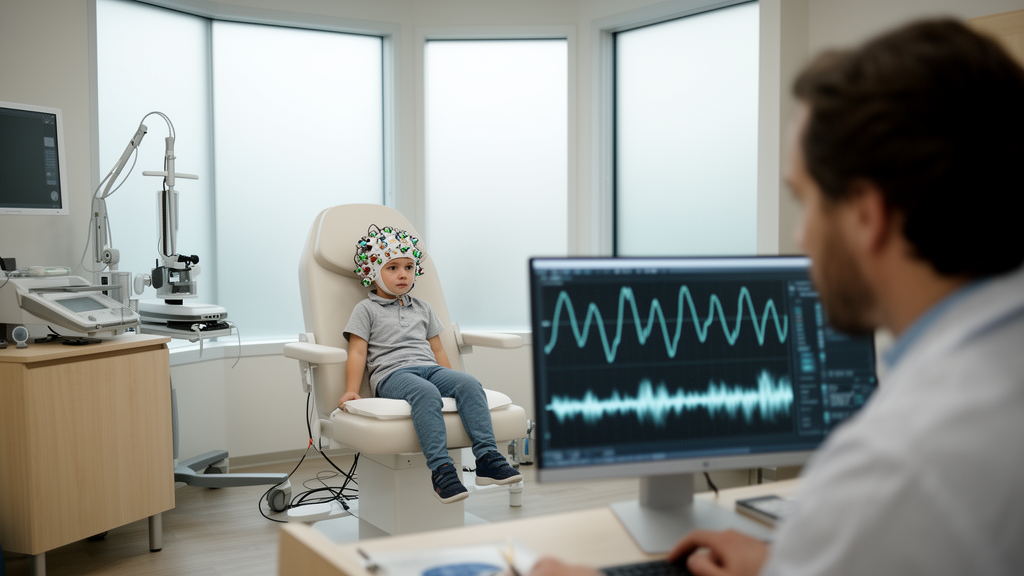
Autism spectrum disorder represents a pervasive neurodevelopmental condition characterized by persistent challenges in verbal and nonverbal communication and social interactions, with an estimated global prevalence of approximately one in every one hundred children. Affected individuals frequently experience co-occurring medical and psychiatric conditions, and core behavioral symptoms typically emerge during early childhood and endure persistently throughout adulthood without full recovery. While there is no known medical cure, early diagnostic identification and timely intervention remain essential clinical priorities because they substantially enhance cognitive growth, adaptive behaviors, and functional communication skills while diminishing secondary developmental impairments. Contemporary clinical practice relies primarily on behavioral questionnaires, developmental histories, and clinician-led observational protocols, such as standard diagnostic interviews. Nevertheless, these conventional assessment pathways can be time-consuming, subjective, and prone to diagnostic inaccuracies. Consequently, non-invasive electroencephalography has attracted considerable scientific interest as a physiological monitoring modality that directly captures underlying neural electrodynamics to provide objective, quantifiable neurodevelopmental diagnostic data.
To evaluate whether artificial intelligence can reliably interpret these neural signals, the investigators registered their systematic review protocol with the international prospective register of systematic reviews, PROSPERO, under registration code CRD42024564955. Following PRISMA methodological reporting guidelines, a structured literature retrieval was executed across PubMed, Scopus, and Web of Science databases through June 27, 2024, without imposing publication date constraints. Eligible research articles were required to implement at least one deep learning computational model applied directly to electroencephalography data to perform classification of individuals identified with autism spectrum disorder against non-autistic comparison groups. Studies relying exclusively on conventional machine-learning classifiers without deep learning components, investigations lacking appropriate control participants, animal experiments, conference abstracts, and non-English texts were systematically excluded. Methodological quality across patient selection, index test execution, reference standard administration, and flow and timing was evaluated using the QUADAS-2 diagnostic tool, allowing the research team to systematically document study-level risks of bias and applicability concerns.
Across the thirty-four included studies, researchers utilized a wide spectrum of computational architectures, with convolutional neural networks emerging as the predominant modeling choice in twenty-seven separate investigations. Within this convolutional family, investigators frequently implemented established computer vision architectures adapted for neuroimaging, including AlexNet, ResNet, GoogLeNet, SqueezeNet, VGG, MobileNetV2, and DenseNet, primarily leveraged to extract complex spatial representations from multichannel electrode arrays. To address continuous temporal dynamics inherent to serial electroencephalographic recordings, several studies incorporated recurrent frameworks, specifically long short-term memory networks and bidirectional long short-term memory models. Furthermore, multiple research teams developed hybrid configurations, merging convolutional neural networks with long short-term memory or gated recurrent units to capture both spatial and temporal signal features simultaneously. Other specialized computational implementations documented in the qualitative review encompassed stacked denoising autoencoders, graph convolutional networks, spatial-temporal graph neural networks, and specialized algorithmic designs like the CNN-FEBAC feature extractor and heuristic-concatenated feature classification algorithms.
The synthesized research displayed considerable divergence in patient demographics, participant recruitment, and recording protocols across the thirty-four evaluated investigations. Sample sizes exhibited extreme variability, ranging from small experimental cohorts containing only 16 participants up to larger collections comprising 200 individuals, with most studies focusing on participants between 3 and 20 years of age despite overall participant ages spanning from 1 to 68 years. Notable demographic skews were identified, particularly regarding participant sex distributions, as multiple included investigations reported zero female participants within their autistic case groups or control cohorts. Eighteen analyzed studies sourced electrophysiological data from public repositories, notably datasets released by King Abdulaziz University and the Simons Foundation Autism Research Initiative. In terms of data acquisition paradigms, resting-state electroencephalography was more prevalent than active task-based recordings, representing twenty-two studies compared to eleven task-driven paradigms, while five papers omitted recording conditions entirely. Recording durations similarly varied from thirty seconds to one hundred seventy-three minutes.
Individual primary studies documented extraordinarily broad ranges of predictive accuracy and diagnostic performance metrics, reflecting profound diversity across experimental pipelines. Classification accuracy across the thirty-four papers ranged from a low of 43 percent up to perfect scores of 100 percent. Individual sensitivity metrics ranged from 22 percent for specific DenseNet implementations up to 100 percent across multiple ResNet configurations, while specificity spanned from 0 percent in certain VGGNet deployments to 100 percent in optimized ResNet50 and long short-term memory models. Precision metrics extended from 21 percent to 100 percent, and reported F1 scores spanned from 0.21 to 1.00. Similarly, the area under the receiver operating characteristic curve varied between 0.631 for spatial-temporal graph convolutional networks and 0.999 for hybrid convolutional long short-term memory systems. High-performing models often incorporated complex preprocessing, such as independent component analysis paired with recurrent dynamic filtering and convolutional layers, reaching reported accuracies of 99.98 percent, though these elevated values occurred mainly in smaller cohorts.
To clarify these divergent findings, the meta-analytic synthesis pooled quantitative diagnostic parameters across relevant subgroups to evaluate structural and experimental variations. A dedicated subgroup analysis restricted to convolutional neural networks yielded a pooled diagnostic sensitivity of 0.96 with a ninety-five percent confidence interval of 0.94 to 0.97 and a pooled specificity of 0.83 with an interval of 0.77 to 0.88. When categorized by recording paradigm, task-based recordings achieved a pooled sensitivity of 0.95 and specificity of 0.94, while resting-state electroencephalography demonstrated matching pooled estimates of 0.95 sensitivity and 0.94 specificity. Restricting analysis to the single best-performing model from each publication yielded a pooled sensitivity of 0.98 with a confidence interval of 0.95 to 0.99 and a pooled specificity of 0.97 with an interval of 0.93 to 0.98. Corresponding subgroup analyses among best-performing models demonstrated pooled sensitivities of 0.99 for convolutional networks and 0.98 for both recording modalities, accompanied by high specificities of 0.96 and 0.97.
Statistical validation checks and sensitivity evaluations demonstrated that high pooled accuracy estimates remained mathematically consistent across multiple analytic adjustments. A leave-one-out sensitivity analysis iteratively omitted one study at a time across the fifteen cohorts, yielding stable sensitivity estimates between 0.98 and 0.99 and specificity values between 0.96 and 0.97. Similarly, an additional sensitivity analysis restricted the data to only one representative study per unique dataset, selecting the publication with the largest population confusion matrix, yielding a pooled sensitivity of 0.97 and a pooled specificity of 0.94. Meta-regression conducted across all included models indicated that autism group sample size was significantly associated with specificity, while the proportion of female participants in both autism and control groups, as well as the total number of recording channels, correlated with sensitivity metrics. Additionally, sampling frequency showed a significant association with specificity across all models, whereas meta-regression restricted to best-performing models revealed no statistically significant moderator effects across the evaluated clinical or technical parameters.
Despite these seemingly robust numerical outcomes, the authors identified pervasive methodological vulnerabilities that severely undermine the clinical validity of the published literature. Statistical between-study heterogeneity remained remarkably elevated across nearly every pooled calculation, with I-squared values frequently exceeding 80 and 90 percent, indicating that observed variations reflect genuine procedural divergence rather than random sampling fluctuations. Crucially, subject-independent validation protocols were explicitly confirmed in only a small minority of reviewed papers. In numerous studies, researchers divided continuous electroencephalography recordings into epochs, spectrogram images, or sliding-window segments before randomly partitioning data into training and testing sets. Without strict subject-level segregation, data segments derived from the same individual appeared simultaneously in both training and testing datasets. This practice introduces severe data leakage, artificially inflating validation accuracy while masking algorithmic inability to classify novel individuals. Furthermore, none of the thirty-four included studies conducted independent external validation on separate clinical cohorts from unaffiliated institutions, leaving real-world generalizability completely unverified.
A final critical limitation highlighted by the systematic synthesis is that every analyzed deep learning application functioned strictly as a binary classifier, distinguishing individuals with established autism spectrum diagnoses from neurotypical comparison controls. In real-world settings, clinicians must differentiate autism from related neurodevelopmental and psychiatric conditions with overlapping behavioral presentations, a complex multiclass challenge that binary algorithms cannot address. Additionally, none of the studies performed direct head-to-head empirical comparisons against conventional clinical diagnostic standards, such as the Autism Diagnostic Observation Schedule, Autism Diagnostic Interview-Revised, or Childhood Autism Rating Scale, meaning deep learning models have not demonstrated superiority over established workflows. Given these unresolved challenges alongside the opaque decision-making processes inherent to complex neural networks, the review concluded that electroencephalography deep learning models cannot currently serve as standalone clinical diagnostic systems. Instead, they represent experimental decision-support methodologies requiring prospective multicenter clinical trials, standardized acquisition protocols, and rigorous AI-specific bias evaluations using tools like PROBAST+AI before clinical translation can occur.
Subject of Research: Diagnostic performance and methodological limitations of deep learning electroencephalography models for autism spectrum disorder
Article Title: Evaluating the performance of deep learning models in diagnosing autism spectrum disorder using electroencephalography: a systematic review and meta-analysis
Article References: Yousefi, S., Islampanah, M., Elahi, R., Hassani, D., Akbari, N., Limoudehi, N. M., Asgari, P., Nattagh Eshtivani, M. M., Noghani, Y. T., Ghasemi, Z., Azarkish, M. J., Shakiba, M. R., & Nazari, E. (2026). Evaluating the performance of deep learning models in diagnosing autism spectrum disorder using electroencephalography: a systematic review and meta-analysis. BMC Psychiatry. https://doi.org/10.1186/s12888-026-08886-1
Image Credits: AI Generated
DOI: 10.1186/s12888-026-08886-1
Keywords: Autism Spectrum Disorder, Deep Learning, Electroencephalography, Systematic Review, Meta-Analysis, Convolutional Neural Networks, Diagnostic Accuracy, Sensitivity and Specificity, Resting-State EEG, Task-Based EEG, Long Short-Term Memory, Data Leakage, Subject-Independent Validation, Heterogeneity, QUADAS-2, Clinical Decision Support, PROBAST+AI, HSROC
News Source: Blake Davidson. (November 20, 2026). Deep Learning EEG Models Detect Autism Accurately but Lack Clinical Validation. Scienmag.