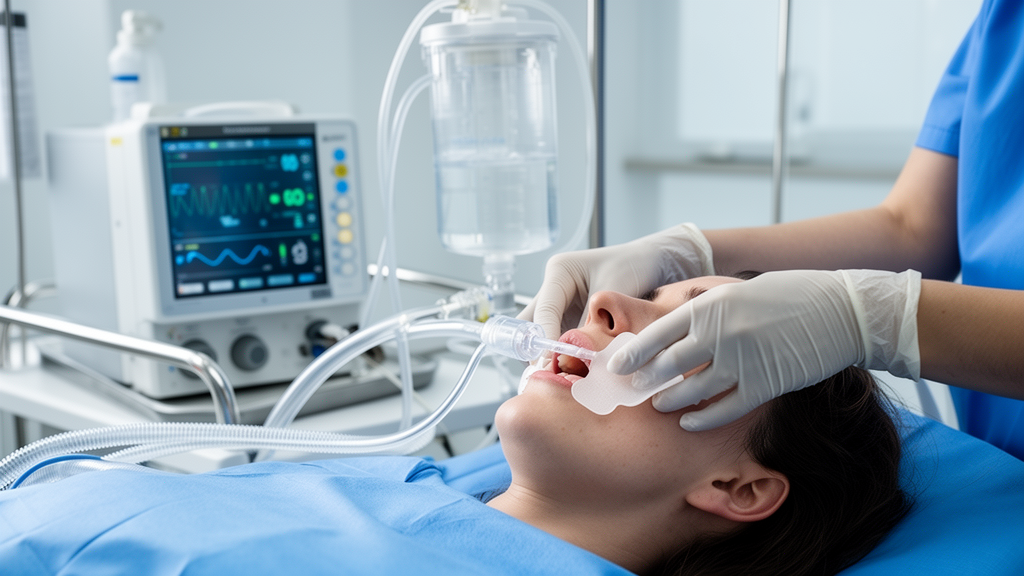
A continuous suction dental pad designed to drain secretions from the mouth by utilizing a gravity-weighted tip was associated with a marked reduction in ventilator-associated pneumonia among critically ill patients receiving mechanical ventilation, according to a retrospective historical cohort study conducted at The First Affiliated Hospital of Ningbo University. Ventilator-associated pneumonia remains a frequent and severe infectious complication in intensive care units, where reported incidence ranges between 5 percent and 40 percent of mechanically ventilated individuals. The condition prolongs ventilation duration and hospital stay while contributing substantially to patient mortality. Mechanistically, pulmonary infection frequently arises following the microaspiration of contaminated oropharyngeal secretions that harbor pathogenic bacteria accumulated during intubation. While conventional oral care programs rely on periodic manual suctioning and topical cleanings performed by nursing staff, intermittent clearance can allow secretions to pool between care intervals, elevating bacterial burden and facilitating transit into the lower respiratory tract.
To evaluate whether continuous low-pressure oral drainage could mitigate aspiration risk and improve clinical outcomes, researchers examined data from 118 adult patients undergoing oral tracheal intubation and mechanical ventilation for at least 72 hours in the intensive care unit of the hospital’s Waitan Campus between January and December 2024. In June 2024, the clinical unit introduced a novel gravity-weighted continuous oral suction dental pad into routine practice. Taking advantage of this chronologically phased rollout, investigators established a pre-post cohort framework comparing 59 consecutive patients treated prior to June 2024 with conventional dental pads against 59 consecutive patients admitted thereafter who were managed using the novel suction device. The transition reflected an institutional workflow update rather than a randomized clinical trial allocation, though baseline clinical characteristics, patient demographics, and accompanying critical care regimens remained strictly comparable across both cohorts.
Standard supportive therapies and preventative care measures were delivered identically to both patient groups throughout the observation period to prevent confounding from evolving nursing practices. All patients were maintained with the head of the bed elevated between 30 and 45 degrees, received routine oral care every 8 hours, and were fed through conventional nasogastric tubes. Endotracheal tube cuff pressures were monitored every 4 hours and adjusted within 25 to 30 centimeters of water, continuous subglottic secretion suction was applied at 50 to 100 millimeters of mercury, ventilator circuit condensate was managed routinely, and clinical readiness for extubation was assessed daily. For the control group, oral suctioning was conducted intermittently as needed using negative pressures of 80 to 120 millimeters of mercury alongside standard dental pads. Unit staffing, treatment protocols, and infection prevention bundles remained unchanged across the calendar year.
The novel intervention device consists of a soft dental pad body fabricated from medical-grade flexible material, an occlusal support wing to stabilize the appliance between the patient’s teeth, and a suction tip connected to a continuous negative-pressure wall system regulated to 50 to 100 millimeters of mercury. Integrated into the distal assembly is a mobile gravity weight that permits the suction aperture to adjust its physical orientation automatically as the patient shifts or is repositioned in bed. By tracking the dependent regions of the oral cavity where saliva and mucus naturally pool under gravity, the mechanism provides uninterrupted, targeted secretion removal. Unlike standard intermittent suction catheters that depend heavily on operator technique and periodic manual execution, the self-adjusting pad maintains sustained drainage without increasing hands-on nursing workload, reducing the volume of static oral fluid available for microaspiration.
Patient baseline parameters demonstrated balanced distributions across both cohorts prior to intervention. The proportion of male patients, age distributions, admission sources, and chronic comorbidities such as diabetes mellitus and coronary heart disease did not differ significantly between groups. At intubation, systemic disease severity measured by Acute Physiology and Chronic Health Evaluation II scores, body temperatures, inflammatory biomarkers including C-reactive protein and peripheral white blood cell counts, and baseline oxygenation indices—specifically arterial partial pressure of oxygen, fraction of inspired oxygen, and the ratio between them—exhibited no significant baseline disparities. Patients presenting with active pneumonia upon admission, severe oral anatomical trauma, an anticipated survival of fewer than 72 hours, or missing nursing records were excluded prior to analysis.
Marked divergences in systemic inflammation and mucosal health emerged at 72 hours following intubation. Patients managed with the continuous suction dental pad exhibited significantly lower median C-reactive protein concentrations at 58.0 milligrams per liter compared with 83.7 milligrams per liter in the conventional care group. White blood cell counts were similarly reduced in the intervention cohort, registering a median of 8.1 times 10 to the ninth power cells per liter versus 10.2 times 10 to the ninth power cells per liter among controls. Core body temperatures also remained lower in the suction pad cohort, averaging a median of 36.8 degrees Celsius compared with 37.5 degrees Celsius in control subjects. Respiratory and arterial blood gas metrics, however, remained indistinguishable between groups at 72 hours, indicating that early physiological separation centered primarily on systemic inflammatory activity rather than acute pulmonary gas exchange.
Oral hygiene and pulmonary infection severity scores demonstrated parallel improvements under continuous suction drainage. Oral cleanliness was evaluated using an eight-domain clinical scale assessing the lips, oral mucosa, gingiva, teeth, tongue, palate, breath odor, and mucosal integrity, yielding cumulative scores from 8 to 24 where higher totals indicate worsening condition. While both groups presented with identical median scores of 8 at intubation, oral cleanliness scores at 72 hours were significantly better in the intervention group at 11 compared with 13 in the control cohort. By day 7, oral scores widened further to a median of 13 in the intervention arm versus 18 among controls. Similarly, Clinical Pulmonary Infection Scores, which incorporate temperature, leukocytosis, tracheal secretion volume, oxygenation ratios, radiographic infiltrate progression, and aspirate microbiological cultures up to a maximum score of 12, remained consistently lower among intervention patients at both 72 hours and day 7 post-intubation.
The primary clinical outcome demonstrated a substantial reduction in the overall incidence of ventilator-associated pneumonia during mechanical ventilation. Among patients managed with conventional dental pads and intermittent oral care, 9 out of 59 individuals developed pneumonia, representing an incidence rate of 15.25 percent. In contrast, 2 out of 59 patients in the gravity-weighted suction pad group contracted the infection, establishing an incidence rate of 3.39 percent. Time-dependent cumulative risk analyzed via Kaplan-Meier curves over the first 7 days following intubation revealed a persistently lower probability of infection in the intervention arm, confirmed by log-rank statistical testing. The authors noted that this relative magnitude of protection aligns closely with documented historical reductions achieved through subglottic secretion drainage, suggesting that upstream drainage within the oral cavity provides meaningful additive defense against descending respiratory pathogens.
The study authors highlighted several structural and methodological limitations that frame their conclusions. Because the investigation was conducted retrospectively at a single hospital center with a modest sample size of 118 patients, unmeasured residual confounding and institutional selection biases cannot be excluded. The non-randomized, historical pre-post design introduces the potential for temporal confounding, such as subtle variations in staff experience over time, even though clinical protocols remained standardized throughout 2024. Furthermore, because only 11 total pneumonia events occurred across both groups, multivariate regression adjustments could not be performed without severe risk of statistical overfitting, leaving factors such as cumulative ventilation hours, sedation depth, and specific antibiotic exposures unadjusted in time-dependent models.
Additional constraints involve the diagnostic and observational scope of the study. Microbiological tracking of specific oral pathogens and biofilm formation kinetics was not performed, leaving direct biological confirmation of bacterial load reduction unverified. The eight-item oral cleanliness scoring tool, while derived from published assessment frameworks like the Beck Oral Assessment Scale and routine hospital practices, has not undergone formal multi-center psychometric validation. Furthermore, follow-up was restricted to 7 days post-intubation, meaning the observed protective benefits apply primarily to early-onset ventilator-associated pneumonia rather than late-onset infections occurring after prolonged ventilation. The researchers emphasized that while these preliminary findings support the clinical feasibility and infection-control utility of position-adaptive oral suction appliances, comprehensive multi-center prospective randomized trials remain necessary to confirm long-term outcomes and evaluate health-economic value.
Subject of Research: Clinical evaluation of a gravity-weighted continuous oral suction dental pad for preventing ventilator-associated pneumonia in intensive care patients
Article Title: Clinical application of a novel gravity-weighted continuous oral suction dental pad in preventing ventilator-associated pneumonia in intubated patients
Article References: Guo, X., Chen, Y., Li, P., Yu, F., & Chen, Y. (2026). Clinical application of a novel gravity-weighted continuous oral suction dental pad in preventing ventilator-associated pneumonia in intubated patients. Head & Face Medicine, 22(1), Article 53. https://doi.org/10.1186/s13005-026-00623-z
Image Credits: AI Generated
DOI: 10.1186/s13005-026-00623-z
Keywords: Ventilator-associated pneumonia, Mechanical ventilation, Intensive care unit, Continuous oral suction, Dental pad, Oral hygiene, Clinical Pulmonary Infection Score, C-reactive protein, White blood cell count, Endotracheal intubation, Airway aspiration, Subglottic secretion drainage, Retrospective cohort study, Hospital-acquired infection, Critical care nursing, Bacterial colonization, Ningbo University
News Source: Ophelia Keating. (November 20, 2026). Continuous Suction Dental Pad Linked to Lower Ventilator Pneumonia Rates. Scienmag.