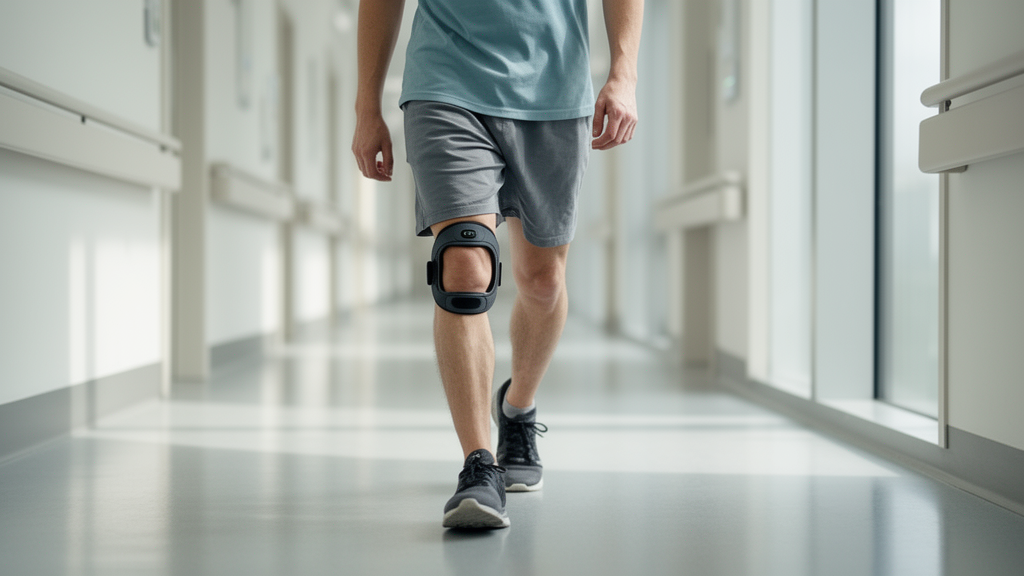
Semi-implantable functional electrical stimulation of the peroneal nerve continues to improve walking speed in people with central drop foot nearly ten years after implantation, according to research evaluating long-term patient outcomes. The therapeutic approach addresses movement impairments that typically arise from conditions such as stroke and multiple sclerosis.
Prior clinical evaluations had confirmed that the semi-implantable system provides an effective therapy to enhance mobility and retain efficacy up to one year following surgical implantation. However, clinicians and researchers previously lacked comprehensive evidence regarding whether the functional benefits would persist over an extended operational period beyond that initial twelve-month post-surgical window.
To investigate the long-term durability of the therapy, investigators conducted an extended follow-up assessment of a cohort of 45 patients who had previously demonstrated verified functional improvements at the one-year mark. The evaluation examined clinical outcomes across an average duration of 8.5 years post-implantation. Researchers tracked maximum gait velocity and comfortable walking speed while also administering the Short Form 36 questionnaire to monitor changes in general health-related quality of life.
At the extended follow-up milestone, patients walked significantly faster with electrical stimulation switched on compared to when stimulation was switched off. The statistical evaluation showed that the performance gap between the active and inactive device states was highly significant for both maximum gait velocity and comfortable pace.
When analyzing maximum walking velocity across time, the researchers observed significant main effects for both the stimulation state and the evaluation intervals, which spanned one day, three months, one year, and the extended period. Walking was consistently faster whenever the stimulation was active, and patient responsiveness to the nerve stimulation did not degrade across the years. Furthermore, the beneficial effect of active stimulation remained statistically significant even after adjusting the statistical models for participant age and baseline paresis severity.
Measurements of comfortable walking pace demonstrated that only the main effect of stimulation reached statistical significance, accompanied by an interaction between stimulation and patient age. Although younger individuals in the cohort exhibited larger absolute effects from stimulation, the overall magnitude of the stimulation-induced speed difference did not display a significant linear correlation with age across the entire patient group.
Assessments of patient-reported quality of life showed an initial improvement after implantation that was subsequently followed by a gradual reduction over the subsequent years. Despite this decrease, the cohort maintained a remaining trend toward a higher quality of life at the extended 8.5-year evaluation compared to their initial baseline scores. The authors noted that this gradual decline likely mirrors general age-related challenges and the ongoing development of comorbid medical conditions among aging patients.
The study authors concluded that semi-implantable functional electrical stimulation of the peroneal nerve continues to deliver effective clinical support for central drop foot nearly a decade after device implantation. By demonstrating persistent motor gains without an attenuation of the stimulation response over time, the long-term findings indicate that the semi-implantable neuroprosthetic system represents a viable, life-long intervention for individuals managing chronic gait instability.
Subject of Research: Long-term efficacy of semi-implantable peroneal nerve stimulation for central drop foot
Article Title: Semi-implantable peroneal nerve stimulation is a life-long treatment for central drop foot
Article References: Sweeney-Reed, C. M., Tonchev, N., Sarshar, P., Hausmann, J., Deliano, M., & Buentjen, L. (2026). Semi-implantable peroneal nerve stimulation is a life-long treatment for central drop foot. Journal of NeuroEngineering and Rehabilitation. https://doi.org/10.1186/s12984-026-02218-w
Image Credits: AI Generated
DOI: 10.1186/s12984-026-02218-w
Keywords: central drop foot, peroneal nerve, functional electrical stimulation, gait velocity, stroke, multiple sclerosis, semi-implantable neuroprosthetics, walking speed, fall prevention, gait rehabilitation, paresis, Short Form 36, long-term follow-up, nerve stimulation, motor rehabilitation, quality of life
News Source: Ophelia Keating. (November 20, 2026). Nerve stimulation aids walking nearly a decade after drop foot surgery. Scienmag.