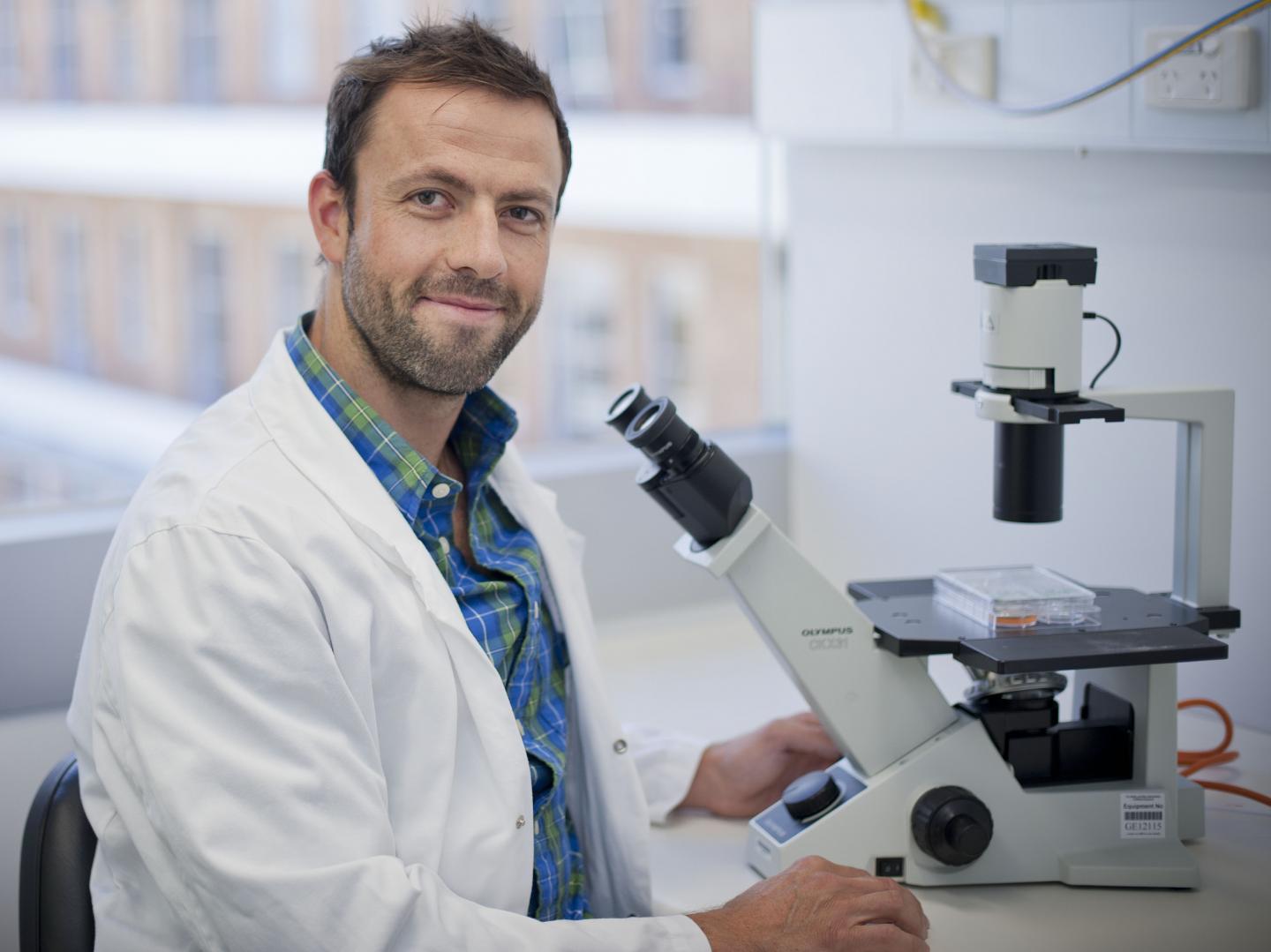
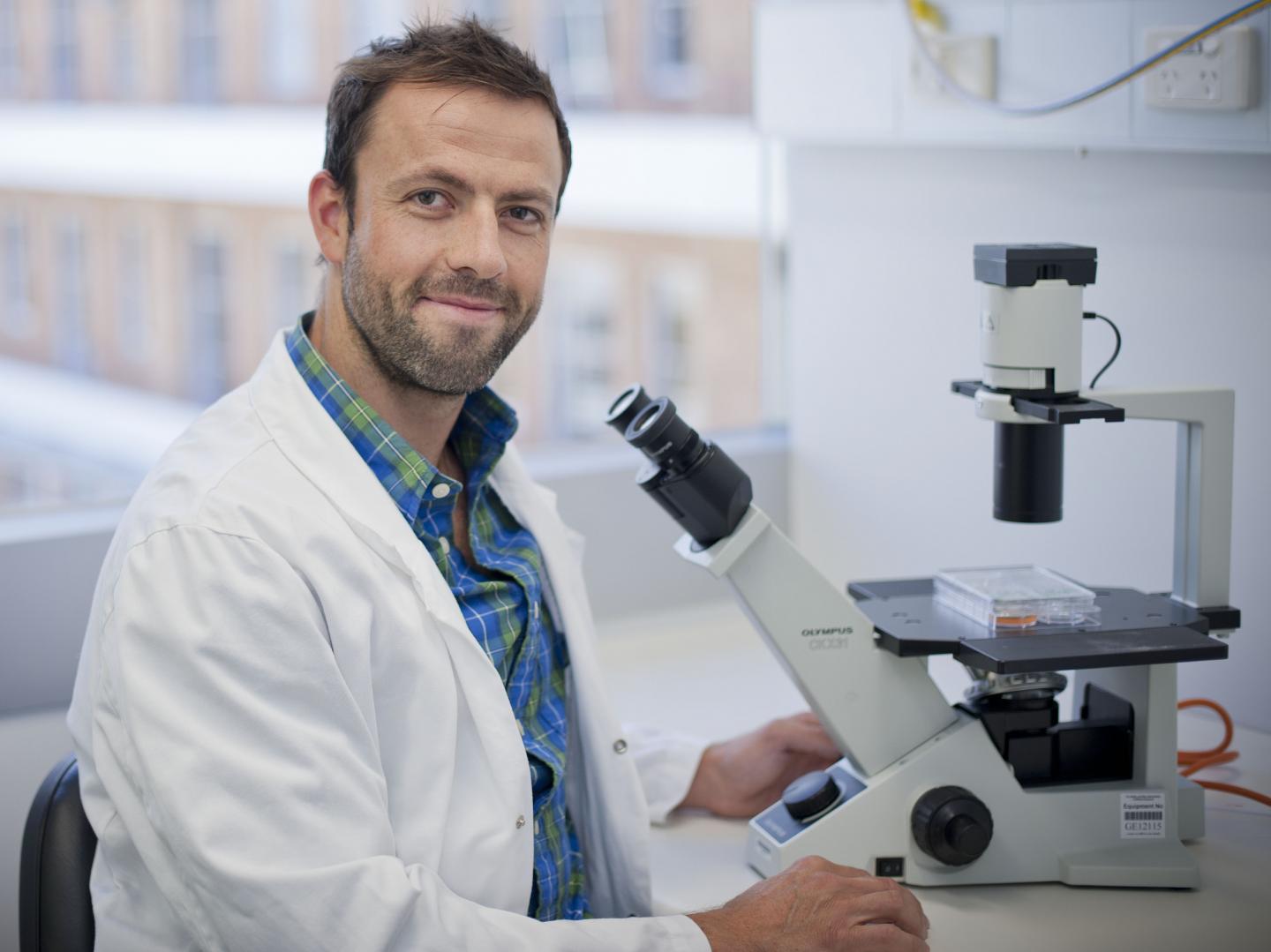
Credit: Walter and Eliza Hall Institute of Medical Research
A team of researchers from Australia and France have uncovered new insights into how to prolong the lifespan of the body's disease-fighting natural killer (NK) cells.
The finding offers fresh clues about how best to harness NK cells to improve their disease-fighting function. This may have particular importance for cancer immunotherapy, 'buying more time' for NK cells to detect and destroy cancer cells.
The Melbourne team led by Dr Nick Huntington from the Walter and Eliza Hall Institute along with collaborators from Centre of Immunology in France, Professor Eric Vivier and Professor Sophie Ugolini, made the discovery by investigating factors that control NK cell function. The research was published this month in The Journal of Experimental Medicine.
Dr Huntington said the research revealed that a protein called BCL-2 was particularly important for controlling the reservoir of NK cells in our body. BCL-2 is a so-called 'pro-survival' protein that makes normal immune cells survive for extended periods.
"We have been very interested in understanding which factors control the lifespan of NK cells," Dr Huntington said. "We had previously identified a protein related to BCL-2, called MCL-1, which was critically required for all NK cell survival. This new study now shows that BCL-2 "teams up" with MCL-1 and both these proteins crucially determine NK cell survival in our body, and the majority of NK cells died following a reduction in the levels of BCL-2.
"Importantly, we were able to prevent NK cell death when BCL-2 levels were low by using a hormone-like protein or cytokine called IL-15. Boosting NK cell numbers by treating them with IL-15 may be a valuable new approach to boosting our immunity to viral infections or cancer. On the flipside, targeting this growth factor or BCL-2 could reduce NK cell numbers and offer potential therapies for immune disorders such as some types of autoimmune diseases, sepsis or graft versus host disease, a side effect of bone marrow transplants.
The team's research also identified that NK cells may be vulnerable to new medicines that inhibit BCL-2, which are also becoming widely tested as anti-cancer treatments.
"Our research has identified that adding cytokines could be a novel way to protect NK cells from the effect of BCL-2 inhibitors, maintaining healthy NK cell numbers in people undergoing cancer therapy," Dr Huntington said.
###
The research at the Walter and Eliza Hall Institute of Medical Research was supported by the National Health and Medical Research Council, the Harry J. Lloyd Charitable Trust, the Cancer Research Institute, Cancer Council Victoria, the Australian Research Council, the Leukemia and Lymphoma Society (US), the Menzies Foundation and the Victorian Government.
The Walter and Eliza Hall Institute is the research powerhouse of the Victorian Comprehensive Cancer Centre, an alliance of leading Victorian hospitals and research centres committed to controlling cancer.
For further information:
P: +61 475 751 811
E: [email protected]
Media Contact
Media Team
[email protected]
61-475-751-811
@WEHI_research