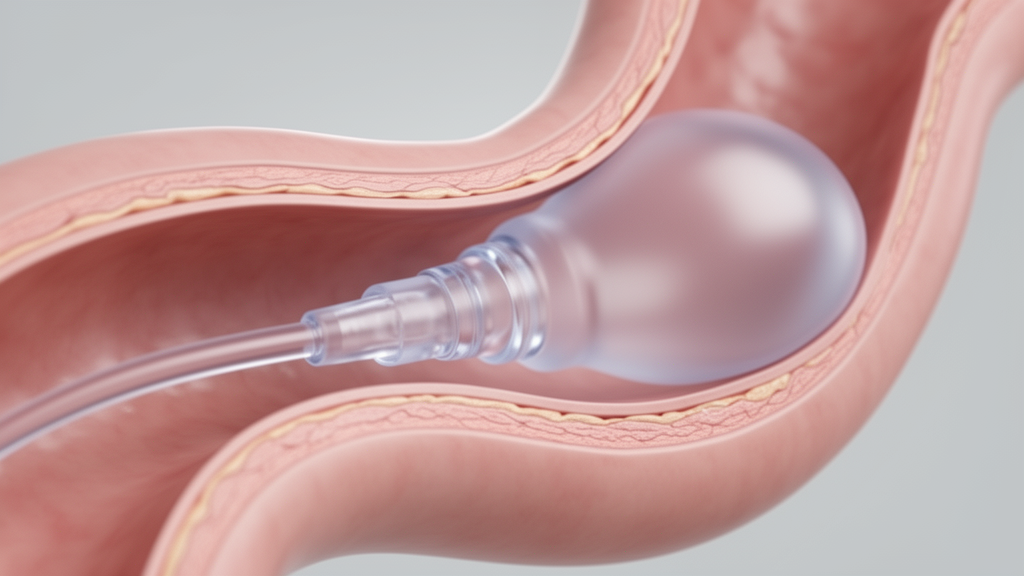
A single-center retrospective study has detailed the diagnosis and management of rare esophageal perforations occurring during gastroscopy-guided balloon dilation for pediatric esophageal stenosis. Researchers reviewed clinical records covering procedural interventions performed between 2017 and 2024 to identify how often the severe complication arose and how affected children were subsequently treated.
Across the seven-year observation window, clinicians administered a total of 1635 balloon dilation procedures for esophageal narrowing. During these interventions, medical staff recorded four separate episodes of esophageal perforation. This established a procedure-level complication incidence of 0.24 percent, underscoring that while esophageal perforation represents a serious medical event, it remains an infrequent occurrence in pediatric endoscopic practice.
The four affected patients comprised one male and three females who ranged in age from 3 to 16 months at the time of injury. Investigators documented varied underlying etiologies responsible for the initial esophageal stenosis across the cohort, identifying anastomotic stenosis following repair of esophageal atresia in two cases, congenital esophageal stenosis in one infant, and corrosive esophageal stenosis in another.
Prior to the onset of perforation, all four pediatric patients had undergone between two and three guidewire-assisted balloon dilation sessions. Following the identification of structural tearing, medical teams instituted prompt individualized interventions rather than relying on a uniform treatment approach. The specific therapeutic strategies selected by the clinicians included emergency endoscopic stenting, open thoracic surgical repair, and conservative management combined with stenting.
Alongside mechanical repair and stenting protocols, the treating teams administered standardized supportive medical regimens to protect the children during recovery. These measures paired targeted anti-infection therapy with structured nutritional support. All four infants survived the severe procedural complication, achieving full clinical resolution and discharge after hospital stays spanning between 10 and 30 days.
Subsequent outpatient monitoring over an extended follow-up period extending from 8 to 26 months revealed sustained clinical recovery across all patients. During this surveillance interval, each child underwent four to six additional planned dilation sessions to maintain esophageal patency, ultimately resuming normal oral feeding without persistent functional failure.
The authors emphasized that prompt and accurate diagnosis serves as a critical determinant of clinical outcomes when perforations occur following pediatric balloon dilation. Based on institutional findings, early temporary endoscopic stenting alongside standardized anti-infection therapy and nutritional support proved beneficial for selected cases, offering a pathway that can help shorten disease course.
The investigators cautioned that the small cohort size inherent to a retrospective four-case series prevents drawing definitive conclusions regarding the comparative superiority of different therapeutic modalities. They noted that larger-scale clinical studies remain necessary to establish comparative efficacy among conservative management, stenting, and open surgical repair.
Subject of Research: Diagnosis and treatment of esophageal perforation secondary to pediatric balloon dilation
Article Title: Diagnosis and treatment of esophageal perforation caused by gastroscopy-guided balloon dilation for esophageal stenosis in children
Article References: Yang, Y., Ye, M., Cai, L., Chen, Y., Qi, J., Wang, Z., & Mo, X. (2026). Diagnosis and treatment of esophageal perforation caused by gastroscopy-guided balloon dilation for esophageal stenosis in children. BMC Pediatrics. https://doi.org/10.1186/s12887-026-08058-w
Image Credits: AI Generated
DOI: 10.1186/s12887-026-08058-w
Keywords: esophageal perforation, pediatric gastroenterology, balloon dilation, esophageal stenosis, endoscopic stenting, thoracic surgery, esophageal atresia, congenital esophageal stenosis, corrosive esophageal stenosis, pediatric surgery, endoscopy complications, clinical outcomes, anti-infection therapy, nutritional support, pediatric endoscopy
News Source: Harold Sullivan. (November 20, 2026). Study Reviews Rare Esophageal Perforations From Pediatric Balloon Dilation Procedures. Scienmag.