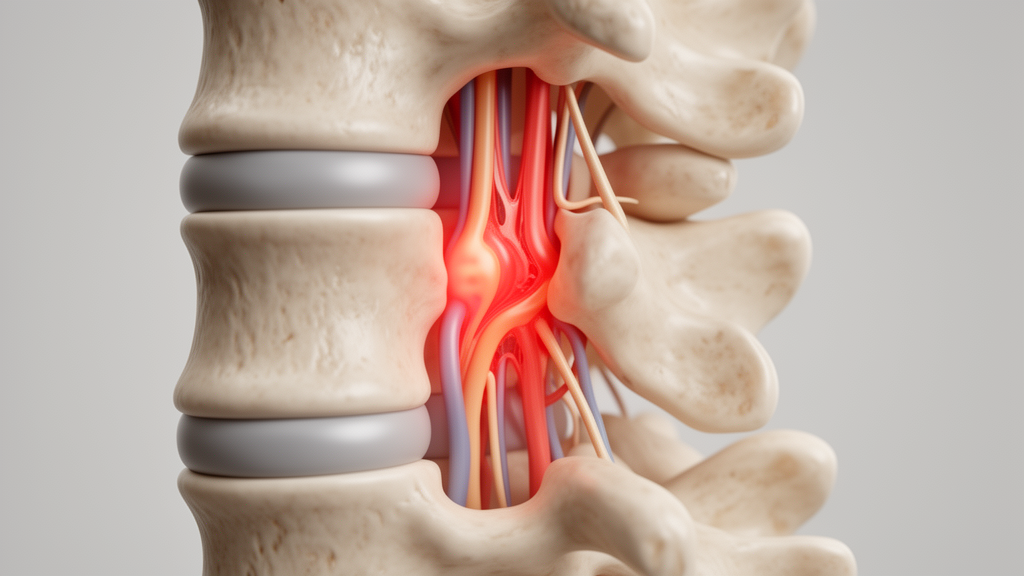
Degenerative lumbar spinal stenosis severity is significantly associated with advancing age, female sex, high body mass index, sedentary habits, joint comorbidities, and occupational physical demands, according to a multicenter cross-sectional evaluation conducted across tertiary healthcare facilities in Pakistan. The investigative team analyzed clinical and imaging records from a cohort of patients seeking care to clarify how lifestyle attributes and baseline medical conditions correlate with anatomical narrowing in the lumbar canal and resultant patient disability.
Degenerative lumbar spinal stenosis represents a major contributor to chronic physical pain, functional limitations, and diminished autonomy among adults. Predisposing factors frequently compound its development and alter how individuals experience daily physical restrictions. To quantify these influences within a regional hospital setting, researchers examined predisposing clinical characteristics alongside imaging data to determine their direct statistical associations with structural disease staging and validated quality-of-life parameters.
The investigation utilized a multicenter cross-sectional framework based in tertiary care facilities across Pakistan’s twin cities, carrying out patient evaluations between November 2024 and January 2025. Employing nonprobability convenience sampling, investigators collected demographic and clinical observations from at least 400 diagnosed individuals through structured face-to-face interviews. Structural spine characteristics were systematically classified using magnetic resonance imaging protocols to evaluate neural canal obstruction.
Standardized measurement protocols included the Pain Disability Index, the Roland Morris Disability Questionnaire, and the 36-Item Short Form Health Survey to objectively record pain-related limitations and health-related quality of life. The analytical workflow processed recorded variables in SPSS software, using chi-square tests to test relationships between categorical risk factors and magnetic resonance grading tiers, maintaining significance thresholds at p values below 0.05.
Among evaluated participants, degenerative lumbar spinal stenosis was confirmed in 62.3 percent, with 50.25 percent reporting sedentary routines. Osteoarthritis emerged as the leading medical comorbidity, documented in 25.5 percent of participants. Weight assessments revealed obesity in 32.3 percent of the patient group, while overall overweight or obese classifications encompassed 50.8 percent of those evaluated during clinical intake.
Magnetic resonance imaging revealed moderate spinal canal obstruction, designated as grade two, as the single most prevalent anatomical finding at 42.0 percent. Minor stenosis, or grade one, was identified in 23.3 percent of cases, whereas serious stenosis, designated as grade three, appeared in 22.8 percent of imaging profiles. These classifications established the structural spectrum of narrowing across the surveyed clinical cohort.
Physical impact assessments demonstrated a mean Pain Disability Index score of 29.00 with a standard deviation of 13.85. The Roland Morris Disability Questionnaire yielded an average raw score of 12.72 with a standard deviation of 2.31, representing a calculated mean disability index of 51.11 percent with a standard deviation of 9.62 percent. Short Form Health Survey findings registered marked reductions in functional capacity, displaying physical role limitations averaging 52.68 with a standard deviation of 12.69 and emotional role limitations averaging 49.75 with a standard deviation of 25.89.
Statistical testing confirmed that severe lumbar stenosis was significantly associated with older age, female gender, physical inactivity, osteoarthritis, obesity, and work profiles involving sustained sitting or heavy lifting routines. Furthermore, higher pain-related disability correlated with reduced physical functioning at a coefficient of 0.259 and poorer emotional well-being at a negative correlation coefficient of minus 0.220, highlighting the functional burden documented in this clinical population.
Subject of Research: Predisposing risk factors and disease severity in degenerative lumbar spinal stenosis
Article Title: Association of predisposing risk factors with disease severity and quality of life in degenerative lumbar spinal stenosis (DLSS): a multicenter cross-sectional study from Pakistan
Article References: Khan, K. S., Khan, A., Khan, A., Khan, M. N., Kanwal, H., & Mushtaq, S. (2026). Association of predisposing risk factors with disease severity and quality of life in degenerative lumbar spinal stenosis (DLSS): a multicenter cross-sectional study from Pakistan. BMC Health Services Research. https://doi.org/10.1186/s12913-026-16129-y
Image Credits: AI Generated
DOI: 10.1186/s12913-026-16129-y
Keywords: degenerative lumbar spinal stenosis, lumbar stenosis, cross-sectional study, magnetic resonance imaging, Pain Disability Index, Roland Morris Disability Questionnaire, SF-36, quality of life, physical functioning, osteoarthritis, obesity, sedentary lifestyle, occupational risk factors, Pakistan twin cities, tertiary care, disease severity
News Source: Ophelia Keating. (November 20, 2026). Cross-Sectional Study Identifies Predisposing Risk Factors Linked to Lumbar Stenosis Severity. Scienmag.