Mesenchymal stem cells have emerged as promising therapeutic agents in regenerative medicine, with their therapeutic effects increasingly attributed to intercellular communication and microenvironmental regulation rather than long-term engraftment or direct tissue replacement, according to a scientific review published in Biology Direct. Among these diverse intercellular mechanisms, mitochondrial transfer represents a specialized form of organelle-mediated intercellular communication through which cells exchange intact mitochondria or mitochondria-associated cargo.
Mesenchymal stem cells are recognized as prominent candidate donors in this biological exchange because of their active responsiveness to injury-associated cues, their regulated mitochondrial trafficking, and their established paracrine and immunomodulatory properties. However, mitochondrial transfer is not a capability unique to mesenchymal stem cells, and the movement of organelles may be bidirectional or multidirectional across interacting cells rather than a simple one-way delivery pathway.
Furthermore, the authors note that mitochondrial transfer is not invariably beneficial for recipient cells. The physiological consequences of organelle donation depend directly on the specific functional states of both donor and recipient cells, leading to complex biological outcomes that may range from the preservation of physiological homeostasis and active tissue repair to adverse, maladaptive cellular responses.
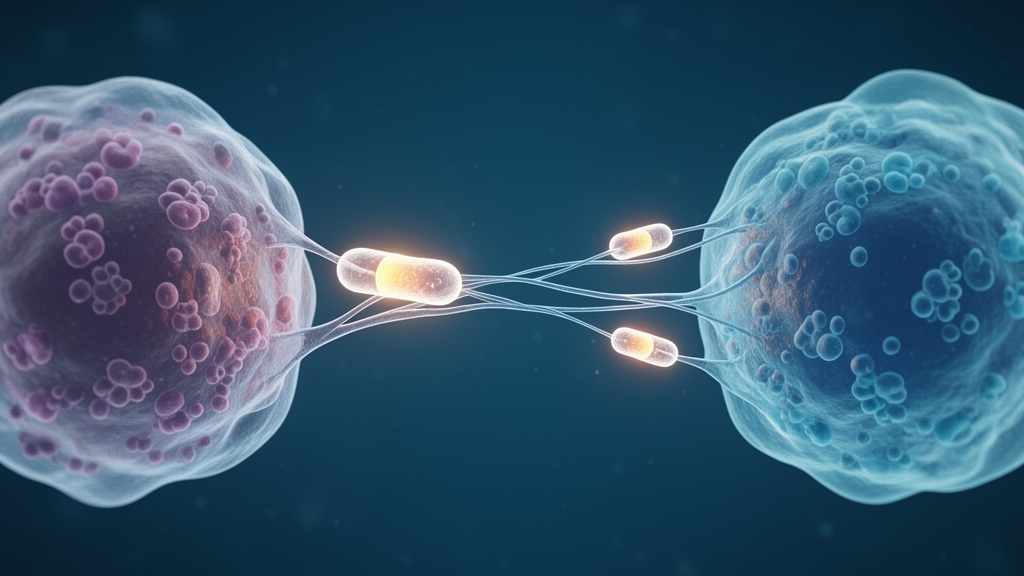
In their synthesis of the literature, the authors summarize the molecular mechanisms that govern mesenchymal stem cell-mediated mitochondrial transfer, placing particular emphasis on injury sensing, recipient-cell selectivity, and mitochondrial quality control. The review compares the primary transfer routes, including tunneling nanotube-mediated trafficking, extracellular vesicle-associated delivery, direct cellular uptake of extracellular or isolated mitochondria, and cell fusion, while underscoring the specific mechanistic features and evidentiary limitations that characterize each pathway.
Once transferred into recipient targets, intact mitochondria and mitochondria-associated cargos actively regulate fundamental cellular processes, including cellular bioenergetics, redox homeostasis, and immunometabolic states. The review evaluates the therapeutic implications of these cellular modifications across diverse disease contexts, examining potential applications in cases of acute tissue injury, chronic inflammatory disorders, and systemic metabolic dysfunction.
The authors also critically examine the extent to which current experimental evidence can distinguish the discrete contributions of mitochondrial transfer from the broader therapeutic effects mediated by mesenchymal stem cells. In particular, existing studies must carefully separate organelle donation from concurrent paracrine signaling and systemic immunomodulation to determine the precise therapeutic drivers within treated tissues.
Finally, the review details the practical considerations and technical benchmarks required to transition these biological mechanisms into precision mitochondrial therapy. Clinical translation will depend on developing targeted strategies to enhance transfer efficiency, establishing rigorous criteria for mitochondrial quality and potency, creating precision delivery platforms, and successfully addressing major manufacturing and biosafety challenges.
Subject of Research: Mesenchymal stem cell-mediated mitochondrial transfer and precision therapy
Article Title: Mesenchymal stem cell-mediated mitochondrial transfer: from intercellular communication to precision mitochondrial therapy
Article References: Zhou, Z., Li, W., Fang, J., Melino, G., Shi, Y., & Cao, L. (2026). Mesenchymal stem cell-mediated mitochondrial transfer: from intercellular communication to precision mitochondrial therapy. Biology Direct. https://doi.org/10.1186/s13062-026-01072-z
Image Credits: AI Generated
DOI: 10.1186/s13062-026-01072-z
Keywords: mesenchymal stem cells, mitochondrial transfer, regenerative medicine, intercellular communication, tunneling nanotubes, extracellular vesicles, cell fusion, mitochondrial quality control, cellular bioenergetics, redox homeostasis, immunometabolic regulation, tissue repair, inflammatory disorders, metabolic dysfunction, precision delivery platforms, paracrine signaling
News Source: Drew Townsend. (November 20, 2026). Mesenchymal Stem Cell Mitochondrial Transfer Effects Range From Repair to Maladaptive Responses. Scienmag.