• HOME
  • NEWS
  • EXPLORE
    • CAREER
      • Companies
      • Jobs
    • EVENTS
    • iGEM
      • News
      • Team
    • PHOTOS
    • VIDEO
    • WIKI
  • BLOG
  • COMMUNITY
    • FACEBOOK
    • INSTAGRAM
    • TWITTER
Friday, November 20, 2026
BIOENGINEER.ORG
No Result
View All Result
  • Login
  • HOME
  • NEWS
  • EXPLORE
    • CAREER
      • Companies
      • Jobs
        • Lecturer
        • PhD Studentship
        • Postdoc
        • Research Assistant
    • EVENTS
    • iGEM
      • News
      • Team
    • PHOTOS
    • VIDEO
    • WIKI
  • BLOG
  • COMMUNITY
    • FACEBOOK
    • INSTAGRAM
    • TWITTER
No Result
View All Result
Bioengineer.org
No Result
View All Result
Home NEWS Science News Biology

Specialized Phages Shift Wastewater Plasmids Without Altering Broader Bacterial Communities

by
November 20, 2026
in Biology
Reading Time: 2 mins read
0
Specialized Phages Shift Wastewater Plasmids Without Altering Broader Bacterial Communities

Specialized Phages Shift Wastewater Plasmids Without Altering Broader Bacterial Communities

Share on FacebookShare on TwitterShare on LinkedinShare on RedditShare on Telegram

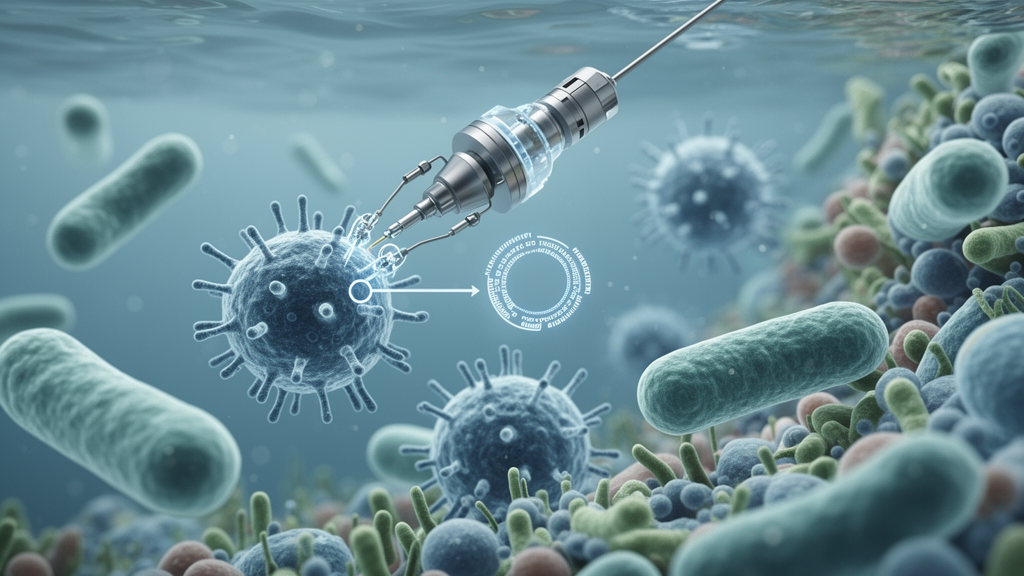
Targeting bacterial mating structures with plasmid-dependent phages induces selective shifts in plasmid populations without altering overall bacterial abundance or taxonomic composition in wastewater microbiomes. Researchers evaluated this biological approach across domestic and hospital wastewater communities to determine whether these specialized viruses could curb conjugative plasmids, which serve as primary drivers for the horizontal dissemination of antibiotic resistance.

Conjugative plasmids facilitate horizontal gene transfer and spread resistance traits, making their persistence in wastewater systems a critical environmental concern. Plasmid-dependent phages specifically infect bacteria carrying these conjugative elements by binding to the mating structures encoded by the plasmids themselves. To assess their real-world impact, investigators tested three distinct phages—PRD1, Lu221, and Hgal1—against wastewater microbiomes using serial cultivation alongside metagenomic sequencing at 24-hour and 48-hour intervals.

In control cultures grown without phage supplementation, microbial communities consistently converged toward assemblages dominated by Enterobacterales. This unhindered progression caused an overall reduction in community diversity, coupled with an enrichment of extended-spectrum beta-lactamase-producing bacteria and conjugative plasmids harboring antibiotic resistance genes.

Introducing the phages yielded mixed survival kinetics depending on the specific viral treatment. Infectious titers remained sustained over time in both cocktail treatments and resident-phage exposures, whereas titers of the phage PRD1 exhibited a steady decline during cultivation. Despite evidence of active viral infection, the phages produced minimal detectable changes in the total abundance of bacteria, broader taxonomic structures, or phenotypic antibiotic resistance levels.

Metagenomic analyses uncovered source-specific and treatment-specific variations restricted primarily to conjugative plasmid systems, particularly within the MPF_F and MPF_T mating-pair formation types. The phage PRD1 triggered transient increases in conjugative plasmids, while resident phages stimulated the enrichment of MPF_F systems specifically in hospital-derived communities.

The observed selective pressures were strictly confined to plasmid-level dynamics and failed to translate into detectable community-wide changes. Researchers concluded that while plasmid-dependent phages actively influence plasmid populations, their evolutionary and ecological effects remain decoupled from broader community outcomes under high-turnover wastewater conditions.

Subject of Research: Plasmid-dependent phage selective pressure on wastewater conjugative plasmids

Article Title: Effect of plasmid-dependent phages on the plasmid load of bacterial communities from domestic and hospital wastewater

Article References: Parra, B., Arriagada-Moreno, V., He, Z., Nesme, J., Smets, B. F., Rivera, D., & Dechesne, A. (2026). Effect of plasmid-dependent phages on the plasmid load of bacterial communities from domestic and hospital wastewater. Microbial Ecology. https://doi.org/10.1007/s00248-026-02896-y

Image Credits: AI Generated

DOI: 10.1007/s00248-026-02896-y

Keywords: microbial ecology, plasmid-dependent phages, conjugative plasmids, antibiotic resistance, horizontal gene transfer, domestic wastewater, hospital wastewater, bacteriophages, metagenomic sequencing, Enterobacterales, ESBL, MPF_F, MPF_T, PRD1, Lu221, Hgal1, wastewater microbiome, bacterial communities

News Source: Morgan Morrow. (November 20, 2026). Specialized Phages Shift Wastewater Plasmids Without Altering Broader Bacterial Communities. Scienmag.


Tags: antibiotic resistancebacterial communitiesbacteriophagesconjugative plasmidsdomestic wastewaterEnterobacteralesESBLHgal1Horizontal gene transferhospital wastewaterLu221metagenomic sequencingMicrobial ecologyMPF_FMPF_Tplasmid-dependent phagesPRD1wastewater microbiome
Share12Tweet7Share2ShareShareShare1

Related Posts

Mammalian Herbivores Exhibit Evolutionary Adaptations Resisting Mammary Cancer Development

Mammalian Herbivores Exhibit Evolutionary Adaptations Resisting Mammary Cancer Development

November 20, 2026
Chitrakoot Ethnobotanical Survey Documents 119 Medicinal Plants Across Indigenous and Saint Communities

Chitrakoot Ethnobotanical Survey Documents 119 Medicinal Plants Across Indigenous and Saint Communities

November 20, 2026

Ancient tRNA-Binding Module Safeguards Translation Fidelity in Human Alanyl-tRNA Synthetase

November 20, 2026

SIRT1 Protein Protects Hypertensive Mouse Hearts by Suppressing Ferroptotic Cell Death

November 20, 2026

POPULAR NEWS

  • Astrocytic GFAP Upregulation Reduces Tau Pathology in Mouse Model of Tauopathy

    Astrocytic GFAP Upregulation Reduces Tau Pathology in Mouse Model of Tauopathy

    29 shares
    Share 12 Tweet 7
  • Acidic Ponds Link to Lower Pathogen Prevalence in Palmate Newts

    29 shares
    Share 12 Tweet 7
  • Early YAP and Beta-Catenin Signaling Links Stomach Infection to Liver Colonization

    29 shares
    Share 12 Tweet 7
  • Cold Storage Preserves Peach Firmness by Triggering RNA Degradation of Expansin Transcripts

    29 shares
    Share 12 Tweet 7

About

We bring you the latest biotechnology news from best research centers and universities around the world. Check our website.

Follow us

Recent News

Bibliometric Study Maps Rapid Growth and Geographic Concentration in AI Traditional Medicine

Mammalian Herbivores Exhibit Evolutionary Adaptations Resisting Mammary Cancer Development

Only 8.4 Percent of Men Perform Monthly Testicular Self-Examinations

Subscribe to Blog via Email

Enter your email address to subscribe to this blog and receive notifications of new posts by email.

Join 89 other subscribers
  • Contact Us

Bioengineer.org © Copyright 2023 All Rights Reserved.

Welcome Back!

Login to your account below

Forgotten Password?

Retrieve your password

Please enter your username or email address to reset your password.

Log In
No Result
View All Result
  • Homepages
    • Home Page 1
    • Home Page 2
  • News
  • National
  • Business
  • Health
  • Lifestyle
  • Science

Bioengineer.org © Copyright 2023 All Rights Reserved.