• HOME
  • NEWS
  • EXPLORE
    • CAREER
      • Companies
      • Jobs
    • EVENTS
    • iGEM
      • News
      • Team
    • PHOTOS
    • VIDEO
    • WIKI
  • BLOG
  • COMMUNITY
    • FACEBOOK
    • INSTAGRAM
    • TWITTER
Saturday, February 7, 2026
BIOENGINEER.ORG
No Result
View All Result
  • Login
  • HOME
  • NEWS
  • EXPLORE
    • CAREER
      • Companies
      • Jobs
        • Lecturer
        • PhD Studentship
        • Postdoc
        • Research Assistant
    • EVENTS
    • iGEM
      • News
      • Team
    • PHOTOS
    • VIDEO
    • WIKI
  • BLOG
  • COMMUNITY
    • FACEBOOK
    • INSTAGRAM
    • TWITTER
  • HOME
  • NEWS
  • EXPLORE
    • CAREER
      • Companies
      • Jobs
        • Lecturer
        • PhD Studentship
        • Postdoc
        • Research Assistant
    • EVENTS
    • iGEM
      • News
      • Team
    • PHOTOS
    • VIDEO
    • WIKI
  • BLOG
  • COMMUNITY
    • FACEBOOK
    • INSTAGRAM
    • TWITTER
No Result
View All Result
Bioengineer.org
No Result
View All Result
Home NEWS Science News Immunology

Skin based immunity secrets revealed

Bioengineer by Bioengineer
February 3, 2015
in Immunology
Reading Time: 2 mins read
0
Share on FacebookShare on TwitterShare on LinkedinShare on RedditShare on Telegram

A team of international scientists has discovered a new mechanism by which immune cells in the skin function act as the body’s ‘border control’, revealing how these cells sense whether lipid or fat-like molecules might indicate the presence of foreign invaders.

The findings could improve how we fight some infections, allergies and auto-immune diseases.
The discovery by researchers from Melbourne, Monash and Harvard Universities and published today in the international journal Nature Immunology, is a fundamental advance in understanding how the immune system functions, particularly within the skin.

Human skin contains an extensive network of immune cells that act as a crucial barrier to infection, but when these immune cells recognise the body’s cells or foods as foreign, they can have unwanted side-effects, such as inflammation and allergies.
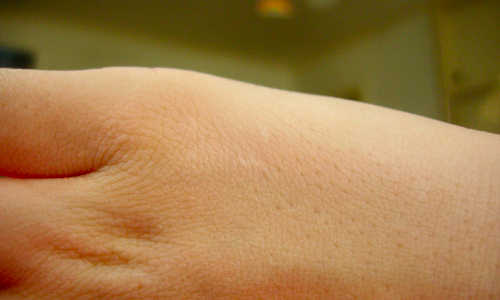
skin

One molecule, termed CD1a, found on these skin based immune cells, plays a key role in this response, by binding to, and displaying, foreign lipid (or fat-like) molecules derived from bacteria, and also lipids from our own cells, for recognition by T lymphocytes within our immune system.

The CD1a molecule behaves as border control staff reading the lipid molecules which act like passports to identify which compounds belong to the body or not.

It is this interaction that has been unravelled by the teams of Professor Dale Godfrey at the University of Melbourne, Professor Jamie Rossjohn, Monash University and Professor Branch Moody from Harvard University.

Even though CD1a was discovered over 30 years ago, and it is known to be involved in immunity to mycobacteria and inflammation following bee stings, how the immune system interacted with these CD1a molecules has been a mystery.

“Lipids are potent stimulators of the immune response and they are produced by pathogens, allergens and our own cells. This work shows that the means by which the immune system detects lipids is very different to the mechanism underlying recognition of proteins” Professor Godfrey from the Peter Doherty Institute for Infection and Immunity at the University of Melbourne said.

Professors Rossjohn and Godfrey, in conjunction with the Australian synchrotron, provided detailed molecular insight into how the immune system engages with complexes of CD1a and lipid molecules.
They defined a completely novel mechanism of immune cell recognition and provided valuable insight into how this part of the immune system operates and how it might be manipulated as a means for enhancing immunity to infection or suppressing immunity associated with allergic reactions.

“By understanding how the human immune system can sense and respond to lipids, we can make them more or less potent by subtly altering their structure,” Professor Rossjohn from Monash University said.

Story Source:

The above story is based on materials provided by University of Melbourne.

Share12Tweet8Share2ShareShareShare2

Related Posts

IMAGE

UMass Amherst grad student awarded fellowship for food allergy research

July 23, 2021
IMAGE

Less-sensitive COVID-19 tests may still achieve optimal results if enough people tested

July 22, 2021

Public trust in CDC, FDA, and Fauci holds steady, survey shows

July 20, 2021

USC study shows male-female differences in immune cell function

July 19, 2021
Please login to join discussion

POPULAR NEWS

  • Robotic Ureteral Reconstruction: A Novel Approach

    Robotic Ureteral Reconstruction: A Novel Approach

    82 shares
    Share 33 Tweet 21
  • Digital Privacy: Health Data Control in Incarceration

    63 shares
    Share 25 Tweet 16
  • Study Reveals Lipid Accumulation in ME/CFS Cells

    57 shares
    Share 23 Tweet 14
  • Breakthrough in RNA Research Accelerates Medical Innovations Timeline

    53 shares
    Share 21 Tweet 13

About

We bring you the latest biotechnology news from best research centers and universities around the world. Check our website.

Follow us

Recent News

Personalized Guide to Understanding and Reducing Chemicals

Inflammasome Protein ASC Drives Pancreatic Cancer Metabolism

Phage-Antibiotic Combo Beats Resistant Peritoneal Infection

Subscribe to Blog via Email

Enter your email address to subscribe to this blog and receive notifications of new posts by email.

Join 73 other subscribers
  • Contact Us

Bioengineer.org © Copyright 2023 All Rights Reserved.

Welcome Back!

Login to your account below

Forgotten Password?

Retrieve your password

Please enter your username or email address to reset your password.

Log In
No Result
View All Result
  • Homepages
    • Home Page 1
    • Home Page 2
  • News
  • National
  • Business
  • Health
  • Lifestyle
  • Science

Bioengineer.org © Copyright 2023 All Rights Reserved.