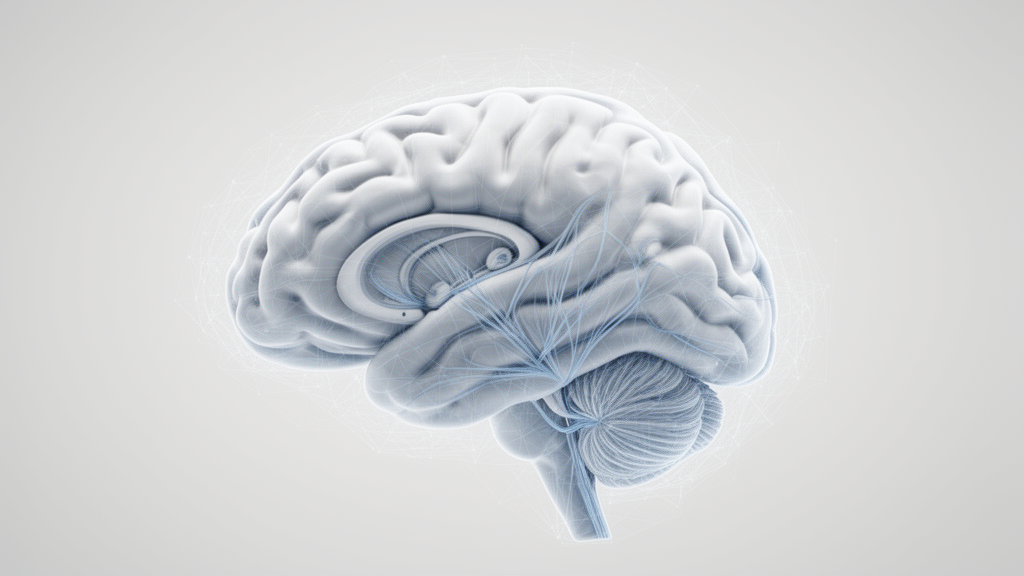
A newly developed neural network framework, FB-CBF Net, achieved an accuracy of 99.05 percent and a mean absolute error of 0.95 in predicting fetal brain age from magnetic resonance imaging scans, according to research published in the International Journal of Computational Intelligence Systems. Developed by researchers S. Mary Cynthia and R. Praveena, the computational system was engineered to estimate fetal gestational age based on patterns of cerebral cortical sulcation.
Accurate estimation of fetal gestational age remains vital for tracking fetal neurodevelopment and identifying potential abnormalities throughout pregnancy. Although ultrasound-based biometry is routinely employed during prenatal assessments, the technique becomes notably less reliable during later gestation and in pregnancies complicated by fetal growth restriction, which restricts the capacity to perform accurate assessments of fetal brain maturity.
To overcome these diagnostic constraints, the research team designed FB-CBF Net to analyze T2-weighted magnetic resonance imaging data. The processing pipeline begins with the application of a Retinex Bilateral (REB) filter to raw scans. This filtering mechanism enhances overall image quality by improving visual contrast while preserving essential anatomical boundaries and structures necessary for subsequent developmental evaluation.
Following the image enhancement stage, the system utilizes the Swin U-Net architecture to perform automated segmentation of fetal brain regions. By segmenting these anatomical targets, the network preserves subtle and fine cortical patterns directly correlated with progressive neurodevelopmental milestones across gestation.
For biomarker extraction, the architecture incorporates a bidirectional attention-based feature pyramid network, designated BHA-FPN. This network extracts specific cortical biomarkers from the segmented brain volumes, including quantitative metrics representing sulcal depth, cortical thickness, and gray-to-white matter signal intensity.
To refine the extracted information and eliminate feature redundancy, the authors applied the Cuckoo Catfish Optimization (CCO) algorithm. This optimization step filters the multidimensional dataset to select only the most discriminative cortical features prior to developmental classification.
The resulting optimized feature subset is subsequently routed into a fully connected layer (FCL). This layer classifies fetal brains into distinct gestational age stages associated with structural landmarks, including the Parieto-Occipital Sulcus, Calcarine Sulcus, Central Sulcus, Superior Temporal Sulcus, and Pre-and Post-Central Sulcus.
The bidirectional attention-based feature pyramid network was developed and evaluated using T2-weighted magnetic resonance images from 659 fetal brains. In experimental evaluations, FB-CBF Net improved overall prediction accuracy by 11.29 percent compared to MTSE U-Net, by 4.98 percent compared to BAPNet, by 3.97 percent compared to an attention-guided convolutional neural network, and by 1.24 percent compared to ResNet-50.
Subject of Research: Fetal gestational age estimation from MRI using deep learning
Article Title: FB-CBF Net: Fetal Brain Maturity Based Gestational Age Estimation using Cuckoo Catfish Optimized Bidirectional Feature Pyramid Network
Article References: Cynthia, S. M., & Praveena, R. (2026). FB-CBF Net: Fetal Brain Maturity Based Gestational Age Estimation using Cuckoo Catfish Optimized Bidirectional Feature Pyramid Network. International Journal of Computational Intelligence Systems. https://doi.org/10.1007/s44196-026-01605-4
Image Credits: AI Generated
DOI: 10.1007/s44196-026-01605-4
Keywords: fetal gestational age, gestational age estimation, fetal brain maturity, FB-CBF Net, magnetic resonance imaging, T2-weighted MRI, cerebral cortical sulcation, Retinex Bilateral filter, Swin U-Net, bidirectional feature pyramid network, cortical biomarkers, Cuckoo Catfish Optimization, sulcal depth, cortical thickness, neurodevelopment monitoring, parieto-occipital sulcus
News Source: Cassandra Pierce. (November 19, 2026). FB-CBF Net Accurately Estimates Fetal Gestational Age Using Brain MRI Scans. Scienmag.