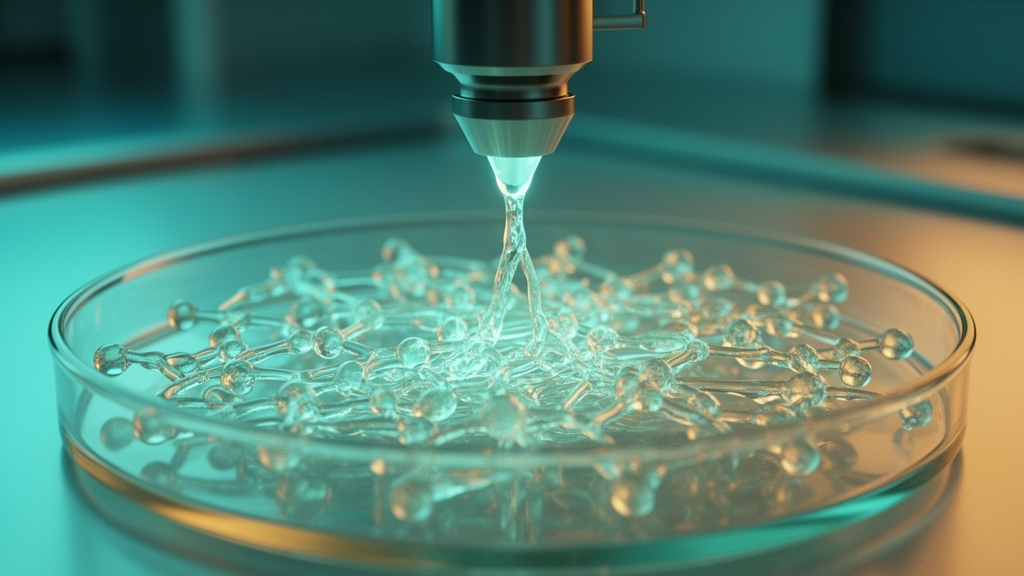
Chemical modification of polymers has emerged as a central approach to creating bioinks with tunable physicochemical and biological characteristics for tissue engineering and regenerative medicine applications. According to a review published in the Journal of Materials Science, functionalizing polymer networks enables researchers to tailor material properties to meet the precise technical requirements of bioprinting workflows. The authors synthesize recent advances showing how targeted chemical modifications directly enhance crosslinking efficiency, structural fidelity, mechanical stability, and rheological behavior during construct fabrication.
Special emphasis is placed on modifications that improve bioactivity. Such modifications include the incorporation of cell-adhesive ligands. They also include the incorporation of degradation-controlling moieties. The authors also highlight the development of stimuli-responsive polymers that introduce dynamic features into bioprinted systems, enabling constructs to actively adapt to environmental cues including pH variations, ambient temperature shifts, and light exposure.
To assess current bioprinting strategies, the review provides a comparative evaluation of widely adopted modified polymers, specifically focusing on gelatin methacrylate, alginate derivatives, and polyethylene glycol-based systems. This comparative analysis examines the distinct functional strengths and application-specific constraints of each chemical platform.
Despite significant technical progress, the authors report that translational hurdles persist in the widespread adoption of chemically modified bioinks. Practical deployment requires addressing fundamental biocompatibility issues, navigation of regulatory frameworks, and the establishment of scalable manufacturing processes for clinical applications. Looking forward, the review identifies machine learning-guided polymer design and smart material integration as key prospective methods to optimize polymer functionalization and advance patient-specific therapies.
Collectively, this work delivers a comprehensive overview tracing the evolution of polymer functionalization in bioprinting from foundational chemistry to intelligent bioinks.
Subject of Research: Chemical functionalization of polymers for advanced bioprinting bioinks
Article Title: Evolution of polymer functionalization in bioprinting: from foundational chemistry to intelligent bioinks
Article References: Farghaly, T. A., Masaret, G. S., Ebrahim, N. A. A., & Soliman, S. M. A. (2026). Evolution of polymer functionalization in bioprinting: from foundational chemistry to intelligent bioinks. Journal of Materials Science. https://doi.org/10.1007/s10853-026-14107-7
Image Credits: AI Generated
DOI: 10.1007/s10853-026-14107-7
Keywords: bioprinting, bioinks, polymer functionalization, tissue engineering, regenerative medicine, gelatin methacrylate, alginate derivatives, polyethylene glycol, stimuli-responsive polymers, crosslinking efficiency, rheological behavior, mechanical stability, biocompatibility, smart materials, materials science, cell-adhesive ligands
News Source: Gregory Coleman. (November 19, 2026). Review Explores Polymer Functionalization Advances for Tunable Bioinks in Bioprinting. Scienmag.