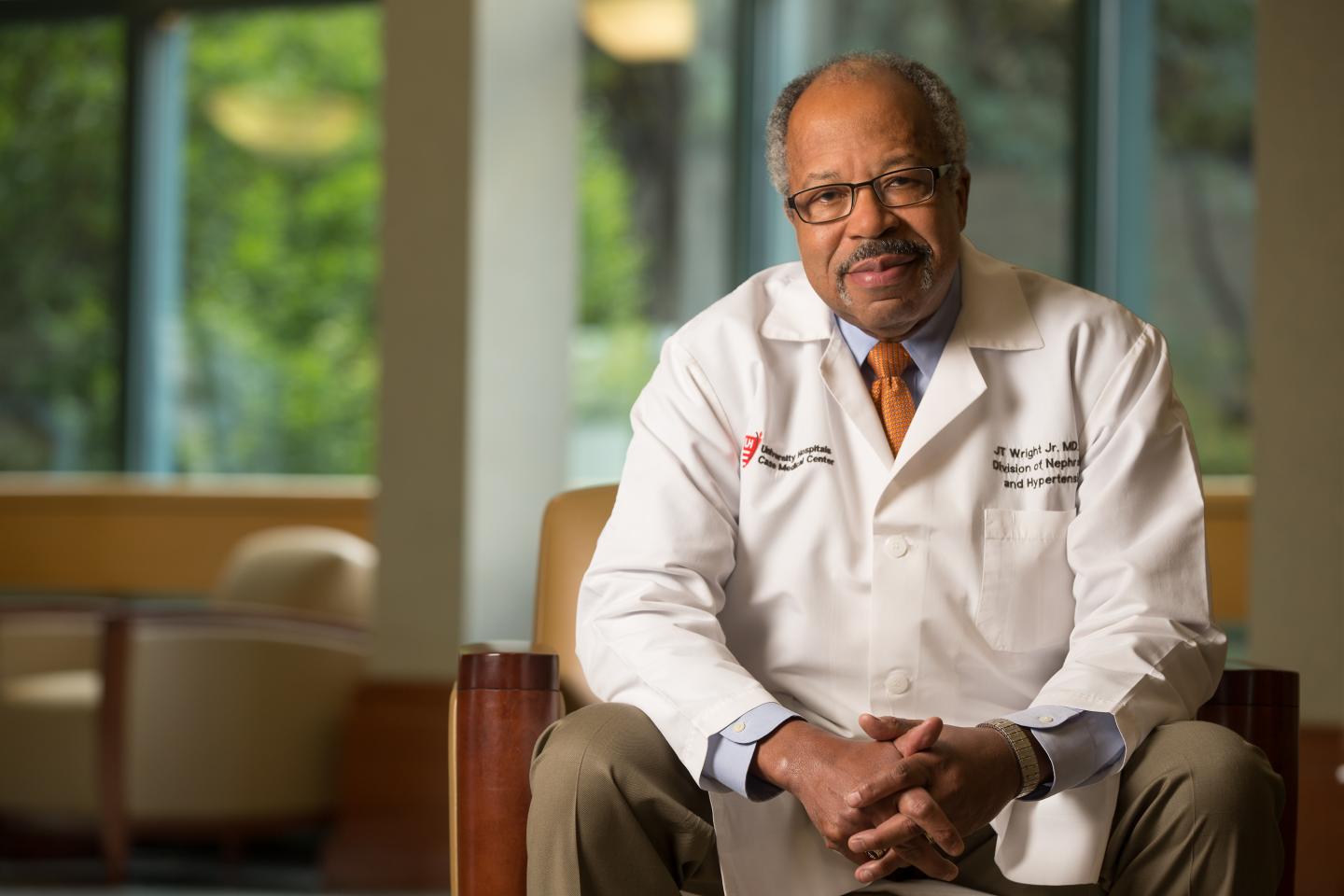
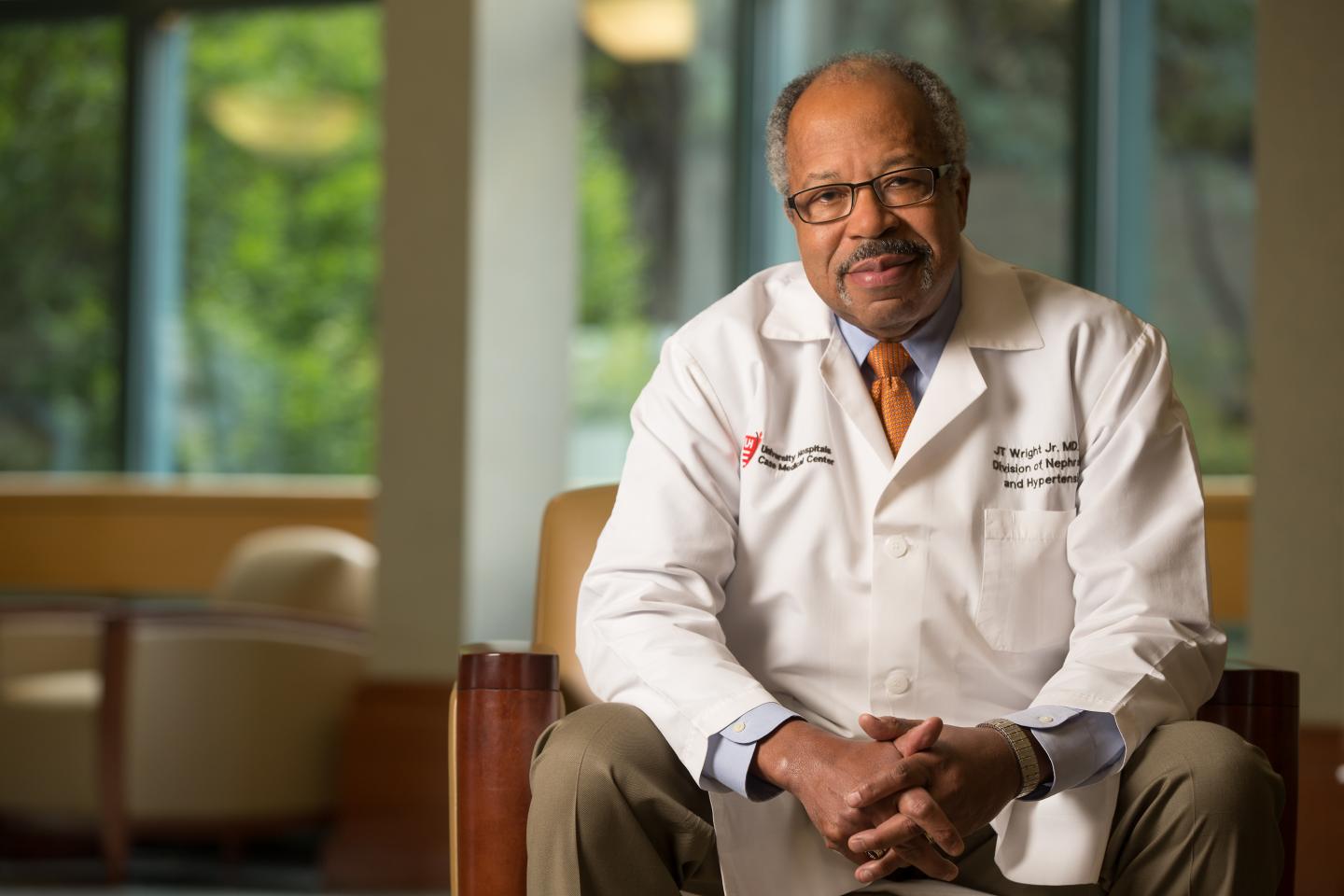
CLEVELAND – Jackson T. Wright Jr., MD, PhD, and researchers from University Hospitals Case Medical Center presented new results from the Systolic Blood Pressure Intervention Trial (SPRINT) showing that in patients at high risk for cardiovascular events, targeting a systolic blood pressure of less than 120 mm Hg resulted in lower rates of fatal and non-fatal major events or death compared to targeting systolic blood pressure to the usually recommended target of less than 140 mm Hg.
The findings presented today at the American Heart Association (AHA) Scientific Sessions in Orlando and published in the New England Journal of Medicine (NEJM) add to the preliminary results from SPRINT announced two months ago. These findings demonstrated intensive management of high blood pressure, below a commonly recommended blood pressure target, significantly reduces rates of cardiovascular disease, and lowers risk of death in a group of adults 50 years and older with high blood pressure.
The SPRINT study, a landmark clinical trial sponsored by the National Institutes of Health, has evaluated the benefits of maintaining a new target for systolic blood pressure, the top number in a blood pressure reading, among a group of patients 50 years and older at increased risk for heart disease or who have kidney disease. University Hospitals Case Medical Center/Case Western Reserve University School of Medicine coordinated one of the five Clinical Center Networks (CCNs) across the country selected to conduct the trial that has recruited more than 9,300 participants.
This blood pressure intervention portion of the trial was stopped 3.26 years into a planned 5-year term as a result of the finding of a 25 percent reduction in the primary cardiovascular outcome and 27 percent reduction of all-cause mortality in those randomized to the lower 120 mm blood pressure target. Specifically, a 38 percent reduction in heart failure and 43 percent reduction in death from heart-related events was found and reported in NEJM.
"What is so groundbreaking about the findings from SPRINT is that we are beginning to determine the most appropriate targets for systolic blood pressure to reduce cardiovascular morbidity and death, especially in a diverse population of older patients without diabetes," said Dr. Wright, lead author and co-principal investigator on the SPRINT trial. Dr. Wright is Director of the Clinical Hypertension Program at UH Case Medical Center and Professor of Medicine at Case Western Reserve School of Medicine and first author on the article.
The study reported about 1-2 percent higher rates of adverse events such as hypotension, syncope, electrolyte abnormalities and acute kidney injury/failures in the group of patients treated to the lower systolic blood pressure target. As a continuation of these findings, SPRINT researchers are proceeding to examine how the lower systolic blood pressure target may impact the incidence of dementia and long-term kidney disease.
In order to achieve the 120 mm target, the findings also noted that an average of one additional medication was required for the lower target with no difference in tolerability even in patients over age 75.
"I cannot predict whether the information presented today will alter the guidelines," said Dr. Wright. "I can however assure that it will certainly create a discussion on the merits of treating hypertensive patients to much lower blood pressure targets than previously recommended."
###
About SPRINT
The SPRINT study, which began in the fall of 2009, includes more than 9,300 participants age 50 and older, recruited from 102 medical centers and clinical practices throughout the United States and Puerto Rico. It is the largest study of its kind to date to examine how maintaining systolic blood pressure at a lower than currently recommended level will impact cardiovascular and kidney diseases. The study is also examining kidney disease, cognitive function, and dementia among the patients; however, those results are still under analysis and are not yet available. NIH stopped the blood pressure intervention earlier than originally planned in order to quickly disseminate the significant preliminary results.
About University Hospitals
University Hospitals, the second largest employer in Northeast Ohio with 25,000 employees, serves the needs of patients through an integrated network of 17 hospitals, 30 outpatient health centers and primary care physician offices in 15 counties. At the core of our $3.5 billion health system is University Hospitals Case Medical Center, ranked among America's 50 best hospitals by U.S. News & World Report in all 12 methodology-ranked specialties. The primary affiliate of Case Western Reserve University School of Medicine, UH Case Medical Center is home to some of the most prestigious clinical and research centers of excellence in the nation, including cancer, pediatrics, women's health, orthopaedics, radiology, neuroscience, cardiology and cardiovascular surgery, digestive health, transplantation and genetics. Its main campus includes UH Rainbow Babies & Children's Hospital, ranked among the top children's hospitals in the nation; UH MacDonald Women's Hospital, Ohio's only hospital for women; and UH Seidman Cancer Center, part of the NCI-designated Case Comprehensive Cancer Center at Case Western Reserve University. For more information, go to http://www.uhhospitals.org