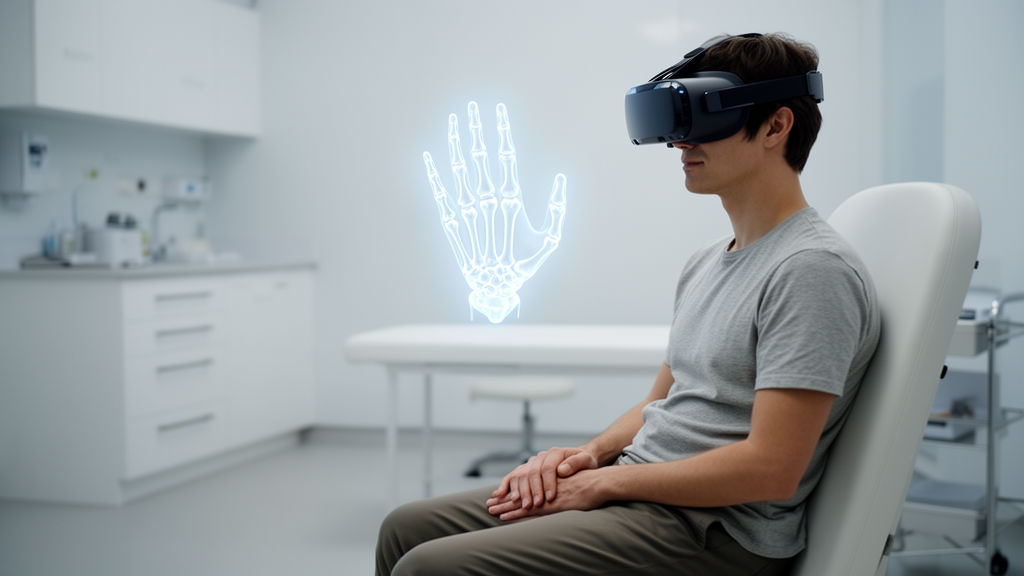
A pilot study has demonstrated that immersive virtual reality scenarios can effectively guide attentional shifts and reduce involuntary motor activity in individuals diagnosed with functional tremor. Researchers observed that manipulating the visual representation of hands within a virtual environment influenced both electrophysiological brain responses and physical hand tremor during motor tasks. The investigation compared nine individuals living with functional tremor against nine healthy matched control participants to assess how distinct virtual hand designs alter attention and motor control.
Functional tremor is clinically characterized by abnormal attention allocation toward the affected body part, making attentional redirection a key target for therapeutic intervention. To explore whether virtual environments could modulate these attentional and emotional states, participants completed experimental hand movement tasks using their less affected hand, while control subjects performed the movements using their non-dominant hand. The experimental design tested two separate visual representations, presenting virtual hands either as realistic models or as abstract skeletal hand depictions.
Investigators tracked multiple outcome measures across the experimental conditions, recording neuronal responses through electroencephalography, tracking participant reaction times, and monitoring muscle activity in the more affected hand via electromyography. The design evaluated whether abstract hand visuals could alter cognitive processing and involuntary tremor expression compared to standard realistic renderings. In particular, the skeletal hand visual model was deployed as a more attention-capturing visual stimulus during the testing protocols.
During a simple button-pressing task, functional tremor patients interacting with the skeletal hand model achieved significantly faster reaction times than when using realistic hand renderings. The electroencephalography recordings revealed that this abstract visual model elicited more pronounced P300 event-related potentials across the patient group, indicating stronger attentional processing. These electrophysiological findings demonstrate that the visual attributes of virtual limbs can directly amplify neural markers associated with attentional focus during active motor execution.
Additional neural differences emerged during a more complex grip task that manipulated the visibility of the resting, more affected hand. When the more affected hand was visually depicted in virtual reality as an inactive, motionless resting hand, the skeletal model induced greater activation within brain hand motor areas compared to scenarios where the inactive hand was omitted from view. Furthermore, following the completion of the grip task with the visible skeletal hand, the patient cohort exhibited stronger active inhibition of motor brain areas than the healthy control cohort.
Importantly, the presence of the visible inactive skeletal resting hand corresponded with an observed reduction in involuntary movements in the resting tremor hand among patients. Alongside these motor and electrophysiological findings, the researchers reported that the virtual reality protocol did not cause adverse side effects such as cybersickness among the participants. The study authors concluded that tailored virtual reality scenarios can modulate attention in functional tremor and may provide a foundation for developing future virtual reality-based interventional strategies.
The comparative testing specifically contrasted visual conditions to determine how abstract limb geometry alters neural and behavioral responses. By presenting skeletal hands rather than realistic models, the experimental protocol sought to modulate both attentional and emotional states during unilateral motor performance. Throughout the complex grip task, depicting the more affected limb as an inactive, motionless resting hand produced marked neurophysiological changes relative to trials where that resting hand was entirely excluded from the virtual scene. Under this visible resting condition, electromyography documented a decrease in involuntary tremor movements within the patient cohort, while electroencephalography recorded heightened activation of hand motor regions alongside more pronounced post-movement active motor inhibition than that observed in healthy control participants.
In addition, the simple button-pressing task confirmed that the attention-capturing skeletal design accelerated reaction times while eliciting elevated P300 event-related potentials in electroencephalography recordings. Because participants experienced no negative side effects such as cybersickness, the pilot findings indicate that tailored virtual environments can successfully guide attentional shifts and provide a viable framework for future interventional strategies.
Subject of Research: Virtual reality modulation of attention and motor activity in functional tremor
Article Title: Virtual reality as a tool to modulate attention and motor activity in functional tremor patients: a pilot study
Article References: Kober, S. E., Pustelnik, V., Berger, L. M., Kern, D., Schneller, M., & Schwingenschuh, P. (2026). Virtual reality as a tool to modulate attention and motor activity in functional tremor patients: a pilot study. Journal of NeuroEngineering and Rehabilitation. https://doi.org/10.1186/s12984-026-02192-3
Image Credits: AI Generated
DOI: 10.1186/s12984-026-02192-3
Keywords: virtual reality, functional tremor, motor activity, attentional allocation, electroencephalography, electromyography, event-related potentials, P300 wave, hand motor areas, motor cortex inhibition, skeletal hand model, involuntary movements, reaction times, cybersickness, pilot study, neurorehabilitation, resting hand visibility
News Source: Ophelia Keating. (November 19, 2026). Virtual Reality Skeletal Hand Models Modulate Attention in Functional Tremor Patients. Scienmag.