Researchers at Ehime University have established a controlled hydrogen reduction method that synthesizes cerium orthoferrite with a phase purity of 99 mol%. The study, published in the journal Inorganic Chemistry, outlines the specific thermal and atmospheric parameters necessary to produce this complex oxide while clarifying the underlying chemical mechanism responsible for its formation. By identifying the precise chemical pathway during reaction, the team resolved longstanding synthetic difficulties that have historically hindered the preparation of pure cerium orthoferrite.
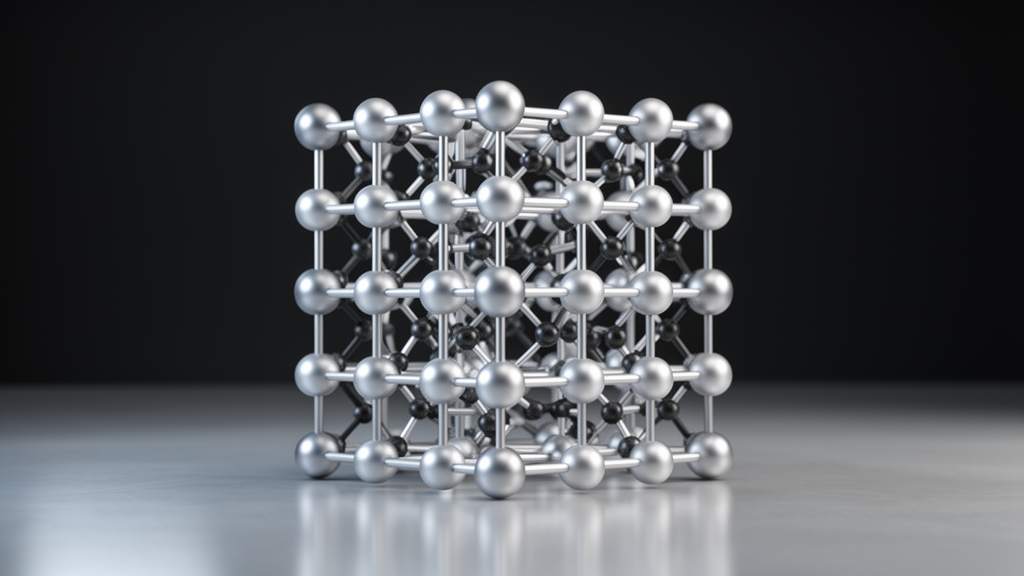
Cerium orthoferrite, designated chemically as CeFeO3, adopts a crystalline perovskite structure that has drawn ongoing interest for potential applications in methane reforming and photocatalytic reactions. Despite these anticipated uses, producing the compound in a pure form has proven difficult under conventional processing techniques. Cerium readily oxidizes to form cerium dioxide, a thermodynamically stable oxide that typically competes with the desired perovskite phase. Consequently, established synthesis routes have faced severe operational hurdles, often requiring prolonged processing times or specialized manufacturing equipment to limit unwanted chemical phases.
To overcome these processing constraints, the investigators examined a direct hydrogen reduction approach using mixed oxide starting materials. The team combined cerium dioxide (CeO2) and iron(III) oxide (Fe2O3), which were subsequently heated within an atmosphere consisting of mixed hydrogen and nitrogen gases. The thermal reduction treatments were carried out at 800 degrees Celsius, equivalent to 1073 Kelvin, for a fixed duration of two hours. During the experiments, the researchers evaluated diverse preparation methods for the starting oxide powders while systematically varying the hydrogen concentration and total gas flow rate.
The experimental setup revealed that reaction outcomes depend strictly on the balance of the reducing atmosphere. When the mixture was treated under a hydrogen concentration of 1.25% at a gas flow rate of 50.0 cubic centimeters per minute, the phase purity of CeFeO3 reached 99 mol%. These quantitative purity values were verified through powder X-ray diffraction and Rietveld refinement analysis. If either the hydrogen concentration or the gas flow rate was increased beyond these thresholds, the excess reducing power drove the reduction of iron species directly into metallic iron, which effectively suppressed the formation of the intended perovskite structure.
The research team tracked reaction dynamics by monitoring hydrogen consumption alongside regular powder X-ray diffraction and X-ray absorption near-edge structure analyses on samples gathered at intermediate stages. These diagnostic tools demonstrated that the conversion proceeds through a stepwise reduction sequence. Initially, iron(III) oxide is reduced to iron(II) oxide, or FeO. This newly generated iron(II) oxide then reacts directly with the surrounding cerium dioxide to yield the final cerium orthoferrite phase. Under overly aggressive reducing parameters, the intermediate FeO reduces further into metallic iron rather than reacting with cerium dioxide, confirming the necessity of maintaining strict atmospheric control.
The study clarifies how carefully tuned hydrogen reduction can yield cerium orthoferrite with high phase purity without resorting to specialized or complex equipment. Nonetheless, the authors noted clear operational limits regarding the scope of their investigation. The research team did not evaluate the catalytic performance of the synthesized material, nor did they determine the overall productivity or scalability of the synthesis process under commercial industrial settings.
By determining the critical gas concentration and flow parameters, the findings establish an experimental baseline for understanding how cerium orthoferrite forms from its constituent oxides. The authors emphasize that these baseline mechanistic insights and controlled synthesis conditions provide an empirical foundation for future studies aiming to evaluate the material properties and prospective chemical applications of cerium orthoferrite.
Subject of Research: Controlled synthesis and formation mechanism of cerium orthoferrite perovskite
Article Title: Successful high-purity synthesis of the challenging-to-produce cerium orthoferrite!
Article References: Successful high-purity synthesis of the challenging-to-produce cerium orthoferrite!. Original publication (Bibliographic details unavailable.)
Image Credits: AI Generated
DOI: Not provided
Keywords: cerium orthoferrite, CeFeO3, perovskite structure, cerium dioxide, iron(III) oxide, iron(II) oxide, hydrogen reduction, gas flow rate, Rietveld refinement, powder X-ray diffraction, X-ray absorption near-edge structure, phase purity, stepwise reduction, methane reforming, photocatalysis, Ehime University, Inorganic Chemistry
News Source: Bethany Barker. (November 19, 2026). Controlled Hydrogen Reduction Yields High Purity Cerium Orthoferrite Perovskite. Scienmag.