Computer vision researchers have developed a compact aerial detection architecture that improves the detection of small and densely clustered road users without expanding the computational footprint of its base model. The design, named AeroDet, modifies the nano-scale YOLOv11n architecture by replacing three internal feature processing modules rather than redesigning the entire detection pipeline. In primary evaluations on a dense aerial traffic dataset collected in Bangladesh, the updated model achieved a mean average precision across intersection-over-union thresholds from 0.50 to 0.95 of 78.3 percent on validation data and 77.5 percent on a held-out test set. These marks represent improvements of 4.5 and 4.4 percentage points over the standard YOLOv11n baseline, respectively, while simultaneously trimming the total parameter count from 2.6 million down to 2.2 million and maintaining a computational cost of 6.4 billion floating-point operations.
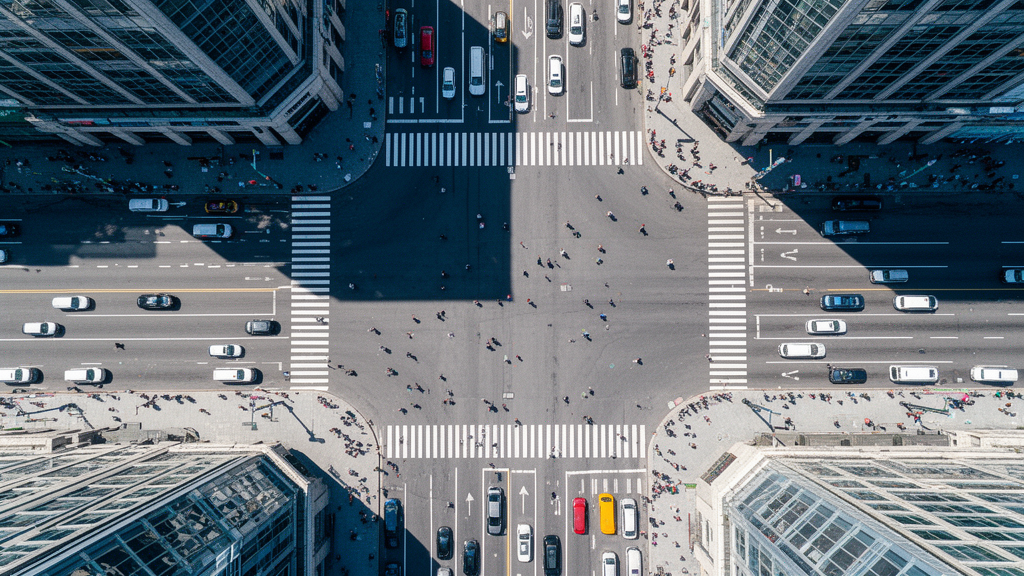
Monitoring road traffic using unmanned aerial vehicles introduces significant observational hurdles that roadside cameras rarely encounter. Drones offer adaptable viewpoints and broad spatial coverage over complex intersections and dynamic corridors, but the resulting imagery captures vehicles and pedestrians across wide scale variations and elevated perspectives. Compact road users frequently occupy only a small cluster of pixels within an image, overlap heavily in congested queues, and show weak boundaries caused by building shadows, variable illumination, and cluttered urban backgrounds. Because downsampling during standard neural network feature extraction risks degrading fragile boundary signals, standard aerial detectors have traditionally relied on larger model backbones, added high-resolution prediction heads, or extensive feature pyramid redesigns. While these broader interventions can lift accuracy, they substantially raise computational demands, posing practical difficulties for resource-constrained edge computing environments.
To investigate whether detection accuracy could be improved strictly through targeted feature refinement, the authors formulated an architectural design that keeps the reference prediction hierarchy, the three-scale detection head, and the training objective completely unchanged. Rather than appending an extra high-resolution processing branch, AeroDet concentrates all structural modifications into three role-specific substitutions positioned across the network backbone and neck. Standard C3k2 convolutional blocks are swapped out for Gated Multi-Range Aggregation units, the standard spatial pyramid pooling block at the deepest stage is replaced with Log-Scale Dilated Pooling, and the subsequent attention mechanism is substituted with Mask-Gated Spatial Attention. This experimental constraint allowed the researchers to isolate whether localized changes to feature transformations alone could enhance small-object representation without enlarging the model budget.
The first core component, Gated Multi-Range Aggregation, replaces the C3k2 blocks distributed throughout the backbone and neck to provide multi-range spatial processing without altering all feature channels simultaneously. The module begins by splitting projected features into an unaltered bypass path and a secondary refinement branch, ensuring that baseline feature information remains intact. Within the refinement stream, gated depthwise convolutions divide channels between standard and dilated branches that are modulated by independent sigmoid gates derived from pre-filter features. A subsequent multi-range convolution partitions features across three separate depthwise paths using 3 by 3, 5 by 5, and 7 by 7 spatial kernels, weighting the outputs with sample-specific Softmax scaling factors. By preserving an unmanipulated bypass while applying multi-kernel refinement across separate channel groups, the module broadens spatial context without continuously transforming delicate local signals.
At the deepest stage of the backbone, where spatial resolution is reduced to a thirty-second of the original input dimensions, the architecture introduces Log-Scale Dilated Pooling to replace the conventional fast spatial pyramid pooling layer. This component is specifically restricted to the lowest-resolution feature representation, preventing expensive contextual dilation from inflating processing costs at shallower levels. The module splits the incoming reduced representation across five parallel, resolution-preserving branches: an identity path, a 3 by 3 local average-pooling path, and three 3 by 3 depthwise convolutions with dilation rates set to 2, 4, and 8. Because each branch operates with stride-one convolutions and padding that maintains spatial dimensions, the geometrically spaced sampling fields expand context across the lowest-resolution feature map before channel concatenation and projection restore the required output width.
Following the dilated pooling stage, the network applies Mask-Gated Spatial Attention in place of the standard C2PSA block to provide global spatial interaction. Full pairwise attention mechanisms typically incur computational costs that scale quadratically with the total number of spatial tokens, making global attention across high-resolution maps computationally prohibitive. AeroDet addresses this challenge by confining pairwise token interactions exclusively to a channel-reduced refinement branch at the stride-32 level, where the token count is smallest. While the projected bypass path remains untouched, the attended tokens within the refinement branch are scaled by a learned, channel-wise sigmoid mask before being added back residually. This structure allows the detector to capture long-range contextual relationships among visually ambiguous objects while strictly regulating the magnitude of the residual update.
The primary dataset used to benchmark the architecture, designated AeroBD, comprises 15,820 aerial images and 393,373 annotated bounding-box instances collected via a DJI Mavic 3 drone across diverse urban roads, intersections, highways, and flyovers in Bangladesh. Unlike standard aerial benchmarks that primarily capture conventional passenger cars, AeroBD reflects heterogeneous regional traffic by including fourteen distinct categories such as compressed-natural-gas three-wheelers, auto rickshaws, easy bikes, rickshaws, and legunas alongside standard cars, buses, trucks, motorcycles, and pedestrians. The images, retained at resolutions of 1280 by 720 and 720 by 720 pixels, average approximately 25 annotated objects per frame, with individual scenes containing up to 193 instances. The dataset was split randomly at the image level using a 7:2:1 ratio into 11,074 training images, 3,164 validation images, and 1,582 test images.
In rigorous validation comparisons against several established architectures, the proposed model delivered competitive overall precision and recall metrics while maintaining lightweight properties. Across the 3,164 validation images, AeroDet achieved an average precision at an intersection-over-union threshold of 0.50 of 94.0 percent, outperforming the YOLOv11n baseline by 2.5 percentage points. Detailed scale-wise evaluations further highlighted the impact of the targeted feature refinement, with small-object average precision rising from 53.5 percent in YOLOv11n to 60.7 percent in AeroDet, a gain of 7.2 percentage points. Performance on medium and large objects also improved by 3.4 and 2.8 percentage points, reaching 83.6 percent and 89.5 percent, respectively. Measured inference speed on a workstation equipped with an NVIDIA RTX 4090 GPU reached 140.4 frames per second at an input resolution of 640 by 640 pixels, compared to 131.1 frames per second for the reference model.
Ablation experiments conducted on the validation set systematically isolated the individual and combined effects of each proposed module under identical training schedules of 300 epochs from random weight initialization. When tested individually against the baseline, Log-Scale Dilated Pooling provided the largest single-component gain, lifting the multi-threshold average precision from 73.8 percent to 77.1 percent. Standalone integration of Gated Multi-Range Aggregation and Mask-Gated Spatial Attention produced scores of 76.8 percent and 76.7 percent, respectively. Combining all three components achieved the peak validation result of 78.3 percent, demonstrating that the full configuration was the most effective arrangement tested. However, because the performance gains from paired modules were not purely additive, the authors noted that the ablation results represent configuration-level improvements rather than evidence of independent statistical synergy.
To verify that the model improvements were not limited to the traffic environment of the primary dataset, the researchers conducted separate external evaluations on the VisDrone-DET2019 and UAVDT benchmark datasets. Models were trained independently from scratch on the specific training partitions of each public benchmark and evaluated on their designated validation sets. On VisDrone-DET2019, which contains dense scenes featuring ten vehicle and pedestrian categories, AeroDet increased multi-threshold average precision from 17.6 percent to 19.7 percent over YOLOv11n, while raising the threshold-50 metric from 31.4 percent to 35.2 percent. On the vehicle-centric UAVDT benchmark, the architecture improved the primary multi-threshold metric from 23.0 percent to 25.9 percent and boosted overall precision from 44.1 percent to 53.1 percent, confirming consistent improvements across differing viewpoints, camera sensors, and annotation schemes.
Despite these measurable gains, the study documented several methodological and operational limitations that define the boundaries of the findings. The primary AeroBD dataset was partitioned using random image-level assignment rather than scene- or video-disjoint splits, meaning source video similarities across data splits cannot be entirely ruled out. Furthermore, annotations were completed by a single annotator without multi-annotator adjudication, and written operational guidelines were not preserved during curation. Category analyses also revealed persistent difficulties: pedestrian detection remained the lowest-scoring class across models, achieving 54.8 percent average precision, and confusion matrices showed slight increases in background false negatives for pedestrians. In extreme-density validation scenes, substantial false negative counts persisted despite reductions in false positives. Additionally, measured throughput figures were gathered exclusively on a high-end desktop GPU, leaving performance, thermal stability, and memory efficiency on embedded drone hardware subject to future empirical validation.
Subject of Research: Lightweight neural network architecture for small object detection in dense aerial traffic imagery
Article Title: AeroDet: lightweight multi-range context and global spatial refinement for dense aerial object detection
Article References: Hasan, M. M., Wang, Z., Sarker, K., Shaha, R., & Hussain, M. A. I. (2026). AeroDet: lightweight multi-range context and global spatial refinement for dense aerial object detection. Journal of King Saud University Computer and Information Sciences, 38(10), Article 1035. https://doi.org/10.1007/s44443-026-01442-7
Image Credits: AI Generated
DOI: 10.1007/s44443-026-01442-7
Keywords: aerial object detection, unmanned aerial vehicles, YOLOv11n, deep learning, computer vision, small object detection, traffic monitoring, dilated convolution, spatial attention, feature refinement, lightweight neural networks, AeroBD dataset, VisDrone, UAVDT, convolutional neural networks, intelligent transportation
News Source: Blake Davidson. (November 19, 2026). Compact Aerial Vision Model Refines Features to Improve Small Object Detection. Scienmag.