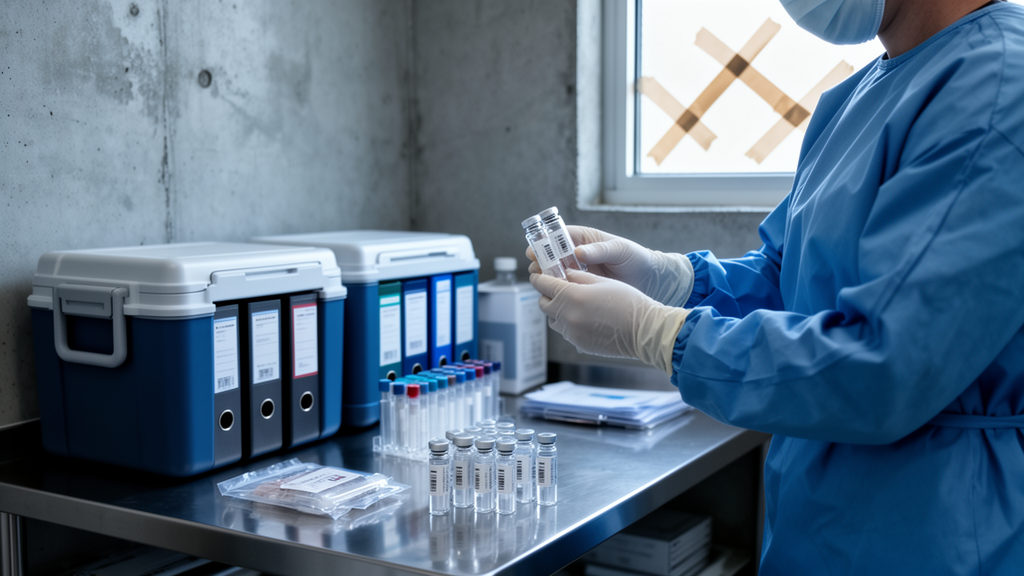
A cohort study in wartime Ukraine successfully accelerated recruitment and maintained high follow-up rates by rapidly adapting its scientific protocol to active conflict conditions, according to findings from the ANCHOR project published in the Journal of Epidemiology and Global Health. The research effort, formally titled Analysis of Network Composition, Health Outcomes, and Resilience, was initiated to evaluate how changes caused by war and displacement influence social networks, HIV risks, and healthcare engagement among sexual minority men. Operating across Kyiv and Lviv, the team demonstrated that introducing flexible research workflows permitted investigators to sustain critical longitudinal public health inquiries even amidst widespread infrastructure destruction and civilian mobility constraints.
Armed conflict in Ukraine began in 2014 and escalated dramatically with the full-scale invasion in 2022, creating profound disruptions across society, including large-scale internal and external migration, physical damage to essential civil infrastructure, movement restrictions affecting men, and substantially curtailed access to regular medical care. Because longitudinal infectious disease research is essential for tracking viral transmission patterns and preventing secondary outbreaks during humanitarian crises, the ANCHOR study was officially launched in November 2024. The investigators set out to examine the intricate intersections of forced displacement, social network reconfiguration, and HIV continuum-of-care retention in this severely compromised operating environment.
To assemble the study population, the researchers employed respondent-driven sampling to recruit sexual minority men in the two metropolitan centers between 2024 and 2026. The initial study design established comprehensive data collection procedures comprising structured behavioral and social network interviews, rapid diagnostic testing for HIV, viral load quantification, and HIV genetic sequencing. For participants diagnosed with HIV, the original protocol planned structured follow-up evaluations at six-month and twelve-month milestones to measure clinical indicators and track ongoing network transitions over time.
In response, the investigative team promptly revised their implementation protocols to incorporate digital screening mechanisms, oral informed consent, remote interviewing channels, video-supported HIV self-testing kits, and decentralized, flexible pathways for biospecimen collection. These operational adjustments directly addressed physical displacement and ongoing threats to participant and staff safety without halting scientific data gathering.
The procedural modifications produced measurable efficiencies, allowing the researchers to complete enrollment of 1,199 sexual minority men in eight months rather than the initially projected eighteen-month timeline. Among all enrolled participants, 87 individuals tested positive for HIV and entered the longitudinal tracking phase of the investigation. Despite the volatile security landscape, the investigators achieved a 94 percent retention rate for behavioral interviews at both the six-month and twelve-month follow-up waves, successfully interviewing 82 of the 87 participants living with HIV at each assessment point.
Longitudinal biospecimen acquisition, while more heavily impacted by displacement, nonetheless yielded vital clinical and genomic samples under the adapted protocols. Investigators successfully gathered biological specimens from 61 of the 87 HIV-positive participants at the six-month follow-up and from 45 of the 87 participants at the twelve-month follow-up.
The study authors concluded that structural flexibility preserved both research integrity and personal safety for field teams and participants during sustained warfare. The researchers noted that the operational lessons gained from ANCHOR can guide future infectious disease investigations in conflict zones and could potentially inform routine disease surveillance systems facing acute societal disruptions.
The integration of behavioral network interviews with viral load monitoring and HIV genetic sequencing provided a multifaceted epidemiological dataset designed to clarify how social connections and healthcare engagement evolve under severe disruption. By preserving the capacity to track both viral transmission dynamics and individual network composition, the adapted methodology demonstrated how longitudinal cohort designs can remain scientifically viable even when physical mobility restrictions and displacement threaten participant retention.
Furthermore, the investigators highlighted that the methodological lessons emerging from the ANCHOR cohort extend beyond active war environments to broader populations experiencing significant barriers to research participation. While decentralized recruitment, remote consenting, and multimodal specimen handling maintained study integrity throughout intense upheaval, the authors emphasized that determining the practical utility of integrating these adaptive mechanisms into routine public health surveillance programs will require dedicated future evaluation.
Subject of Research: Adaptation of longitudinal HIV cohort research protocols during armed conflict in Ukraine
Article Title: Adapting Research Protocols During War: The ANCHOR (Analysis of Network Composition, Health Outcomes, and Resilience) Study
Article References: Filippovych, M., Kovalenko, G., Skaathun, B. P., Wertheim, J. O., Koutsenok, I., Liulchuk, M. G., Friedman, S. R., Smyrnov, P., & Vasylyeva, T. I. (2026). Adapting Research Protocols During War: The ANCHOR (Analysis of Network Composition, Health Outcomes, and Resilience) Study. Journal of Epidemiology and Global Health, 16(1), Article 145. https://doi.org/10.1007/s44197-026-00632-w
Image Credits: AI Generated
DOI: 10.1007/s44197-026-00632-w
Keywords: ANCHOR study, Ukraine conflict, HIV research, infectious disease surveillance, respondent-driven sampling, sexual minority men, protocol adaptation, remote interviews, HIV self-testing, biospecimen collection, viral load testing, molecular epidemiology, cohort study, Kyiv, Lviv, population displacement, public health in conflict, health resilience
News Source: Phoebe Ingram. (November 19, 2026). Adaptive Research Protocols Preserved HIV Cohort Study in Wartime Ukraine. Scienmag.