

• HOME
  • NEWS
  • EXPLORE
    • CAREER
      • Companies
      • Jobs
    • EVENTS
    • iGEM
      • News
      • Team
    • PHOTOS
    • VIDEO
    • WIKI
  • BLOG
  • COMMUNITY
    • FACEBOOK
    • INSTAGRAM
    • TWITTER
Monday, June 29, 2026
BIOENGINEER.ORG
No Result
View All Result
  • Login
  • HOME
  • NEWS
  • EXPLORE
    • CAREER
      • Companies
      • Jobs
        • Lecturer
        • PhD Studentship
        • Postdoc
        • Research Assistant
    • EVENTS
    • iGEM
      • News
      • Team
    • PHOTOS
    • VIDEO
    • WIKI
  • BLOG
  • COMMUNITY
    • FACEBOOK
    • INSTAGRAM
    • TWITTER
  • HOME
  • NEWS
  • EXPLORE
    • CAREER
      • Companies
      • Jobs
        • Lecturer
        • PhD Studentship
        • Postdoc
        • Research Assistant
    • EVENTS
    • iGEM
      • News
      • Team
    • PHOTOS
    • VIDEO
    • WIKI
  • BLOG
  • COMMUNITY
    • FACEBOOK
    • INSTAGRAM
    • TWITTER
No Result
View All Result
Bioengineer.org
No Result
View All Result
Home Headlines

No sex without kiss! Researchers discover how the brain controls sex

Bioengineer.org by Bioengineer.org
January 26, 2018
in Headlines, Health, Science News
Reading Time: 2 mins read
0
Share on FacebookShare on TwitterShare on LinkedinShare on RedditShare on Telegram
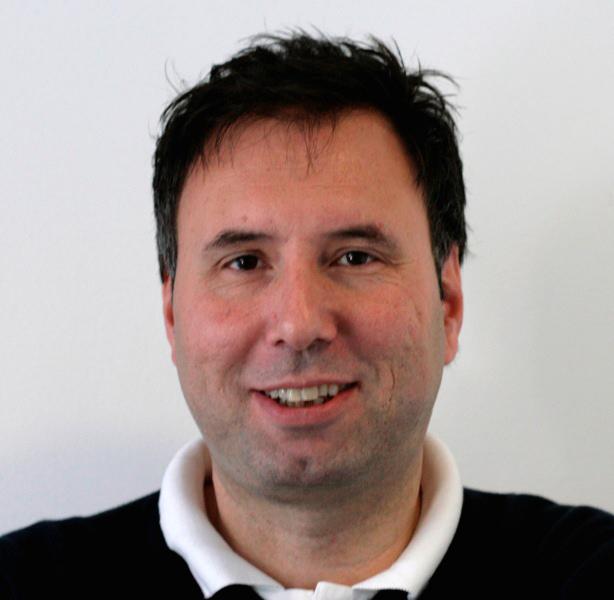
IMAGE

Credit: privat

A research team led by Professor Julie Bakker at Liège University (Belgium) and Professor Ulrich Boehm at Saarland University (Germany) has made a major advancement in our understanding of how the brain controls sex. Their research results are published today in Nature Communications.

Using female mice as a model, the researchers found that a hormone in the brain, (appropriately) called kisspeptin, drives both attraction to the opposite sex and sexual behavior. They discovered that pheromones secreted by the male mouse activate these neurons which, in turn, transmit this signal to another population of neurons (gonadotropin-releasing hormone neurons) to drive attraction to the opposite sex. In parallel, they also transmit this signal to cells that produce the neurotransmitter nitric oxide to trigger sexual behavior.

"This work has provided new insight into how the brain decodes signals from the outside world and then translates these environmental cues into behavior. In many animals, sexual behavior is timed to occur with ovulation to ensure the highest possible chance of fertilization and therefore, continuation of the species. Until now, little was known about how the brain ties together ovulation, attraction and sex. Now we know that a single molecule – kisspeptin- controls all of these aspects through different brain circuits running in parallel with one another", said Ulrich Boehm, Professor of Experimental and Clinical Pharmacology and Toxicology of Saarland University.

Taken together, these findings show that puberty, fertility, attraction and sex are all controlled by a single molecule; kisspeptin. This work opens up new and exciting possibilities for the treatment of patients with psychosexual disorders such as hyposexual desire disorder. "There are currently no good treatments available for women suffering from low sexual desire. The discovery that kisspeptin controls both attraction and sexual desire opens up exciting new possibilities for the development of treatments for low sexual desire", explained Professor Julie Bakker, who is leading the Laboratory of Neuroendocrinology at Liège University.

###

The scientific article "Female sexual behavior in mice is controlled by kisspeptin neurons" was published today in Nature Communications: http://www.nature.com/articles/s41467-017-02797-2

Press picture: http://www.uni-saarland.de/pressefotos

For further information please contact:

Professor Ulrich Boehm
Chair of Experimental Pharmacology
Saarland University
Tel: 49-6851-16-47879
Mail: [email protected]

Professor Julie Bakker
Laboratory of Neuroendocrinology Liège University
Tel: 32-4-366-59-78
Mail: [email protected]

Media Contact

Friederike Meyer zu Tittingdorf
[email protected]
49-681-302-3610
@Saar_Uni

http://www.uni-saarland.de

Original Source

http://www.pzms.uni-saarland.de/index.php/prof-boehm http://dx.doi.org/10.1038/s41467-017-02797-2

Share12Tweet8Share2ShareShareShare2

Related Posts

Tracking Lanthanide-Labeled Microplastics in Plants

June 25, 2026

POSTECH Researchers Slash Cost of Reconstituted Cell-Free Systems by 95%

June 25, 2026

AI and Physics Collaborate to Design Advanced Hydrogen Storage Materials

June 25, 2026

Natural Hallucinogens: Evolution’s Ecological Tools, Not Mere Chemical Byproducts

June 25, 2026
Please login to join discussion

POPULAR NEWS

  • Saying Goodbye to PGY-6: Pediatric Fellowship Realities

    103 shares
    Share 41 Tweet 26
  • Multi-Hospital Study Reveals Long Covid Burden Is Twice as High as Current Estimates

    92 shares
    Share 36 Tweet 23
  • Detection of EDCs in Breast Milk and Infant Urine Up to Six Months Highlights Early Exposure Risks

    77 shares
    Share 31 Tweet 19
  • New Drug Candidate Developed at McMaster Shows Potential for Treating Brain Cancer

    58 shares
    Share 23 Tweet 15

About

We bring you the latest biotechnology news from best research centers and universities around the world. Check our website.

Follow us

Recent News

Tracking Lanthanide-Labeled Microplastics in Plants

POSTECH Researchers Slash Cost of Reconstituted Cell-Free Systems by 95%

AI and Physics Collaborate to Design Advanced Hydrogen Storage Materials

Subscribe to Blog via Email

Success! An email was just sent to confirm your subscription. Please find the email now and click 'Confirm' to start subscribing.

Join 82 other subscribers
  • Contact Us

Bioengineer.org © Copyright 2023 All Rights Reserved.

Welcome Back!

Login to your account below

Forgotten Password?

Retrieve your password

Please enter your username or email address to reset your password.

Log In
No Result
View All Result
  • Homepages
    • Home Page 1
    • Home Page 2
  • News
  • National
  • Business
  • Health
  • Lifestyle
  • Science

Bioengineer.org © Copyright 2023 All Rights Reserved.
