

• HOME
  • NEWS
  • EXPLORE
    • CAREER
      • Companies
      • Jobs
    • EVENTS
    • iGEM
      • News
      • Team
    • PHOTOS
    • VIDEO
    • WIKI
  • BLOG
  • COMMUNITY
    • FACEBOOK
    • INSTAGRAM
    • TWITTER
Saturday, February 7, 2026
BIOENGINEER.ORG
No Result
View All Result
  • Login
  • HOME
  • NEWS
  • EXPLORE
    • CAREER
      • Companies
      • Jobs
        • Lecturer
        • PhD Studentship
        • Postdoc
        • Research Assistant
    • EVENTS
    • iGEM
      • News
      • Team
    • PHOTOS
    • VIDEO
    • WIKI
  • BLOG
  • COMMUNITY
    • FACEBOOK
    • INSTAGRAM
    • TWITTER
  • HOME
  • NEWS
  • EXPLORE
    • CAREER
      • Companies
      • Jobs
        • Lecturer
        • PhD Studentship
        • Postdoc
        • Research Assistant
    • EVENTS
    • iGEM
      • News
      • Team
    • PHOTOS
    • VIDEO
    • WIKI
  • BLOG
  • COMMUNITY
    • FACEBOOK
    • INSTAGRAM
    • TWITTER
No Result
View All Result
Bioengineer.org
No Result
View All Result
Home Headlines

Blind people have brain map for ‘visual’ observations too

Bioengineer.org by Bioengineer.org
January 26, 2018
in Headlines, Health, Science News
Reading Time: 2 mins read
0
Share on FacebookShare on TwitterShare on LinkedinShare on RedditShare on Telegram
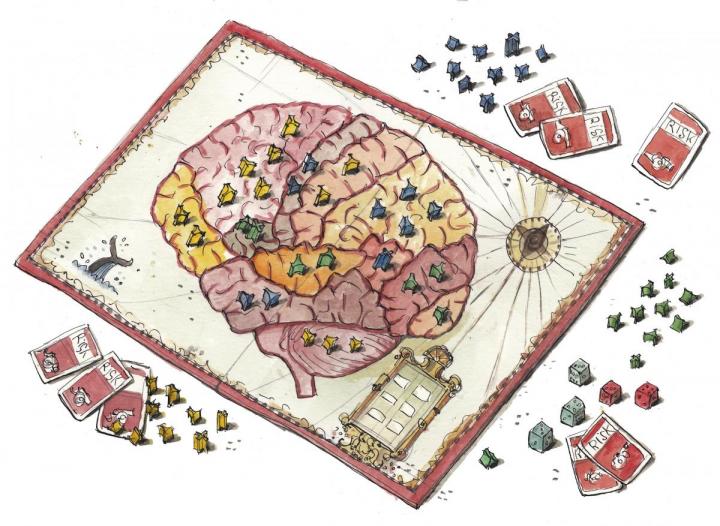
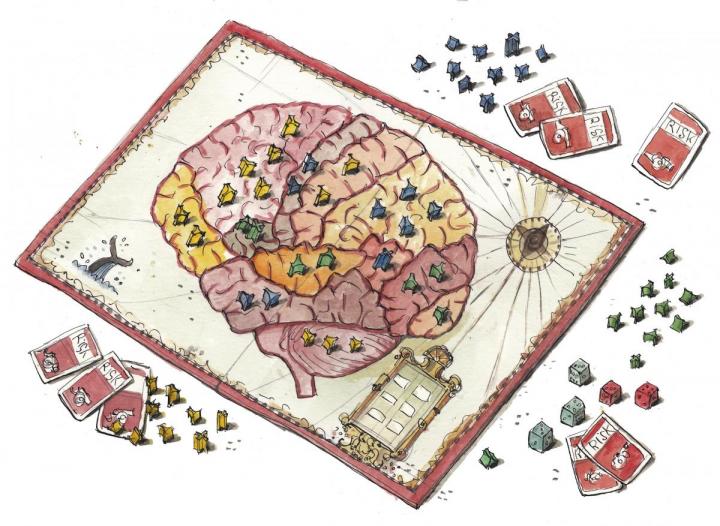
IMAGE

Credit: KU Leuven – Joris Snaet

Is what you're looking at an object, a face, or a tree? When processing visual input, our brain uses different areas to recognize faces, body parts, scenes, and objects. Scientists at KU Leuven (University of Leuven), Belgium, have now shown that people who were born blind use a 'brain map' with a very similar layout to distinguish between these same categories.

Our brain only needs a split second to determine what we're seeing. The area in our brain that can categorize these visual observations so quickly is the so-called ventral-temporal cortex, the visual brain. Like a map, this region is divided into smaller regions, each of which recognizes a particular category of observations — faces, body parts, scenes, and objects.

Scientists have long wondered whether we're born with this map, or whether its development relies on the visual input that we receive.

To answer this question, researchers from the KU Leuven Laboratory for Biological Psychology conducted an experiment with people who were born blind — some of them even without eyeballs — and have therefore never processed any visual information.

They asked the blind participants to listen to sounds from four categories: laughing, kissing, and lip smacking for faces; hand clapping and footsteps for body parts; forest and beach sounds for scenes; and a clock, washing machine, and car for objects. Meanwhile, a scanner measured the activity in their visual brain.

"We found that blind individuals also use the map in the visual brain," Professor Hans Op de Beeck from the KU Leuven Laboratory of Biological Psychology explains. "Their visual brain responds in a different way to each category. This means that blind people, too, use this part of the brain to differentiate between categories, even though they've never had any visual input. And the layout of their map is largely the same as that of sighted people. This means that visual experience is not required to develop category selectivity in the visual brain."

But these findings also raise new questions. For one thing, sounds are very different from visual input such as images and videos, so what exactly is being processed in blind people's visual brain? Further research will have to show.

###

Media Contact

Hans Op de Beeck
[email protected]
32-163-26039
@LeuvenU

http://www.kuleuven.be/english/news?

Original Source

https://nieuws.kuleuven.be/en/content/2017/blind-people-have-brain-map-for-visual-observations-too http://dx.doi.org/10.1073/pnas.1612862114

Share12Tweet8Share2ShareShareShare2

Related Posts

Evaluating Pediatric Emergency Care Quality in Ethiopia

February 7, 2026

TPMT Expression Predictions Linked to Azathioprine Side Effects

February 7, 2026

Improving Dementia Care with Enhanced Activity Kits

February 7, 2026

Decoding Prostate Cancer Origins via snFLARE-seq, mxFRIZNGRND

February 7, 2026
Please login to join discussion

POPULAR NEWS

  • Robotic Ureteral Reconstruction: A Novel Approach

    Robotic Ureteral Reconstruction: A Novel Approach

    82 shares
    Share 33 Tweet 21
  • Digital Privacy: Health Data Control in Incarceration

    63 shares
    Share 25 Tweet 16
  • Study Reveals Lipid Accumulation in ME/CFS Cells

    57 shares
    Share 23 Tweet 14
  • Breakthrough in RNA Research Accelerates Medical Innovations Timeline

    53 shares
    Share 21 Tweet 13

About

We bring you the latest biotechnology news from best research centers and universities around the world. Check our website.

Follow us

Recent News

Evaluating Pediatric Emergency Care Quality in Ethiopia

TPMT Expression Predictions Linked to Azathioprine Side Effects

Improving Dementia Care with Enhanced Activity Kits

Subscribe to Blog via Email

Success! An email was just sent to confirm your subscription. Please find the email now and click 'Confirm' to start subscribing.

Join 73 other subscribers
  • Contact Us

Bioengineer.org © Copyright 2023 All Rights Reserved.

Welcome Back!

Login to your account below

Forgotten Password?

Retrieve your password

Please enter your username or email address to reset your password.

Log In
No Result
View All Result
  • Homepages
    • Home Page 1
    • Home Page 2
  • News
  • National
  • Business
  • Health
  • Lifestyle
  • Science

Bioengineer.org © Copyright 2023 All Rights Reserved.
