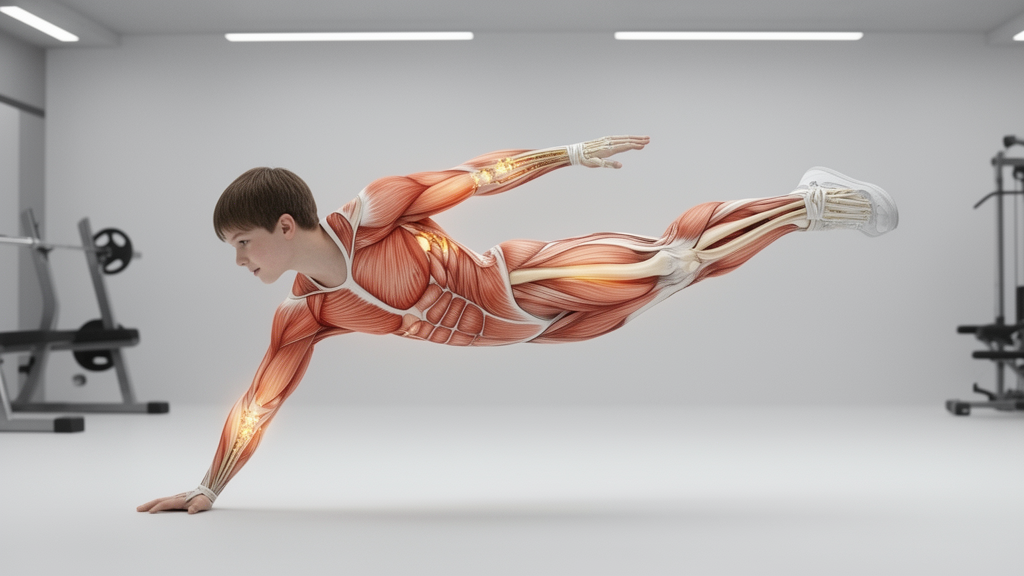
Structured exercise programs for children and adolescents appear to produce a small positive increase in bone mineral content, whereas their overall impact on bone mineral density remains uncertain, according to a systematic review and multilevel meta-analysis published in BMC Pediatrics. Researchers evaluated dual-energy X-ray absorptiometry outcomes across multiple randomized controlled trials to clarify how physical activity influences pediatric skeletal development.
Physical activity is widely considered an important factor in supporting skeletal accrual during childhood and adolescence, yet findings regarding dual-energy X-ray absorptiometry measures of bone mineral density and content have historically remained ambiguous. To address this uncertainty, the investigators conducted a comprehensive literature review exploring whether skeletal site, sexual maturation, or specific exercise program characteristics systematically alter bone accretion outcomes.
The research team systematically searched five major scientific databases, including PubMed, Web of Science Core Collection, Embase, Cochrane CENTRAL, and Scopus, from database inception through September 26, 2026. Eligible studies were restricted to English-language, peer-reviewed full-text reports of randomized controlled trials involving participants younger than 18 years of age. Dual-energy X-ray absorptiometry measurements were obtained across the lumbar spine, femoral neck, and whole body.
To evaluate the extracted evidence, bone mineral density and bone mineral content outcomes were analyzed independently using change-score-standardized Hedges’ g. The team utilized multilevel random-effects models combined with trial-level CR2 inference and small-sample corrections, adjusting variance calculations for cluster randomization and paired twin data. Because change-score standard deviations were unavailable for 30 of the 49 primary estimates, the authors applied assumed correlation values informed by earlier postmenopausal literature, testing values across a sensitivity spectrum ranging from 0.30 to 0.95.
The primary analytical models synthesized 17 bone mineral density estimates across eight clinical trials and 32 bone mineral content estimates drawn from twelve trials. In the primary bone mineral density assessment, the intervention effect was statistically uncertain, demonstrating an effect size g of 0.073 with a 95 percent confidence interval spanning minus 0.191 to 0.336 and a p-value of 0.525. Conversely, bone mineral content demonstrated a modest positive effect, with a standardized effect size g of 0.179, a 95 percent confidence interval between 0.037 and 0.322, and a statistically significant p-value of 0.019.
Sensitivity analyses indicated that the statistical conclusions remained stable when applying alternative baseline-to-follow-up correlation assumptions and baseline standardizations. However, the statistical robustness of the bone mineral content finding diminished when the investigators incorporated trials with limited cluster replication, yielding a reduced effect size g of 0.123 with a 95 percent confidence interval ranging from minus 0.048 to 0.294 that crossed the line of no effect.
Exploratory moderator analyses failed to detect any clear associations between skeletal adaptations and anatomical site, pubertal stage, exercise intervention category, program duration, or weekly exercise frequency. Evaluating the certainty of the body of evidence under the GRADE framework resulted in a low-certainty rating for both primary outcomes, driven primarily by risk of bias in the underlying trials and statistical imprecision.
The authors concluded that while structured pediatric exercise may provide a modest average benefit for bone mineral content, evidence regarding bone mineral density remains inconclusive under current analytical specifications. Because the findings display sensitivity to study design eligibility and inconclusive moderator analyses, the researchers caution that the current evidence base cannot support definitive exercise-prescription guidelines. Future randomized controlled trials will be necessary to establish the durability and long-term clinical relevance of these skeletal changes.
Subject of Research: Pediatric exercise interventions and bone mineral accrual
Article Title: Effects of structured exercise on DXA-derived lumbar-spine, femoral-neck and whole-body bone mineral density and content in children and adolescents: a systematic review and multilevel meta-analysis of randomised trials
Article References: Fan, C., Omar Dev, R. D., Abu Saad, H., & Liu, D. (2026). Effects of structured exercise on DXA-derived lumbar-spine, femoral-neck and whole-body bone mineral density and content in children and adolescents: a systematic review and multilevel meta-analysis of randomised trials. BMC Pediatrics. https://doi.org/10.1186/s12887-026-07959-0
Image Credits: AI Generated
DOI: 10.1186/s12887-026-07959-0
Keywords: bone mineral content, bone mineral density, pediatrics, exercise intervention, systematic review, meta-analysis, randomized trials, skeletal development, dual-energy X-ray absorptiometry, lumbar spine, femoral neck, adolescent health, multilevel analysis, Hedges g, GRADE assessment, physical activity
News Source: Harold Sullivan. (November 19, 2026). Youth Structured Exercise May Slightly Increase Bone Mineral Content but Not Density. Scienmag.