• HOME
  • NEWS
  • EXPLORE
    • CAREER
      • Companies
      • Jobs
    • EVENTS
    • iGEM
      • News
      • Team
    • PHOTOS
    • VIDEO
    • WIKI
  • BLOG
  • COMMUNITY
    • FACEBOOK
    • INSTAGRAM
    • TWITTER
Friday, November 20, 2026
BIOENGINEER.ORG
No Result
View All Result
  • Login
  • HOME
  • NEWS
  • EXPLORE
    • CAREER
      • Companies
      • Jobs
        • Lecturer
        • PhD Studentship
        • Postdoc
        • Research Assistant
    • EVENTS
    • iGEM
      • News
      • Team
    • PHOTOS
    • VIDEO
    • WIKI
  • BLOG
  • COMMUNITY
    • FACEBOOK
    • INSTAGRAM
    • TWITTER
No Result
View All Result
Bioengineer.org
No Result
View All Result
Home NEWS Science News Chemistry

Low Copper Modification Improves Mordenite Zeolite Performance in Carbonylation Reactions

by
November 19, 2026
in Chemistry
Reading Time: 2 mins read
0
Low Copper Modification Improves Mordenite Zeolite Performance in Carbonylation Reactions

Low Copper Modification Improves Mordenite Zeolite Performance in Carbonylation Reactions

Share on FacebookShare on TwitterShare on LinkedinShare on RedditShare on Telegram

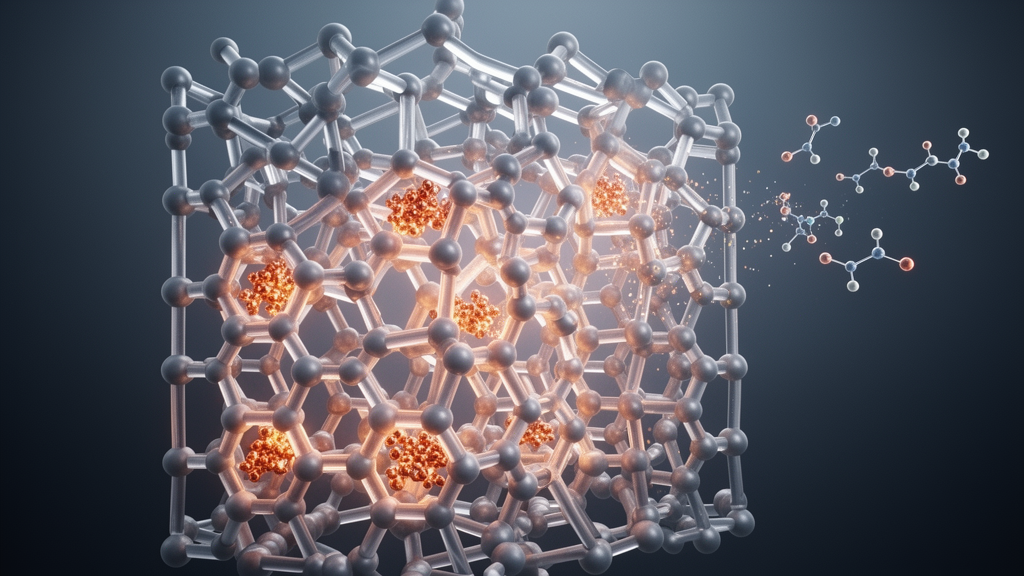
Researchers prepared a series of copper-modified mordenite zeolite catalysts featuring low copper loadings to examine dimethyl ether carbonylation into methyl acetate. The catalysts were prepared with copper loadings between 0.2 and 1.5 weight percent via an ion exchange method.

Multiple analytical characterizations were conducted to examine the physical, chemical, and structural attributes of the prepared catalysts. The investigation applied X-ray diffraction, nitrogen physisorption, X-ray photoelectron spectroscopy, temperature-programmed desorption of ammonia, pyridine-adsorbed infrared spectroscopy, and thermogravimetry. These techniques investigated the zeolite crystal structure, textural properties, copper valence distribution, acid sites, and coke deposition behavior.

The characterization results demonstrated that the extent of copper loading significantly impacts the dispersion of metal species and the acid distribution across the mordenite zeolite. Under low metal loading conditions, the catalyst achieved highly dispersed copper species. This modification optimized the synergy between copper active sites and Brønsted acid sites located within the eight-membered ring pockets of the mordenite structure.

The resulting metal-acid synergy enhanced methyl acetate selectivity while suppressing coke formation during the dimethyl ether carbonylation reaction. By connecting copper species, acidic properties, and catalytic performance, the researchers established a structure-activity relationship for the system, offering fundamental insights into the behavior of low-content copper-doped mordenite zeolites in catalytic carbonylation reactions.

Subject of Research: Copper-modified mordenite zeolite catalysts for dimethyl ether carbonylation

Article Title: Insight into Trace Cu Modification of H-Mordenite: Metal–Acid Synergy and Anti-coking Behavior in Dimethyl Ether Carbonylation

Article References: Guo, W., Ding, R., Yin, Y., Li, S., Chen, H., Wang, Y., Zhao, L., Liang, X., Jiang, Y., Xie, F., Lu, J., Hou, L., Li, J., & Ning, Z. (2026). Insight into Trace Cu Modification of H-Mordenite: Metal–Acid Synergy and Anti-coking Behavior in Dimethyl Ether Carbonylation. Catalysis Letters, 156(12), Article 334. https://doi.org/10.1007/s10562-026-05574-3

Image Credits: AI Generated

DOI: 10.1007/s10562-026-05574-3

Keywords: catalysis, zeolite, mordenite, copper modification, dimethyl ether, carbonylation, methyl acetate, anti-coking, metal-acid synergy, Brønsted acid sites, ion exchange, X-ray diffraction, X-ray photoelectron spectroscopy, temperature-programmed desorption, heterogeneous catalysis

News Source: Bethany Barker. (November 19, 2026). Low Copper Modification Improves Mordenite Zeolite Performance in Carbonylation Reactions. Scienmag.


Tags: anti-cokingBrønsted acid sitescarbonylationCatalysiscopper modificationdimethyl etherHeterogeneous catalysision exchangemetal-acid synergymethyl acetatemordenitetemperature-programmed desorptionX-ray diffractionX-ray photoelectron spectroscopyzeolite
Share12Tweet7Share2ShareShareShare1

Related Posts

Cattail Roots Release Oxygen into Wetland Sediments During Active Growth Pulses

Cattail Roots Release Oxygen into Wetland Sediments During Active Growth Pulses

November 19, 2026
Six UT Knoxville Faculty Named to 2026 Highly Cited List

Six UT Knoxville Faculty Named to 2026 Highly Cited List

November 19, 2026

X-Ray Measurements Detect Fleeting Intermediate State in Light-Excited Iron Molecule

November 19, 2026

Direct Electric Current Guides Carbon Through Solid Metals to Grow Graphite

November 19, 2026

POPULAR NEWS

  • Transient Neonatal Diabetes Can Signal Rare HNF1B Whole-Gene Deletions

    Transient Neonatal Diabetes Can Signal Rare HNF1B Whole-Gene Deletions

    29 shares
    Share 12 Tweet 7
  • Vernacular Names Reveal Ethnobotanical Plant Exudate Knowledge in Brazil

    29 shares
    Share 12 Tweet 7
  • Nurses in 2023 Turkey Mission Faced Emotional Strains and Operational Hurdles

    29 shares
    Share 12 Tweet 7
  • Arabic Resilience and Relapse Scales Show High Reliability in Emirati Addiction Study

    29 shares
    Share 12 Tweet 7

About

We bring you the latest biotechnology news from best research centers and universities around the world. Check our website.

Follow us

Recent News

Non-Invasive Brain Stimulation Targets Relieve Pain and Emotional Distress in Chronic Illness

Multilevel Barriers Hinder Rural Dog Rabies Vaccination in Kilosa District

Trapping-Induced Social Disruption Temporarily Increases Spatial Caution in Wild Pigs

Subscribe to Blog via Email

Enter your email address to subscribe to this blog and receive notifications of new posts by email.

Join 89 other subscribers
  • Contact Us

Bioengineer.org © Copyright 2023 All Rights Reserved.

Welcome Back!

Login to your account below

Forgotten Password?

Retrieve your password

Please enter your username or email address to reset your password.

Log In
No Result
View All Result
  • Homepages
    • Home Page 1
    • Home Page 2
  • News
  • National
  • Business
  • Health
  • Lifestyle
  • Science

Bioengineer.org © Copyright 2023 All Rights Reserved.