• HOME
  • NEWS
  • EXPLORE
    • CAREER
      • Companies
      • Jobs
    • EVENTS
    • iGEM
      • News
      • Team
    • PHOTOS
    • VIDEO
    • WIKI
  • BLOG
  • COMMUNITY
    • FACEBOOK
    • INSTAGRAM
    • TWITTER
Thursday, November 19, 2026
BIOENGINEER.ORG
No Result
View All Result
  • Login
  • HOME
  • NEWS
  • EXPLORE
    • CAREER
      • Companies
      • Jobs
        • Lecturer
        • PhD Studentship
        • Postdoc
        • Research Assistant
    • EVENTS
    • iGEM
      • News
      • Team
    • PHOTOS
    • VIDEO
    • WIKI
  • BLOG
  • COMMUNITY
    • FACEBOOK
    • INSTAGRAM
    • TWITTER
No Result
View All Result
Bioengineer.org
No Result
View All Result
Home NEWS Science News Technology

Computational Model Predicts How Cellular Obstacles Retain Nanoparticles in Solid Tumours

by
November 19, 2026
in Technology
Reading Time: 2 mins read
0
Computational Model Predicts How Cellular Obstacles Retain Nanoparticles in Solid Tumours

Computational Model Predicts How Cellular Obstacles Retain Nanoparticles in Solid Tumours

Share on FacebookShare on TwitterShare on LinkedinShare on RedditShare on Telegram

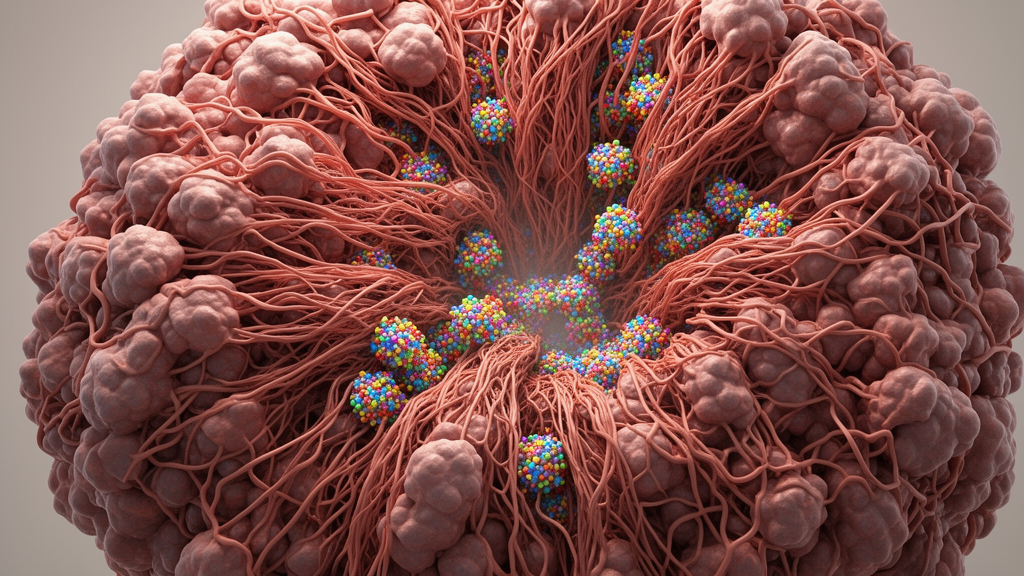
Researchers have reported a computational strategy to determine the mechanism of nanoparticle retention in solid tumours, clarifying an essential but previously unresolved stage of tumour transport. Under the active transport and retention principle, nanoparticles enter solid tumours through endothelial cells and subsequently exit via lymphatic drainage. However, the biological and physical processes that govern how nanoparticles are retained within the tumour microenvironment after entering and before exiting have remained unclear. To address this fundamental question, the research team developed a tumour-specific computational model to simulate nanoparticle transport and identify the specific factors that control retention.

The computational framework reveals that both cellular and acellular components of the tumour delay and obstruct the movement of nanoparticles. These tumour structures directly influence three primary physical forces governing nanoparticle transport: nanoparticle drag, Brownian forces, and electric forces.

Based on these specific physical interactions, the researchers mathematically defined nanoparticle retention within solid tumours. This mathematical formulation establishes a direct quantitative link connecting retention to tumour pathophysiology, nanoparticle design characteristics, and overall delivery efficiency. By capturing these interactions mathematically, the model quantitatively accounts for how physical forces and tissue properties govern the duration of nanoparticle residence inside tumours.

The investigators validated the computational model by assessing the separate impacts of tumour pathophysiology and nanoparticle design on retention.

To enable practical implementation of their findings, the authors created a software interface to simulate and predict nanoparticle retention across different tumour systems and nanoparticle designs. This computational interface models nanoparticle residence time and predicts therapeutic efficacy based on retention behaviour. By allowing researchers to simulate how specific nanoparticle architectures behave under varying biological conditions, the platform enables the selection of optimal tumour and nanoparticle delivery conditions. Ultimately, the computational framework provides a predictive tool to determine nanoparticle residence time and guide treatment strategies for better therapeutic outcomes.

Subject of Research: Computational modeling of physical forces governing nanoparticle retention and transport in solid tumours

Article Title: The retention of nanoparticles in solid tumours

Article References: Chang, A. C. Y., Nguyen, L. N. M., Ji, Q., Blackadar, C., Mladjenovic, S. M., & Chan, W. C. W. (2026). The retention of nanoparticles in solid tumours. Nature Materials. https://doi.org/10.1038/s41563-026-02781-6

Image Credits: AI Generated

DOI: 10.1038/s41563-026-02781-6

Keywords: nanoparticle retention, solid tumours, computational strategy, tumour microenvironment, Brownian forces, electric forces, nanoparticle drag, endothelial cells, lymphatic drainage, nanoparticle transport, tumour pathophysiology, nanoparticle design, delivery efficiency, therapeutic outcomes, active transport, cellular components, acellular components

News Source: Denise Maddox. (November 19, 2026). Computational Model Predicts How Cellular Obstacles Retain Nanoparticles in Solid Tumours. Scienmag.


Tags: acellular componentsactive transportBrownian forcescellular componentscomputational strategydelivery efficiencyelectric forcesEndothelial Cellslymphatic drainageNanoparticle Designnanoparticle dragnanoparticle retentionnanoparticle transportsolid tumourstherapeutic outcomestumour microenvironmenttumour pathophysiology
Share12Tweet7Share2ShareShareShare1

Related Posts

Acoustic Calm and Grandeur Shape Virtual Reality Immersion in Landmark Study

Acoustic Calm and Grandeur Shape Virtual Reality Immersion in Landmark Study

November 19, 2026
Interpretable Machine Learning Models Aid Arrhythmia Localization Without Demonstrating Statistical Superiority

Interpretable Machine Learning Models Aid Arrhythmia Localization Without Demonstrating Statistical Superiority

November 19, 2026

Convolutional Neural Networks Accurately Predict Drug Solubility in Green Solvents

November 19, 2026

Sobol and Morris Sensitivity Measures Best Identify Influential Pixels in Neural Networks

November 19, 2026

POPULAR NEWS

  • Review Links Diverse Autism Risk Factors to Shared Neural Circuit Imbalance

    Review Links Diverse Autism Risk Factors to Shared Neural Circuit Imbalance

    29 shares
    Share 12 Tweet 7
  • Standardized HPLC Method Quantifies Five Narrow-Index Drugs Using Stable Non-Analyte Reference Standards

    29 shares
    Share 12 Tweet 7
  • Deep Learning System Accurately Classifies Rare Pediatric Femoral Neck Fractures on Radiographs

    29 shares
    Share 12 Tweet 7
  • Pharmacological Review Evaluates Modern Formulations and Mechanisms of Bupleurum Herbal Preparations

    29 shares
    Share 12 Tweet 7

About

We bring you the latest biotechnology news from best research centers and universities around the world. Check our website.

Follow us

Recent News

Vitamin K2 Linked to Insulin Resistance and Granulosa Cell Protection

Acoustic Calm and Grandeur Shape Virtual Reality Immersion in Landmark Study

Patients With Advanced Breast Cancer Welcome Genetic Testing Despite Assumed Emotional Burden

Subscribe to Blog via Email

Enter your email address to subscribe to this blog and receive notifications of new posts by email.

Join 89 other subscribers
  • Contact Us

Bioengineer.org © Copyright 2023 All Rights Reserved.

Welcome Back!

Login to your account below

Forgotten Password?

Retrieve your password

Please enter your username or email address to reset your password.

Log In
No Result
View All Result
  • Homepages
    • Home Page 1
    • Home Page 2
  • News
  • National
  • Business
  • Health
  • Lifestyle
  • Science

Bioengineer.org © Copyright 2023 All Rights Reserved.