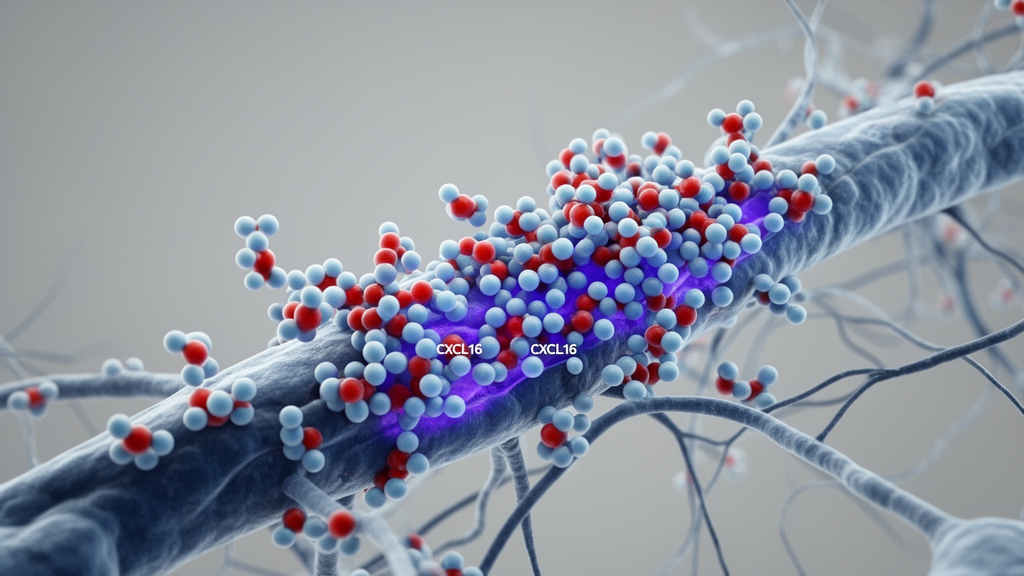
Genetically predicted higher expression of the chemokine gene CXCL16 is associated with an increased risk of developing Parkinson’s disease, according to a comprehensive two-sample Mendelian randomization investigation published in Molecular Brain. In their primary inverse variance weighted model, each standard deviation increase in genetically predicted CXCL16 expression conferred an odds ratio of 1.115 for Parkinson’s disease risk, with a 95 percent confidence interval spanning from 1.060 to 1.173 and an extreme statistical significance of p = 2.4 × 10⁻⁵. Conversely, genetically predicted higher expression of FADD demonstrated an inverse, protective relationship with Parkinson’s disease, presenting an odds ratio of 0.861 with a 95 percent confidence interval between 0.790 and 0.939 and a significance of p = 7.1 × 10⁻⁴. These analytical findings offer direct genetic evidence implicating specific cell-death regulators in disease vulnerability.
The clinical motivation for identifying upstream genetic determinants stems directly from the rising global epidemiological toll of Parkinson’s disease and the persistent lack of disease-modifying therapies. Parkinson’s disease represents a progressive neurodegenerative condition pathologically defined by the loss of dopaminergic neurons in the substantia nigra, manifesting clinically as tremors, rigidity, and bradykinesia. According to data from the 2021 Global Burden of Disease study cited by the authors, global Parkinson’s disease prevalence increased from approximately 450,000 cases in 1992 to 1.34 million by 2021. Over that same timeframe, the age-standardized incidence rate rose from 11.54 to 15.63 per 100,000 individuals. Furthermore, among individuals aged 55 and older, incident cases surged from 2.83 million in 1990 to 10.76 million in 2021, corresponding to a 219 percent escalation in annual new diagnoses. This growing burden highlights the urgent necessity for dissecting novel molecular drivers that could guide targeted therapeutic interventions.
To explore disease mechanisms, the researchers focused on PANoptosis, a recently characterized inflammatory programmed cell death pathway that simultaneously coordinates apoptotic, pyroptotic, and necroptotic machinery. Core regulatory proteins within this network include ZBP1, NLRP3, FADD, CASP1, CASP8, RIPK3, and GSDMD. Previous experimental models and neuroinflammation research have repeatedly implicated dysregulated cell-death pathways in neurodegeneration, yet establishing whether these molecules exert true causal influences or merely reflect downstream consequences of cellular damage had remained an unresolved challenge. By using expression quantitative trait loci to instrument 30 PANoptosis-related genes, the authors sought to clarify whether inherited differences in gene expression influence subsequent Parkinson’s disease risk.
The study design strictly followed the STROBE-MR reporting guidelines and proceeded across three interconnected analytical stages: a primary Mendelian randomization screening, summary-data-based Mendelian randomization with heterogeneity in dependent instruments testing, and two-step mediation analysis through peripheral immune traits. Genetic instruments for PANoptosis gene expression were derived from the eQTLGen Consortium, which comprises whole-blood cis-eQTL data from 31,684 individuals. Cis-eQTL variants were defined as single nucleotide polymorphisms located within one megabase upstream or downstream of the gene transcription start site. For the Parkinson’s disease outcome, the primary genome-wide association summary statistics were obtained from the meta-analysis by Nalls and colleagues published in 2019, comprising 37,688 diagnosed cases and 981,372 controls of European ancestry. Secondary validation data were obtained from the FinnGen R12 release, incorporating 5,861 Parkinson’s disease cases and 494,487 controls. Genetic associations for 731 peripheral immune traits were retrieved from the Orrù et al. cohort of approximately 22,000 individuals.
Instrumental variable selection employed a rigorous hierarchical threshold protocol to ensure statistical robustness and prevent weak-instrument bias. Primary genetic instruments were selected at the genome-wide significance threshold of p < 5 × 10⁻⁸. For candidate genes possessing fewer than three independent variants at this stringent cutoff, a relaxed cis-eQTL threshold of p < 1 × 10⁻⁵ was applied to enhance instrument availability. Linkage disequilibrium clumping was conducted using the 1000 Genomes European reference panel with an r² threshold below 0.001 within a 10,000-kilobase window. Instrument strength was confirmed through calculated F-statistics, with all selected instruments far exceeding the conventional threshold of 10. Palindromic variants with minor allele frequencies below 0.42 were harmonized using effect allele frequency alignment, while ambiguous palindromic single nucleotide polymorphisms with frequencies equal to or exceeding 0.42 were discarded.
Across the 30 candidate PANoptosis genes screened, 27 genes possessed at least one available cis-eQTL, while GSDME had no usable instruments and ZBP1, RIPK3, and HSP90AB1 had two or fewer variants at the primary threshold. Following linkage disequilibrium clumping and data harmonization with the primary Parkinson’s disease dataset, four genes retained complete harmonized data for full Mendelian randomization: CXCL16 with 37 single nucleotide polymorphisms, CASP1 with 13, FADD with 17, and IFI27 with 13. Instrument strength was notably high across these four targets, with mean F-statistics reaching 202.5 for CXCL16 (R² = 0.0071), 158.7 for CASP1 (R² = 0.0052), 154.4 for FADD (R² = 0.0049), and 107.1 for IFI27 (R² = 0.0035). Across all 26 multi-SNP genes evaluated in the discovery framework, mean F-statistics ranged from 64.6 to 359.3, confirming the absence of weak-instrument vulnerabilities.
In the primary inverse variance weighted analysis, four genes reached nominal statistical significance. Beyond the significant risk increase observed for CXCL16 and the protective estimate for FADD, genetically predicted higher expression of CASP1 was associated with reduced risk (odds ratio = 0.886, 95 percent confidence interval 0.794 to 0.989, p = 0.032), as was IFI27 expression (odds ratio = 0.868, 95 percent confidence interval 0.769 to 0.980, p = 0.022). To adjust for multiple hypothesis testing across the four analyzable genes, a Bonferroni threshold of p < 0.0125 was applied. Both CXCL16 (adjusted p = 9.7 × 10⁻⁵) and FADD (adjusted p = 2.9 × 10⁻³) retained statistical significance, whereas CASP1 and IFI27 did not survive correction and were classified as exploratory. Under an even more conservative Bonferroni threshold across all 30 initially screened PANoptosis genes (p < 0.00167), CXCL16 maintained strong significance (adjusted p = 7.2 × 10⁻⁴), while FADD showed borderline significance (adjusted p = 0.021).
Extensive sensitivity analyses were conducted to evaluate potential violations of Mendelian randomization assumptions, including horizontal pleiotropy and heterogeneity. For CXCL16, using 36 harmonized instrumental variants, the association remained directionally concordant across multiple complementary methods: the weighted median approach yielded an odds ratio of 1.094 (95 percent confidence interval 1.018 to 1.175, p = 0.014), the MR-RAPS model produced an odds ratio of 1.114 (95 percent confidence interval 1.057 to 1.174, p = 5.2 × 10⁻⁵), and MR-PRESSO indicated an identical odds ratio of 1.115 without identifying any outlier variants (global test p = 0.963). The MR-Egger estimate was directionally consistent though less precise (odds ratio = 1.083, 95 percent confidence interval 0.988 to 1.187, p = 0.097), and its intercept test revealed no evidence of directional pleiotropy (intercept = 0.0067, p = 0.456). Cochran’s Q test similarly indicated an absence of heterogeneity (Q = 21.7, degrees of freedom = 35, p = 0.961). For FADD, the weighted median method yielded an odds ratio of 0.889 (p = 0.042), MR-RAPS produced an odds ratio of 0.859 (p = 9.3 × 10⁻⁴), and MR-PRESSO showed an odds ratio of 0.861 (global p = 0.699). Cochran’s Q test (Q = 12.9, df = 16, p = 0.683) and MR-Egger intercept testing (p = 0.154) confirmed the lack of heterogeneity and pleiotropy. Sequential leave-one-out sensitivity analyses verified that no individual genetic variant disproportionately drove the observed associations for any of the tested genes.
To confirm whether the identified genetic signals represented authentic colocalization rather than confounding due to distinct variants in linkage disequilibrium, the investigators conducted summary-data-based Mendelian randomization paired with the heterogeneity in dependent instruments test. CXCL16 emerged as the only PANoptosis gene that achieved significance in the SMR analysis, with a effect estimate of b-SMR = 0.124, standard error of 0.043, and p = 0.004. Crucially, the HEIDI test returned a p-value of 0.363, well above the 0.05 threshold used to detect linkage confounding, confirming that the gene expression signal and the disease risk signal are compatible with a single shared causal genetic variant. In contrast, SMR testing for FADD (p = 0.110), CASP1 (p = 0.122), and IFI27 (p = 0.157) did not reach statistical significance, establishing CXCL16 as the most robustly validated gene target within the evaluated cell-death network.
To elucidate downstream biological pathways, the researchers evaluated whether peripheral immune phenotypes act as intermediate mediators linking CXCL16 expression to Parkinson’s disease. Screening 731 immune traits from the Orrù et al. catalog revealed that 459 had adequate single nucleotide polymorphism overlap for Mendelian randomization. In primary analyses against Parkinson’s disease, several traits demonstrated nominal associations: risk-increasing traits included IgD⁻CD38br⁺ B cells (odds ratio = 1.132, 95 percent confidence interval 1.053 to 1.217), CCR7⁺ naive CD4⁺ T cells (odds ratio = 1.053, 95 percent confidence interval 1.018 to 1.089), and CD11c⁺ monocytes (odds ratio = 1.063, 95 percent confidence interval 1.008 to 1.121). Protective immune phenotypes included CX3CR1⁺ monocytes (odds ratio = 0.941, 95 percent confidence interval 0.898 to 0.987) and HLA-DR⁺CD33⁻ cells (odds ratio = 0.938, 95 percent confidence interval 0.886 to 0.992). In step-one mediation testing, genetically predicted CXCL16 expression was nominally associated with 66 immune traits, including reductions in HLA-DR⁺CD33⁻ cells (odds ratio = 0.778) and CD28⁺CD45RA⁻CD8br⁺ T cells (odds ratio = 0.882), alongside increases in CD123 expression on plasmacytoid dendritic cells (odds ratio = 1.103 to 1.104).
Executing two-step mediation analysis across all 66 candidate immune traits demonstrated that 63 indirect effects remained statistically significant after false discovery rate correction at q < 0.05. The most prominent exploratory mediator identified was the abundance of HLA-DR⁺CD33⁻ myeloid cells, which are known to exert antigen-presenting and immunoregulatory functions. This pathway accounted for approximately 7.5 percent of the total estimated effect of CXCL16 on Parkinson’s disease risk, translating to an approximate odds ratio of 1.008. Given the modest absolute magnitude of this mediated effect, the authors emphasized that these findings should be regarded as exploratory and hypothesis-generating rather than definitive clinical proof.
Chemokine-driven immune cell recruitment and inflammatory signaling have frequently been observed in neurodegenerative disorders, and the present findings suggest that genetically elevated CXCL16 expression may contribute to Parkinson’s disease pathogenesis in part via peripheral immune modulation. The authors also discussed the protective associations of FADD and CASP1, noting that FADD functions as a critical molecular brake that inhibits excessive necroptosis through death receptor signaling, whereas CASP1-induced pyroptosis through gasdermin D cleavage may assist in eliminating compromised cells. Meanwhile, IFI27 participates in antiviral and immunoregulatory responses, though its exact position within neurodegenerative cascades remains undefined.
The study authors carefully outlined several critical limitations inherent to their methodology. First, expression quantitative trait loci were measured in peripheral whole blood because sufficiently powered brain-specific eQTL datasets were unavailable for all 30 candidate genes; expression patterns in central nervous system tissues may exhibit tissue-specific divergence. Second, formal locus-level colocalization using the coloc framework could not be executed due to the absence of full locus-level summary statistics from the eQTLGen Consortium, meaning HEIDI served as an approximate colocalization proxy. Third, the immune traits examined represent circulating peripheral blood populations and do not directly capture microglial behavior or neuroinflammatory processes within the brain parenchyma or cerebrospinal fluid. Fourth, the analyses were conducted in cohorts of European ancestry, restricting immediate generalizability to broader global populations. Ultimately, while this study establishes compelling genetic links connecting CXCL16 and FADD to Parkinson’s disease risk, the authors concluded that these hypothesis-generating insights necessitate direct validation in cell cultures, animal models, and patient-derived tissues.
Subject of Research: Mendelian randomization analysis of PANoptosis-related gene expression and Parkinson's disease risk
Article Title: Genetically predicted CXCL16 expression is associated with Parkinson’s disease risk and peripheral immune cell dysregulation: a two-sample mendelian randomization study
Article References: Li, Z., Yang, R., Feng, H., Sun, M., & Liu, H. (2026). Genetically predicted CXCL16 expression is associated with Parkinson’s disease risk and peripheral immune cell dysregulation: a two-sample mendelian randomization study. Molecular Brain, 19(1), Article 52. https://doi.org/10.1186/s13041-026-01324-z
Image Credits: AI Generated
DOI: 10.1186/s13041-026-01324-z
Keywords: Parkinson's disease, CXCL16, Mendelian randomization, PANoptosis, FADD, CASP1, IFI27, eQTLGen Consortium, cis-eQTL, neurodegeneration, peripheral immune cells, HLA-DR+CD33- cells, summary-data-based Mendelian randomization, HEIDI test, instrumental variable analysis, two-step mediation analysis
News Source: Diana Fleming. (November 19, 2026). Genetically Predicted CXCL16 Expression Linked to Elevated Parkinson’s Disease Risk. Scienmag.