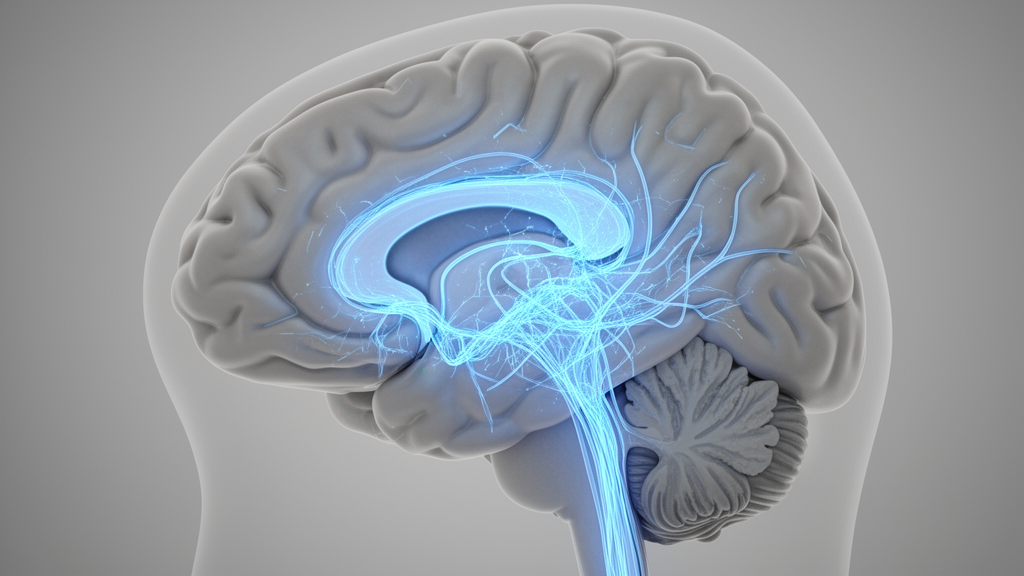
In an analysis published in Frontiers in Conservation Science, researcher Smrithi L. of the Department of Mind, Body, Medicine, and Lifestyle Sciences at Sri Ramachandra Institute of Higher Education and Research in Chennai, India, formulates a neuropsychological perspective on modern human estrangement from the natural world. The paper introduces a theoretical framework centered on cosmological disassociation, defined as a lived cognitive condition in which an individual no longer experiences the bodily self as materially and dynamically continuous with sustaining ecological systems. Rather than treating screen exposure as a simple quantitative distraction or relying strictly on an outdoor nature-deficit model, the author argues that compulsive digital habits systematically occupy and alter the neurocognitive mechanisms through which biological organisms remain situated within physical environments. This conceptual framework examines how modern interactive digital systems continually engage attention allocation, interoceptive awareness, reward prediction architectures, circadian biological entrainment, and embodied spatial cognition, while emphasizing that empirical evidence for permanent neuroadaptation remains preliminary and unproven.
The conceptual framework is framed within the broader conservation research topic examining how human animals can be understood as embedded participants within ecological systems rather than external managers. In conservation social science, individual attitudes and behaviors toward environmental protection are closely associated with human-nature connectedness. Traditional conservation narratives have frequently characterized contemporary detachment through the extinction of experience, which tracks the progressive loss of human interactions with outdoor settings and its downstream consequences for environmental care. The perspective article elaborates on this foundation by proposing that the core challenge extends beyond screen time displacing time spent in forests, gardens, or streets. While conventional accounts assume that human perceptual capacity for ecological belonging remains intact during indoor confinement, the disembodied cognition thesis suggests that repeated immersion in engineered digital environments trains the nervous system in ways that make authentic ecological association significantly more difficult to register, perceive, and enact.
Underpinning the paper is the ecological and embodied tradition of cognitive science, which defines perception as an ongoing reciprocal interaction between an active organism and the affordances of its physical environment. Drawing on philosophical and developmental accounts of the embodied mind, cognition is described as operating through homeostatic internal self-regulation coupled with sensorimotor cycles connecting the organism to its surroundings. This reciprocal sensorimotor loop generates an ecological self rooted in bodily self-awareness, where perception and behavioral action continuously modify one another through physical practice. When individuals explore variable outdoor terrains, coordinate physical actions with shifting weather, forage, or manipulate manual instruments, they refine bodily sensitivity and develop direct possibilities for action. Consequently, the paper positions ecological embeddedness not as an abstract philosophical stance or ethical doctrine, but as a perceptually grounded biological state sustained through routine sensory, motoric, and visceral interactions with living systems.
The perspective paper identifies attentional control as a central operational pathway where digital platforms directly compete with ecological settings. Drawing on Attention Restoration Theory, directed attention is understood as an effortful, finite cognitive resource susceptible to depletion when individuals continuously suppress competing distractions to maintain task focus. Natural settings have been shown to support restorative processes because they feature fascinating stimuli that capture attention without demanding continuous executive control. Prior behavioral research has demonstrated that walking in natural settings or viewing nature imagery can enhance working memory and performance on tasks such as digit span and the Trail Making Test B. Furthermore, neuroimaging and electrophysiological research has observed reduced frontal midline theta activity following nature walks compared to urban walks, suggesting a reduction in executive cognitive strain. However, the author emphasizes that systematic reviews demonstrate mixed outcomes across attentional measures, warning against simplistic assumptions that nature contact universally restores cognitive function.
In contrast to the gentle sensory features of natural landscapes, modern digital platforms utilize sophisticated computational architectures designed to capture and hold directed attention. These platforms pair sensory salience and social validation cues with low-friction navigation and variable reward structures. Applying principles from experimental literature on value-driven attention, stimuli previously associated with rewards persistently seize human attention even when they are entirely irrelevant to the immediate task. Software mechanisms such as infinite scrolling feeds, unpredictable notifications, and dynamic algorithmic recommendations exploit reward uncertainty, creating a learning environment characterized by rapid event frequency and brief temporal resolution. This architecture sustains compulsive checking behaviors because subsequent items may provide sudden social reinforcement or novel emotional stimulation. While natural landscapes offer sensory richness, their feedback loops are comparatively slow and unpersonalized, placing ecological stimuli at a structural disadvantage against platforms engineered for continuous attentional capture.
Neuroimaging studies offer preliminary, correlational insights into how problematic screen behaviors relate to brain function, though the author stresses substantial methodological caveats. In resting-state functional magnetic resonance imaging investigations, problematic smartphone use among male participants has been linked to altered functional connectivity between the dorsal anterior cingulate cortex, the default mode network, and the ventral attention network. Under typical conditions, the ventral attention network acts as an involuntary circuit breaker that interrupts ongoing focus when behaviorally significant unattended stimuli emerge. Heightened or inefficient connectivity within this network may cause handheld devices to continuously hijack attention away from ambient environments. Complementary task-based neuroimaging has revealed inefficient recruitment of ventral attention circuits during active attentional control tasks. Nevertheless, broader systematic reviews emphasize that existing studies rely heavily on small sample sizes, cross-sectional designs, and subjective self-reports, meaning these functional differences cannot be equated with durable, structural neuroadaptations comparable to substance addiction.
Beyond attention, the perspective highlights interoceptive regulation as an essential channel disrupted by habitual screen reliance. Interoception involves the sensing, neural transmission, and conscious interpretation of internal physiological states, including cardiac, respiratory, thermal, and visceral signals. Under predictive processing models of cognition, the central nervous system continuously coordinates internal homeostatic demands with external exteroceptive inputs to guide adaptive behavior and establish subjective selfhood. In natural environments, physiological states such as thirst, hunger, or physical exhaustion directly drive exploratory movement and environmental sampling. Compulsive screen engagement disrupts this integration by constantly elevating high-intensity, externally generated audiovisual cues above internal bodily markers. While users remain physically embodied organisms, their routine cognitive orientation is diverted away from internal visceral rhythms and ambient microclimates, progressively diminishing experiential awareness of physiological continuity with surrounding ecological systems.
Circadian biology represents another documented physiological pathway through which screen environments dislocate humans from ecological rhythms. The human master biological clock is naturally entrained by the twenty-four-hour astronomical light-dark cycle, which governs diurnal hormone synthesis, body temperature, and cellular repair. Controlled laboratory experiments involving evening tablet usage have shown that exposure to light-emitting screens delays self-selected bedtime by approximately thirty minutes, suppresses nighttime melatonin secretion, delays dim-light melatonin onset, and attenuates morning alertness compared to reading printed material. Complementary meta-analyses encompassing longitudinal cohort datasets confirm that each additional hour of daily screen exposure correlates with roughly three to five minutes of lost sleep, accompanied by elevated risks of insomnia and delayed sleep timing. Prolonged evening device use effectively creates a portable artificial day, extending cognitive stimulation past sunset and generating systemic fatigue that undermines subsequent physical mobility and sensory outdoor exploration.
The paper also analyzes spatial cognition, examining how cognitive offloading onto satellite-based turn-by-turn navigation tools may reshape internal environmental representation. Physical spatial navigation relies on an interconnected hippocampal and parahippocampal network featuring place cells, grid cells, head-direction cells, and boundary cells that construct internal cognitive maps from self-motion and landmark observation. Cross-sectional investigations of regular drivers have observed an association between higher lifetime global positioning system usage and poorer hippocampal-dependent spatial memory during unassisted navigation, with small three-year follow-ups indicating steeper performance declines over time. Additional neuroimaging has noted reduced functional connectivity in navigation-related circuits following sustained augmented-reality wayfinding use. When pedestrians and drivers delegate route calculation and orientation to automated devices, they bypass the active demands of path integration and spatial learning, potentially weakening their capacity to perceive geographic space as an interconnected, relational landscape.
In evaluating mitigation strategies, the perspective explicitly assesses virtual nature technologies and digital conservation applications as double-edged tools. Immersive virtual reality simulations, panoramic outdoor projections, and nature documentaries provide convenient visual access to distant biomes. However, empirical studies indicate that while immersive digital nature can stimulate short-term state connectivity and expressional interest, it often fails to translate into physical engagement; one cited randomized trial noted that despite viewing virtual landscapes, only six of thirty-eight participants attended an organized outdoor hike at the featured site. Because virtual nature presents curated visual spectacles without requiring effortful physical movement or authentic sensorimotor coupling, the author characterizes digital nature as neuropsychologically thin. Conversely, interactive tools like citizen-science platforms and outdoor botanical identification applications can encourage attentive observation, demonstrating that the crucial distinction lies in whether digital technology facilitates direct sensory engagement or functions as a disembodied surrogate.
To counter cosmological disassociation, the author proposes a series of hypothesis-generating research directions focused on ecological reassociation rather than issuing clinical or lifestyle mandates. Because randomized trials of brief digital-detox periods show mixed affective results and rarely sustain long-term behavioral changes, simple outdoor exposure or temporary device abstinence is deemed insufficient. Instead, proposed directions include attentional retraining that emphasizes open environmental monitoring without audio devices, interoceptive exercises that link breathing and temperature regulation with atmospheric variations, circadian re-entrainment utilizing natural morning daylight and evening screen restrictions, and independent navigational challenges that cultivate landmark memory without digital aids. The author notes that these sensory and somatic practices parallel place-based traditions preserved within Indigenous and local knowledge systems, where multi-generational stewardship combines physical livelihood practices with deep territorial immersion that cannot be replaced by individual-level psychological protocols alone.
Ultimately, the article frames its conclusions within explicit methodological limitations, reiterating that current neuroimaging and behavioral datasets cannot demonstrate that digital media causes permanent neural rewiring or clinical damage. Small sample sizes, single-sex cohorts in key smartphone studies, and a lack of direct intervention trials linking digital compulsion to measurable declines in felt ecological connectivity require scientific caution. Rather than treating disassociation as an irreversible pathology, the author concludes that compulsive digital media operates as a persistent, artificial training regime that reorganizes daily perceptual habits. Re-establishing human integration within ecological systems therefore requires conservation social science to investigate how cognitive, circadian, and sensory faculties can be retrained to make direct, unmediated engagement with living ecosystems perceptible, viable, and durable in an increasingly automated world.
Subject of Research: Neuropsychological pathways linking digital compulsion and human-nature disassociation
Article Title: Disembodied cognition: How digital compulsion severs the neuropsychological pathways of human–nature association
Article References: L., S. (2026). Disembodied cognition: How digital compulsion severs the neuropsychological pathways of human–nature association. Frontiers in Conservation Science, 7, Article 1984325. https://doi.org/10.3389/fcosc.2026.1984325
Image Credits: AI Generated
DOI: 10.3389/fcosc.2026.1984325
Keywords: attention allocation, attention restoration theory, circadian disruption, cognitive offloading, cosmological disassociation, digital compulsion, embodied cognition, extinction of experience, hippocampal navigation, human-nature connectedness, interoceptive regulation, nature-deficit account, neurocognitive pathways, problematic smartphone use, reward prediction, salience network, spatial memory, value-driven attention
News Source: Drew Townsend. (November 19, 2026). Compulsive Screen Use May Alter Neurocognitive Pathways Linking Humans to Nature. Scienmag.