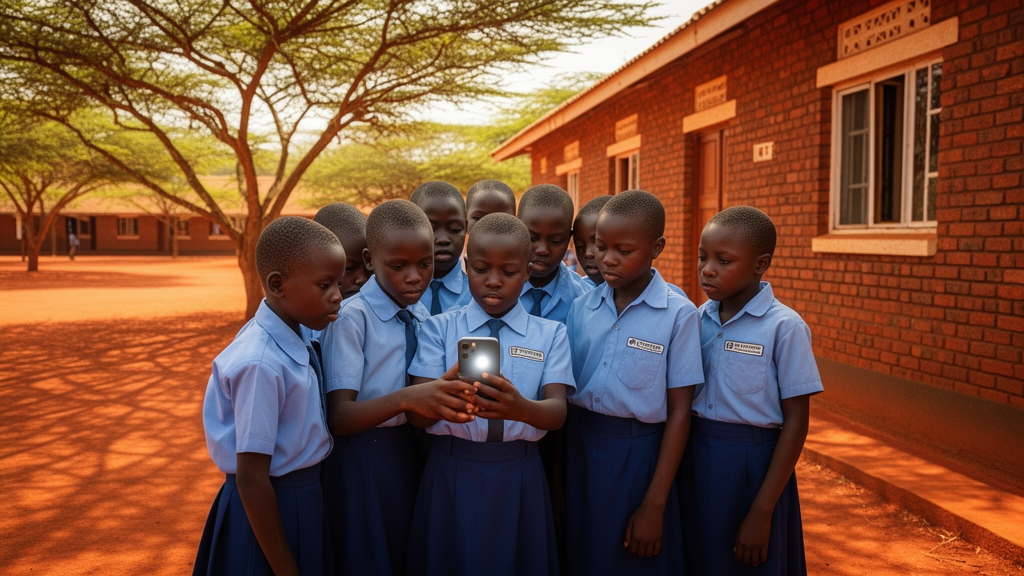
Primary school pupils in Kampala, Uganda, frequently view the internet as an active teacher of harmful behaviours that they subsequently replicate in social interactions, according to a qualitative study published in BMC Public Health. The research team explored how young learners describe and interpret encounters with anti-social, sexualised, and distressing online materials. Focus was placed specifically on children between the ages of 10 and 14 years attending four urban primary schools within the capital city.
The investigation focused on how these young individuals make sense of their digital experiences and how such encounters relate to their personal behaviour, peer relationships, and developing self-regulation. While global expansions in internet connectivity have broadened educational and learning opportunities for children, increasing digital access has simultaneously elevated the risk of exposure to harmful digital content among school-aged demographics navigating online spaces.
To examine these issues directly from the perspective of young users, the authors adopted a qualitative exploratory research design. The investigation gathered primary qualitative data from thirty-one purposefully selected school pupils. Fieldwork was structured around eight in-depth individual interviews alongside five focus group discussions, allowing researchers to collect comprehensive first-person narratives regarding children’s day-to-day engagement with digital devices and online platforms.
All recorded audio data from the interviews and focus groups were transcribed and anonymised verbatim by the research team to maintain participant privacy and confidentiality. The researchers then analysed the resulting narrative transcripts using Braun and Clarke’s method of inductive thematic analysis. This analytical approach enabled the investigators to systematically identify, structure, and interpret recurring patterns across the children’s spoken accounts.
In their accounts of online engagement, many participants described the internet as a direct teacher of negative behaviours. Children specifically highlighted exposure to material depicting physical violence, criminal activity, abusive language, and minor anti-social tricks. Crucially, the participants reported that they actively imitated these observed digital behaviours when participating in everyday peer interactions and social exchanges.
Participants also described encountering explicit sexual and distressing content through distinct pathways that formed a central organising pattern within the qualitative data. Children reported that these exposures occurred through self-directed internet searching, peer-to-peer sharing of digital material, and accidental or incidental exposure while using shared family or community devices. The young participants connected these encounters directly to their developing interpretations of social norms and morality.
Regarding self-regulation, the participants indicated that their digital consumption was governed primarily through external parental controls rather than autonomous self-restraint. According to the children’s accounts, reported vulnerability to harmful online exposure was linked to gaps in parental supervision, the informal peer-sharing of digital files, and instances of unsupervised internet access occurring within school environments.
The findings illustrate that children’s online behaviours are shaped by an interplay between digital access, environmental factors, and processes of observational social learning. The researchers concluded that addressing these challenges requires the establishment of child-centred digital literacy programmes, enhanced parental oversight, and structured school internet policies designed to minimise risks and support safe, age-appropriate digital engagement across rapidly expanding online contexts in Uganda.
Subject of Research: Primary school children's exposure to harmful online content in Kampala, Uganda
Article Title: Children’s accounts of exposure to harmful online content in urban primary schools in Kampala, Uganda: a qualitative study
Article References: Musanje, K., Ojiambo, D., Sadia, C., Candia, D. A., Masiga, S., Namwiyiri, R., Rwakasole, Y., Nakabazzi, B., Masereka, L. K., Nakamya, C., Komuhangi, C., Niwamanya, Y., & Onen, D. (2026). Children’s accounts of exposure to harmful online content in urban primary schools in Kampala, Uganda: a qualitative study. BMC Public Health. https://doi.org/10.1186/s12889-026-30463-0
Image Credits: AI Generated
DOI: 10.1186/s12889-026-30463-0
Keywords: Kampala, Uganda, primary school children, qualitative research, harmful online content, thematic analysis, focus group discussions, in-depth interviews, parental supervision, peer sharing, digital literacy, social learning, school internet use, anti-social behaviour, distressing content, shared devices, self-regulation, online exposure
News Source: Ophelia Keating. (November 19, 2026). Kampala Primary Pupils Report Imitating Negative Behaviours Learned From Internet Content. Scienmag.