Researchers at the Barcelona Supercomputing Center (BSC-CNS) have developed ContextMirror2.0, a computational modeling tool capable of identifying functional connections and relationships between proteins by analyzing the information that millions of years of evolution left behind in their amino acid sequences alone. The peer-reviewed study, published on November 6, 2026, in the journal PLOS Computational Biology, demonstrates how supercomputing can unlock coevolutionary methods to predict protein links. Predicting how proteins interact inside a cell is essential to understanding how organisms function and why they differ from one another. However, experimental hurdles and the substantial computational cost of analyzing millions of protein pairs make it impossible to explore complete interaction networks, particularly in understudied bacteria and other organisms. By relying strictly on sequence data, this methodology opens new avenues to study elusive bacteria and accelerate antibiotic discovery.
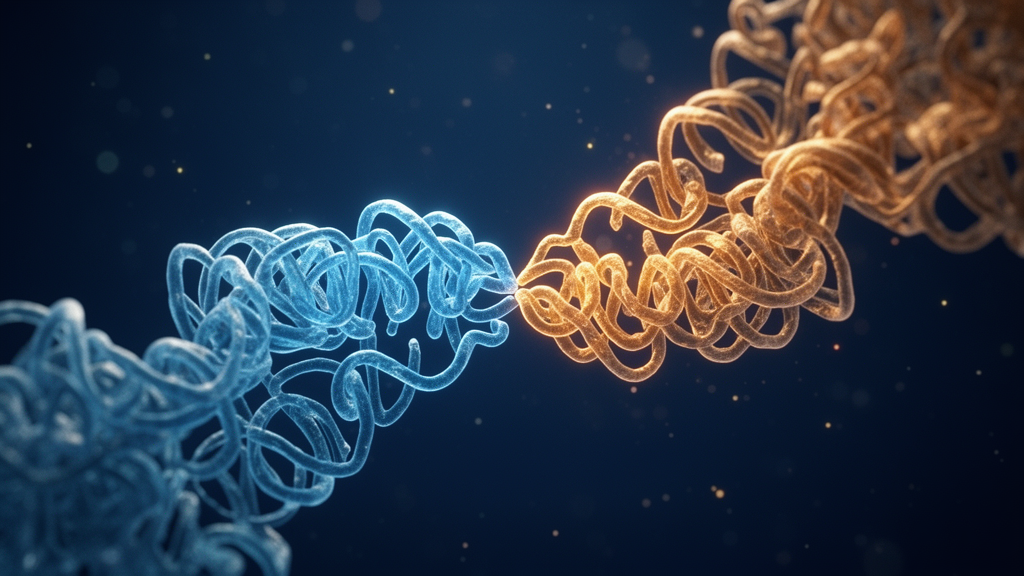
The algorithm works by comparing the evolution of thousands of proteins across different species and searching for pairs that exhibit related evolutionary patterns. When two proteins evolve together over time through coevolution and display correlated changes within their amino acid sequences, researchers can deduce that they physically interact and likely share related cellular functions. The investigators validated this computational method by applying the system across the entire protein sets of three bacterial species: Escherichia coli, Salmonella enterica, and Staphylococcus aureus. Through these comprehensive comparative analyses, the researchers confirmed the predictive capacity of the system by successfully recovering previously known protein associations while simultaneously identifying interaction patterns that are specific to each of the three examined bacterial species.
A fundamental distinction between ContextMirror2.0 and other protein interaction prediction methods is that it does not require training on examples of known interactions. Conventional artificial intelligence techniques typically depend on training datasets derived from heavily studied organisms or proteins, which can introduce systematic biases into predictions. By avoiding this reliance on known interaction data, ContextMirror2.0 serves as an especially valuable complementary tool for analyzing poorly characterized species where little prior experimental evidence exists. As Alfonso Valencia, study lead and Director of the Life Sciences Department at the Barcelona Supercomputing Center, explained, the algorithm reliably predicts hundreds of protein interactions in Escherichia coli and identifies which ones are species-specific, a distinction that generic artificial intelligence methods do not make and that could help uncover new targeted therapeutic targets.
To address the massive computational scale involved in analyzing complete cellular interactomes, the research team utilized the supercomputing power of MareNostrum 4 and later MareNostrum 5 at the Barcelona Supercomputing Center. When tackling the roughly 9 million potential protein pairs present in Escherichia coli, the supercomputer processed millions of potential combinations, allowing the researchers to select the top 1,000 highest-scoring pairs identified by the algorithm. An evaluation of these top 1,000 interactions revealed that 400 had prior experimental validation, while the remaining 600 pairs represented plausible associations that had never before been described. This outcome demonstrated the system’s ability to narrow millions of theoretical combinations down to a high-confidence candidate set, directly providing concrete hypotheses for future biological investigation.
This project marks the culmination of an eighteen-year research trajectory tracing back to the original ContextMirror study published by Alfonso Valencia in 2008. That pioneering work established the conceptual groundwork for the current methodology but could only be applied to small sets of proteins due to the limitations of the era. At that time, researchers faced scarce data in bacterial genomic databases alongside severely limited computational analysis capacity. With the substantial expansion of genomic databases and the availability of modern supercomputing resources like MareNostrum, the researchers were finally able to scale the coevolutionary approach across complete bacterial proteomes, turning an early conceptual model into an operational reality.
To ensure the tool is useful to everyone, alongside the version optimized for supercomputing, the team developed and released a lightweight, open-source library of ContextMirror2.0. This software allows researchers to analyze smaller sets of proteins on a personal computer in an accessible way without requiring major computing infrastructure. Describing the utility of the approach, Miguel Fernández, a researcher at the Barcelona Supercomputing Center and first author of the study, explained that if someone is going to study a bacterium about which nothing is known, they can use this algorithm to get a broad picture of its interaction network, as it narrows millions of combinations down to a small set of candidate proteins with a high probability of interacting, streamlining experimental work in the lab. Fernández noted that predicting all protein interactions within a complete organism remains a highly complex challenge in modern biology. With this tool, the researchers offer an ideal ‘step zero’ so the scientific community can place unknown proteins within their functional contexts and target their experimental trials much more precisely. Looking ahead, the authors conclude that this tool and its comparative approach could facilitate the identification of therapeutic targets and the study of critical mechanisms such as bacterial antibiotic resistance in modern medicine.
Subject of Research: Computational biology and protein interactome prediction in bacterial species
Article Title: Decoding interactomes: Supercomputing unlocks coevolutionary method to predict protein links
Article References: Decoding interactomes: Supercomputing unlocks coevolutionary method to predict protein links. Original publication (Bibliographic details unavailable.)
Image Credits: AI Generated
DOI: Not provided
Keywords: ContextMirror2.0, Barcelona Supercomputing Center, protein interactome, computational biology, coevolutionary analysis, amino acid sequences, bacterial genomics, Escherichia coli, Salmonella enterica, Staphylococcus aureus, protein-protein interaction, supercomputing, PLOS Computational Biology, antibiotic resistance, bioinformatics, protein function, evolutionary biology
News Source: Gavin Prescott. (November 19, 2026). Supercomputing Algorithm Predicts Bacterial Protein Interactions Through Evolutionary Sequence Analysis. Scienmag.