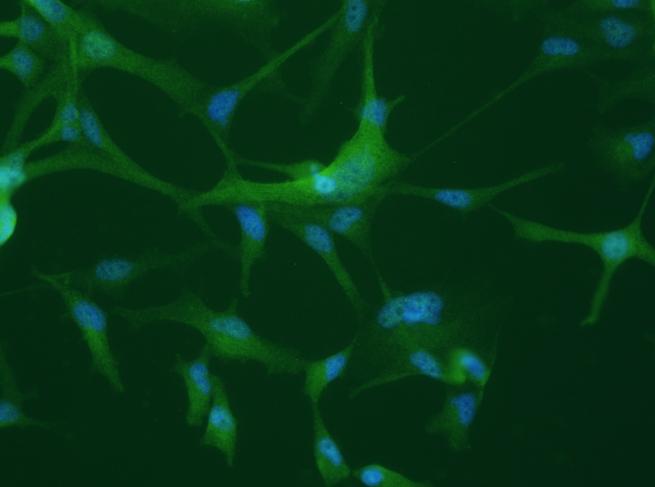
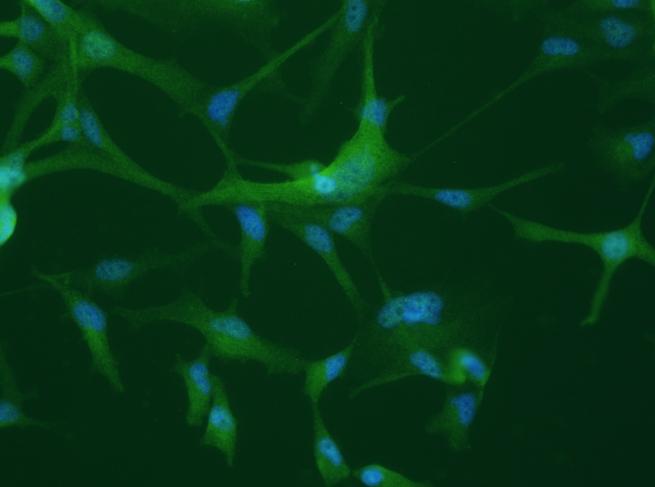
Credit: Daniel Martins-de-Souza, University of Campinas
Schizophrenia affects approximately 1% of the world population and is the main cause of psychiatric incapacitation. Despite its high prevalence and the severity of its symptoms, little is known about the biochemical mechanisms involved in its development or progression.
A study published in Molecular Neuropsychiatry magazine suggests that many of the brain alterations found in patients with schizophrenia may be rooted in the dysfunctional participation of the so-called spliceosome, a protein complex directly involved in the process of protein synthesis.
"Our study is the first to link the spliceosome with the disease," says Daniel Martins-de-Souza, a professor in the Biology Institute of the University of Campinas (IB-UNICAMP), São Paulo State, and principal investigator for the project, which receive support from the São Paulo Research Foundation (FAPESP)
In the cell level, proteins are synthesized through a process in which DNA information is transcripted by the Messenger RNA and then spliced by the spliceosome, whose role is to unite the codifying parts of the genetic code to the precursor molecule, therefore shaping the protein to its functional form.
According to Verônica Saia-Cereda, an Unicamp doctorate student and first author of the article, malfunctioning of the messenger RNA processing machinery may mean that certain proteins are not translated correctly and that their expression is altered throughout the organism, with currently unknown consequences.
On a post-mortem brain tissue comparative analysis between 12 schizophrenia patients and 8 healthy individuals, Martins-de-Souza group detected a high amount of proteins with modified expression at two brain regions that previous research has shown to be morphologically and functionally altered in patients with schizophrenia: the anterior temporal lobe and the corpus callosum.
"The anterior temporal lobe is involved in auditory and visual processing, so it's closely linked to symptoms such as psychosis and hallucinations. The corpus callosum is the brain region that contains the most glial cells [such as astrocytes, microglia, and oligodendrocytes]," Martins-de-Souza said.
According to him, oligodendrocytes are crucial for synapse, for they produce a fatty substance called myelin, in the absence of which the propagation of electric impulses among neurons is impaired.
With the aid of a mass spectrometer, the scientists could map all the proteins found in the nuclei of the cells in these two brain regions and isolating them for analysis, excluding proteins found in other organelles and in the cytoplasm.
In the corpus callosum, they found 119 differentially expressed proteins, 24 of which were nuclear proteins. According to Saia-Cereda, most are involved in calcium-mediated cellular signaling, which is important both to the metabolism of mitochondria (organelles that produce energy for the cell) and to the removal of surplus amounts of the neurotransmitter dopamine from the synaptic vesicle (where information exchange between neurons occurs).
"Alterations in dopamine levels in the brain are associated with the most characteristic symptoms of schizophrenia, such as delirium and hallucinations," Saia-Cereda said.
In the anterior temporal lobe, they found 224 differentially expressed proteins, and 76 were nuclear proteins. Eight of these nuclear proteins are involved in the functioning of the spliceosome — including the ones part of the heterogeneous nuclear ribonucleoprotein (hnRNP) Family, produced by oligodendrocytes. Around 2005, Martins-de-Souza's group found that the expression of hnRNP proteins was also altered in schizophrenia patients.
"Subsequent studies performed by other groups on the basis of our findings showed in animal and cellular models that alterations in hnRNPs do indeed interfere in the neuron myelination process and may impair cerebral connectivity", told Martins-de-Souza. Therefore, this may be the genesis of the myelination dysfunctions associated with schizophrenia,"
Developments
In another study with support from FAPESP, IB-UNICAMP postdoctoral student Mariana Fioramonte is working to identify the proteins that partner with hnRNPs to process messenger RNA.
Martins-de-Souza, her supervisor for the project, explained that the aim is to determine whether the proteins that associate with hnRNPs for this function are different in patients with schizophrenia and people without mental disorders.
"The next step will be to try to modulate the expression of these molecules in the laboratory and observe how the spliceosome functions when some of them are inhibited," he said. "The idea is to try to find the cause of this dysregulation of the spliceosome. Depending on the results, it's possible that some of these proteins can be tested as therapeutic targets."
###
Media Contact
Heitor Shimizu
[email protected]
55-113-838-4223
@AgencyFAPESP
http://www.fapesp.br
Original Source
http://agencia.fapesp.br/26012/