• HOME
  • NEWS
  • EXPLORE
    • CAREER
      • Companies
      • Jobs
    • EVENTS
    • iGEM
      • News
      • Team
    • PHOTOS
    • VIDEO
    • WIKI
  • BLOG
  • COMMUNITY
    • FACEBOOK
    • INSTAGRAM
    • TWITTER
Thursday, January 1, 2026
BIOENGINEER.ORG
No Result
View All Result
  • Login
  • HOME
  • NEWS
  • EXPLORE
    • CAREER
      • Companies
      • Jobs
        • Lecturer
        • PhD Studentship
        • Postdoc
        • Research Assistant
    • EVENTS
    • iGEM
      • News
      • Team
    • PHOTOS
    • VIDEO
    • WIKI
  • BLOG
  • COMMUNITY
    • FACEBOOK
    • INSTAGRAM
    • TWITTER
  • HOME
  • NEWS
  • EXPLORE
    • CAREER
      • Companies
      • Jobs
        • Lecturer
        • PhD Studentship
        • Postdoc
        • Research Assistant
    • EVENTS
    • iGEM
      • News
      • Team
    • PHOTOS
    • VIDEO
    • WIKI
  • BLOG
  • COMMUNITY
    • FACEBOOK
    • INSTAGRAM
    • TWITTER
No Result
View All Result
Bioengineer.org
No Result
View All Result
Home NEWS Science News Stem Cells

Using stem cells to grow new hair

Bioengineer by Bioengineer
January 27, 2015
in Stem Cells
Reading Time: 2 mins read
0
Share on FacebookShare on TwitterShare on LinkedinShare on RedditShare on Telegram

In a new study from Sanford-Burnham Medical Research Institute (Sanford-Burnham), researchers have used human pluripotent stem cells to generate new hair. The study represents the first step toward the development of a cell-based treatment for people with hair loss. In the United States alone, more than 40 million men and 21 million women are affected by hair loss. The research was published online in PLOS One yesterday.
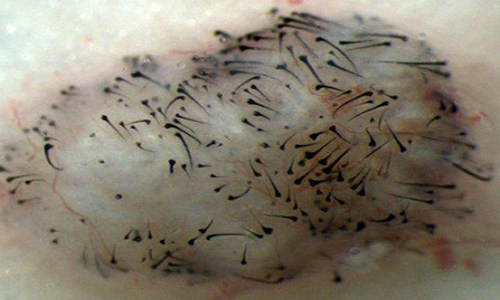
Using stem cells to grow new hair

Scientists at Sanford-Burnham used iPSCs to grow new hair. Photo Credit: Sanford-Burnham Medical Research Institute

“We have developed a method using human pluripotent stem cells to create new cells capable of initiating human hair growth. The method is a marked improvement over current methods that rely on transplanting existing hair follicles from one part of the head to another,” said Alexey Terskikh, Ph.D., associate professor in the Development, Aging, and Regeneration Program at Sanford-Burnham. “Our stem cell method provides an unlimited source of cells from the patient for transplantation and isn’t limited by the availability of existing hair follicles.”

The research team developed a protocol that coaxed human pluripotent stem cells to become dermal papilla cells. They are a unique population of cells that regulate hair-follicle formation and growth cycle. Human dermal papilla cells on their own are not suitable for hair transplants because they cannot be obtained in necessary amounts and rapidly lose their ability to induce hair-follicle formation in culture.

“In adults, dermal papilla cells cannot be readily amplified outside of the body and they quickly lose their hair-inducing properties,” said Terskikh. “We developed a protocol to drive human pluripotent stem cells to differentiate into dermal papilla cells and confirmed their ability to induce hair growth when transplanted into mice.”

“Our next step is to transplant human dermal papilla cells derived from human pluripotent stem cells back into human subjects,” said Terskikh. “We are currently seeking partnerships to implement this final step.”

Story Source:

The above story is based on materials provided by Sanford-Burnham Medical Research Institute.
Share12Tweet8Share2ShareShareShare2

Related Posts

Human stem cells treat spinal cord injury side effects in mice

October 4, 2016

Research into fly development provides insights into blood vessel formation

September 30, 2016

Fertility genes required for sperm stem cells

September 28, 2016

Regulatory RNA essential to DNA damage response

September 27, 2016
Please login to join discussion

POPULAR NEWS

  • blank

    PTSD, Depression, Anxiety in Childhood Cancer Survivors, Parents

    109 shares
    Share 44 Tweet 27
  • NSF funds machine-learning research at UNO and UNL to study energy requirements of walking in older adults

    71 shares
    Share 28 Tweet 18
  • Exploring Audiology Accessibility in Johannesburg, South Africa

    52 shares
    Share 21 Tweet 13
  • SARS-CoV-2 Subvariants Affect Outcomes in Elderly Hip Fractures

    44 shares
    Share 18 Tweet 11

About

We bring you the latest biotechnology news from best research centers and universities around the world. Check our website.

Follow us

Recent News

Assessing HPV Self-Collection Readiness in Tamil Nadu

ImmunoStruct: Advancing Deep Learning in Immunogenicity Prediction

Impact of Post-Liposuction Edema on Weight Loss

Subscribe to Blog via Email

Enter your email address to subscribe to this blog and receive notifications of new posts by email.

Join 71 other subscribers
  • Contact Us

Bioengineer.org © Copyright 2023 All Rights Reserved.

Welcome Back!

Login to your account below

Forgotten Password?

Retrieve your password

Please enter your username or email address to reset your password.

Log In
No Result
View All Result
  • Homepages
    • Home Page 1
    • Home Page 2
  • News
  • National
  • Business
  • Health
  • Lifestyle
  • Science

Bioengineer.org © Copyright 2023 All Rights Reserved.