Medical students participating in a newly piloted interprofessional seminar reported notable learning progress and gave positive ratings to collaborative training focused on the vascular surgery patient journey, according to evaluation findings published in BMC Medical Education. Co-led by vascular surgeons and clinical pharmacists, the educational program was successfully incorporated into the regular vascular surgery curriculum after demonstrating high student acceptance, practical relevance, and perceived educational value during its initial pilot phase.
The educational initiative was designed to address drug safety challenges that frequently arise when managing comorbid vascular surgery patients. To address these vulnerabilities, the course creators emphasized that interprofessional collaboration involving clinical pharmacists provides critical support in identifying medication risks and safeguarding patients throughout the cross-sectoral medication process.
Curriculum developers structured the course using real-life vascular surgery patient cases, following the continuous trajectory of care from hospital admission to post-surgical discharge. By centering coursework on actual surgical journeys, the seminar was designed to illustrate how medication risks manifest at different stages of inpatient treatment and how coordinated care between surgical teams and pharmacy specialists can resolve complex clinical challenges.
The team employed a formal six-step Kern cycle model of curriculum development to guide the design and pedagogical structure of the seminar. Alongside this instructional design framework, course leaders conducted a strengths, weaknesses, opportunities, and threats analysis, commonly termed a SWOT analysis. This analytical approach allowed organizers to identify organizational challenges, anticipate potential implementation barriers, and strategically leverage institutional opportunities before rolling out the seminar.
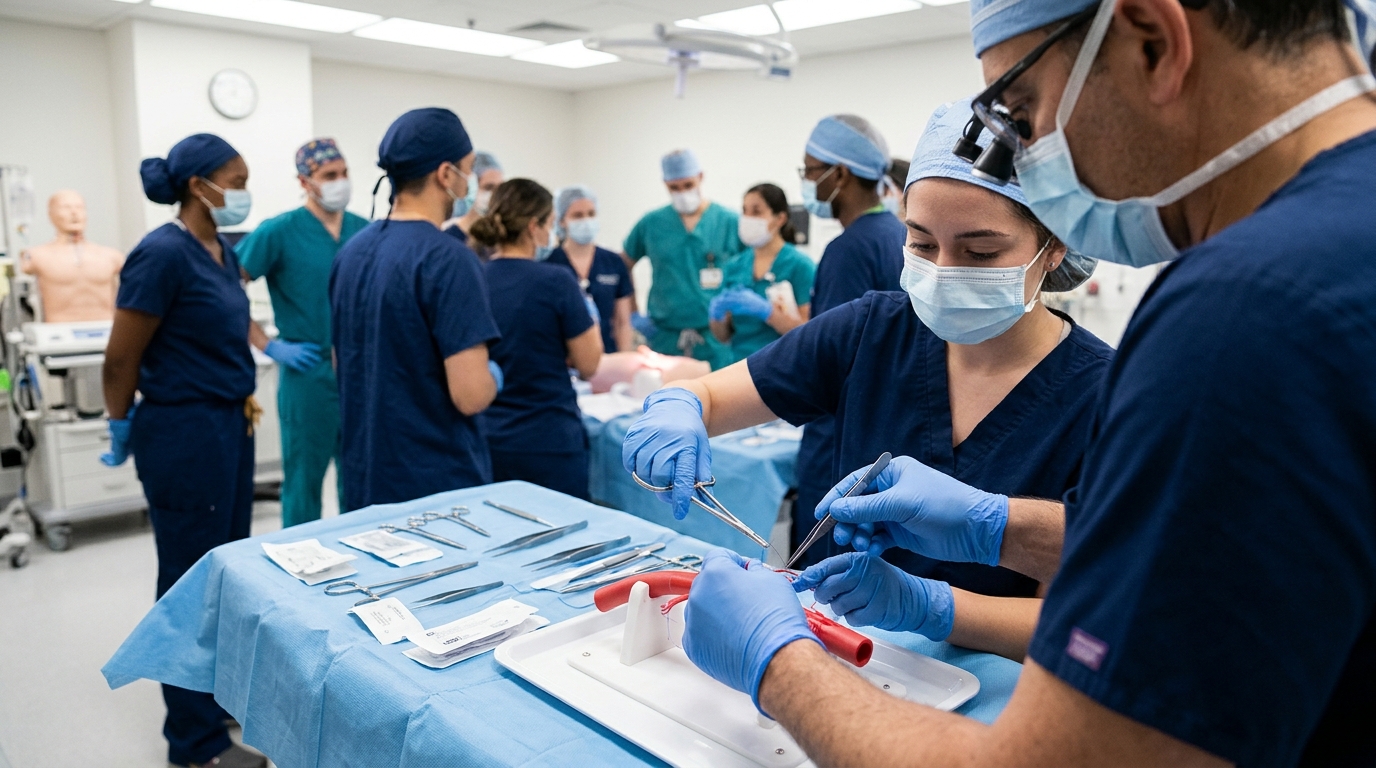
In the classroom, vascular surgeons and clinical pharmacists collaborated directly to deliver course content through active didactic methods, including small-group learning sessions and an inverted classroom model. The explicit learning objectives focused on equipping medical students to identify potential medication risks, search and apply relevant medical literature to resolve drug-related problems, and formulate interprofessional strategies that enhance medication safety during surgical care.
The investigators evaluated the pilot intervention using self-reported survey data collected from medical students who participated in the initial rollout. Out of 240 students involved in the pilot phase, 142 completed the post-course evaluation, representing a survey response rate of 59.1 percent. The researchers analyzed student impressions using a 14-item questionnaire combined with qualitative content analysis of students’ open-ended free-text comments, assessing acceptance, perceived learning gains, and practical relevance.
Survey respondents rated the seminar’s practical relevance, the interprofessional teaching format, and the interactive didactic methods favorably, while noting personal gains in understanding drug safety within surgical pathways. Following its curricular integration, the authors concluded that this collaborative framework offers a workable model for connecting clinical practice with team-based care, suggesting that similar interprofessional teaching structures could be adapted across other medical specialties to strengthen cross-sectoral medication management.
Subject of Research: Medical student perceptions of an interprofessional vascular surgery and medication safety seminar
Article Title: Teaching the bigger picture – student perceptions on interprofessional teaching on the patient journey in vascular surgery
Article References: Morath, B., Chiriac, U., Hoppe-Tichy, T., Schoening, T., Böckler, D., Bischoff, M. S., Barb, A., Schulz, M., & Meisenbacher, K. (2026). Teaching the bigger picture – student perceptions on interprofessional teaching on the patient journey in vascular surgery. BMC Medical Education. https://doi.org/10.1186/s12909-026-10760-3
Image Credits: AI Generated
DOI: 10.1186/s12909-026-10760-3
Keywords: vascular surgery, interprofessional education, clinical pharmacists, medication safety, drug-related problems, patient journey, cross-sectoral care, Kern cycle, SWOT analysis, inverted classroom, small group learning, medical education, curriculum development, qualitative content analysis, questionnaire evaluation, comorbid surgical patients, perceived learning progress
News Source: Ophelia Keating. (November 18, 2026). Medical Students Report Learning Progress in Interprofessional Vascular Surgery Seminar. Scienmag.