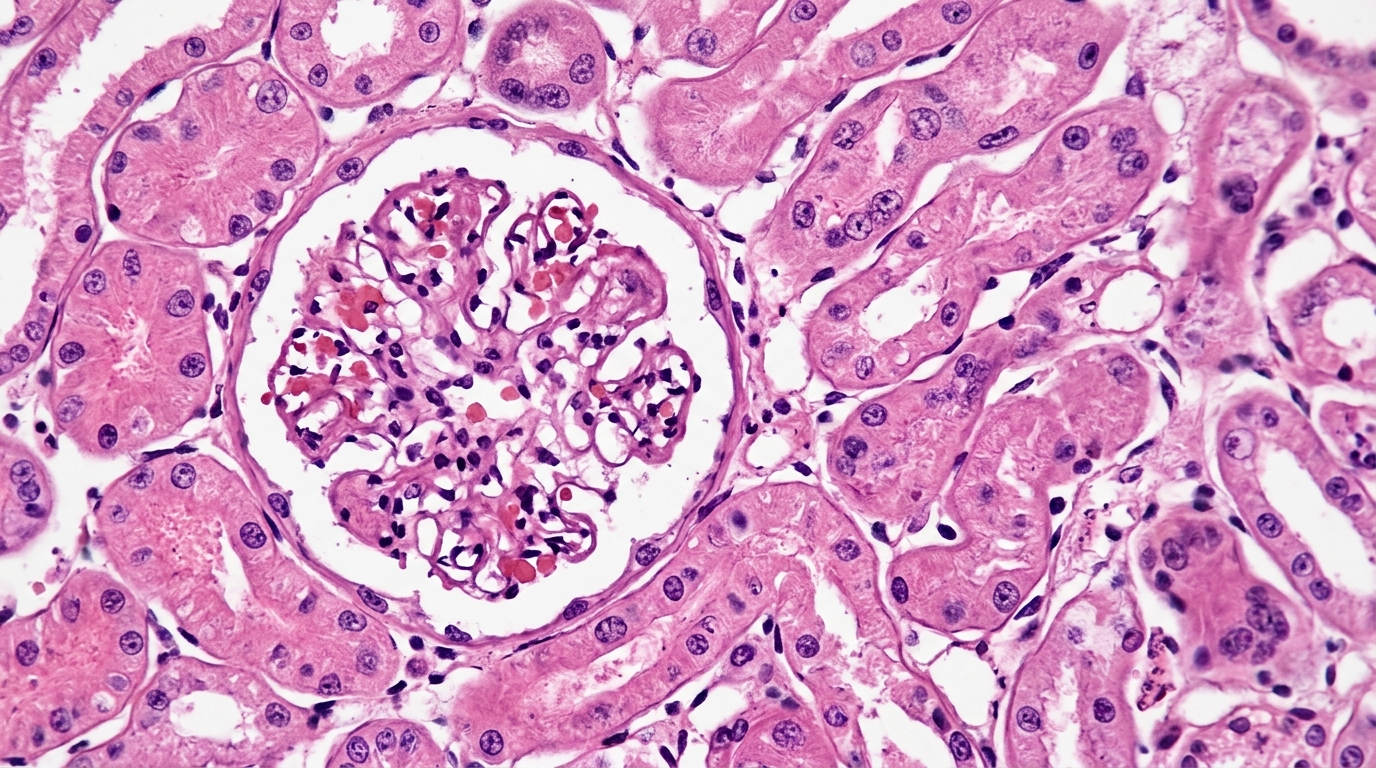
Nearly half of patients who experienced severe acute kidney injury (AKI) had non-resolving kidney dysfunction at the time of ICU discharge, despite having normal levels of serum creatinine. This finding, published in the journal Critical Care, suggests that standard clinical reliance on serum creatinine as a proxy for renal recovery may significantly underestimate the burden of persistent dysfunction in critically ill patients.
The multicenter, observational study focused on patients who experienced KDIGO stage 2 or 3 AKI during their stay in the intensive care unit (ICU). Researchers included 137 participants who had reached serum creatinine levels below 130 µmol/L for men or 110 µmol/L for women by the time they were ready for discharge. Iohexol clearance and serum and urinary creatinine were measured at ICU discharge, once other organ failures had resolved.
The data revealed that 70 patients, or 51% of the cohort, exhibited non-resolving kidney dysfunction, defined as an iohexol clearance rate below 60 mL/min/1.73 m2.
Among the patients with non-resolving impairment, urine creatinine clearance measured less than 60 mL/min/1.73 m2 in 69% of cases, while the CKD-EPI-based estimated GFR failed to capture the majority, identifying the issue in only 19% of the patients. These results suggest that relying on common blood-based estimates can lead to the false conclusion that kidneys have fully recovered.
A multivariable analysis identified several risk factors associated with this persistent dysfunction. Older age, longer durations of stay in the ICU, the presence of malignancy, and higher baseline or admission serum creatinine levels were all linked to an increased likelihood of non-resolving kidney dysfunction at discharge.
Patients classified as having non-resolving dysfunction at the time of discharge maintained significantly lower CKD-EPI GFR scores at six months compared to those who had experienced resolving dysfunction. This long-term association underscores the potential progression from acute injury to chronic kidney disease, even when early signs are seemingly normalized.
The study highlights fundamental limitations in using serum creatinine alone to assess renal recovery in the acute setting.
Subject of Research: Clinical evaluation of residual kidney dysfunction in post-AKI critical care patients.
Article Title: Evaluation of kidney function at ICU discharge using iohexol clearance in patients with normal serum creatinine after acute kidney injury
Article References: Beloncle, F. M., Gandonnière, C. S., Bretagne, I. B.-D., Ehrmann, S., Hamel, J.-F., Tirot, P., Conia, A., Canet, E., Coutrot, M., Lautrette, A., Pape, S. L., Robert, R., Lacherade, J.-C., Dellamonica, J., Woillard, J.-B., Lerolle, N., & Guellec, C. B.-L. (2026). Evaluation of kidney function at ICU discharge using iohexol clearance in patients with normal serum creatinine after acute kidney injury. Critical Care. https://doi.org/10.1186/s13054-026-06465-0
Image Credits: AI Generated
DOI: 10.1186/s13054-026-06465-0
Keywords: Acute Kidney Injury, Critical Care, Renal Function, Iohexol Clearance, Serum Creatinine, Glomerular Filtration Rate, ICU Discharge, Renal Recovery, Chronic Kidney Disease, Critical Illness, Multicenter Study, Renal Impairment, Observational Research, CKD-EPI, Patient Monitoring, Renal Physiology
News Source: Ophelia Keating. (November 18, 2026). Severe Kidney Injury Often Leaves Residual Dysfunction Despite Normal Creatinine Levels. Scienmag.