• HOME
  • NEWS
  • EXPLORE
    • CAREER
      • Companies
      • Jobs
    • EVENTS
    • iGEM
      • News
      • Team
    • PHOTOS
    • VIDEO
    • WIKI
  • BLOG
  • COMMUNITY
    • FACEBOOK
    • INSTAGRAM
    • TWITTER
Saturday, February 7, 2026
BIOENGINEER.ORG
No Result
View All Result
  • Login
  • HOME
  • NEWS
  • EXPLORE
    • CAREER
      • Companies
      • Jobs
        • Lecturer
        • PhD Studentship
        • Postdoc
        • Research Assistant
    • EVENTS
    • iGEM
      • News
      • Team
    • PHOTOS
    • VIDEO
    • WIKI
  • BLOG
  • COMMUNITY
    • FACEBOOK
    • INSTAGRAM
    • TWITTER
  • HOME
  • NEWS
  • EXPLORE
    • CAREER
      • Companies
      • Jobs
        • Lecturer
        • PhD Studentship
        • Postdoc
        • Research Assistant
    • EVENTS
    • iGEM
      • News
      • Team
    • PHOTOS
    • VIDEO
    • WIKI
  • BLOG
  • COMMUNITY
    • FACEBOOK
    • INSTAGRAM
    • TWITTER
No Result
View All Result
Bioengineer.org
No Result
View All Result
Home NEWS Science News Biology

Newly discovered infectious prion structure shines light on mad cow disease

Bioengineer by Bioengineer
January 25, 2018
in Biology, Science News
Reading Time: 2 mins read
0
Share on FacebookShare on TwitterShare on LinkedinShare on RedditShare on Telegram
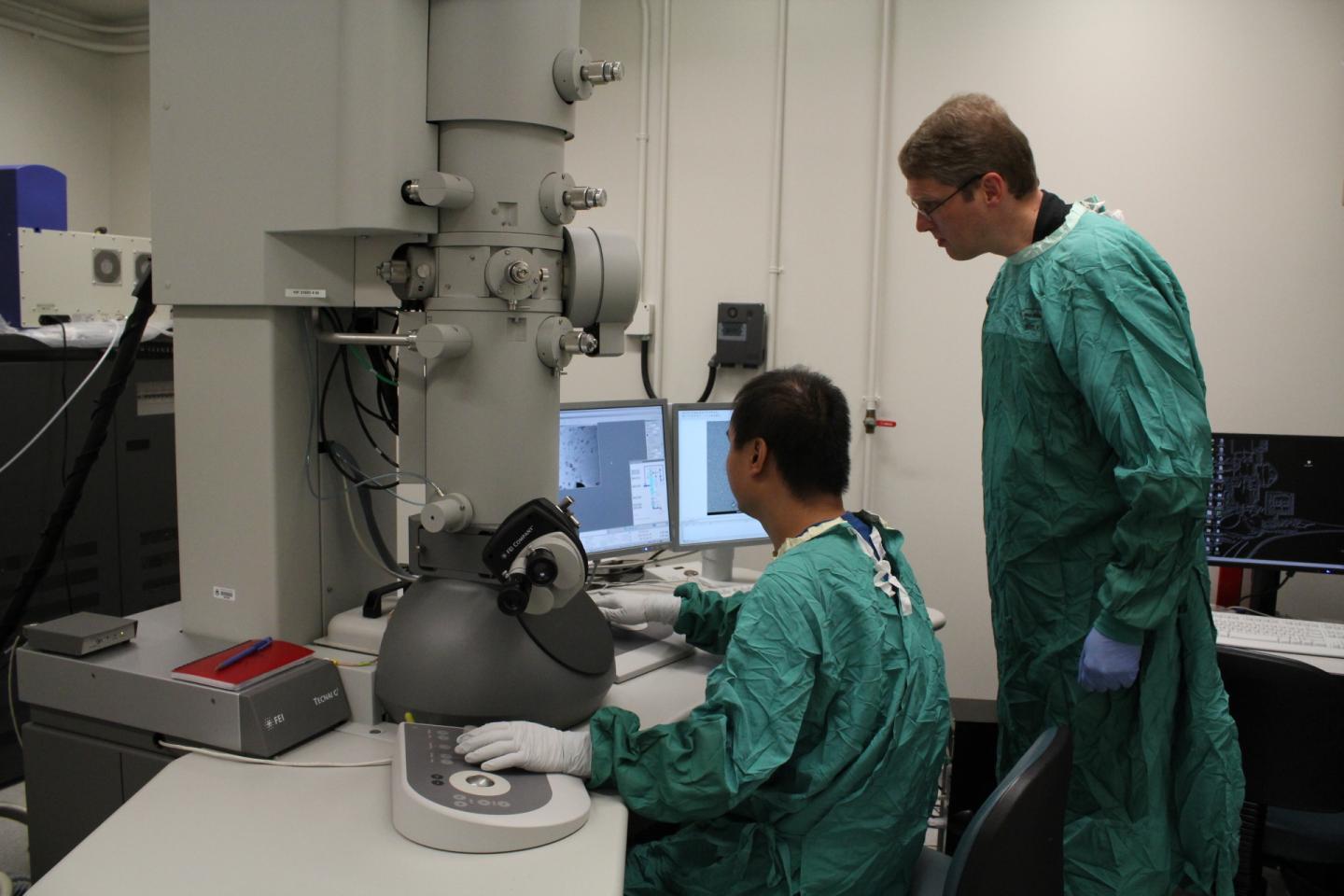
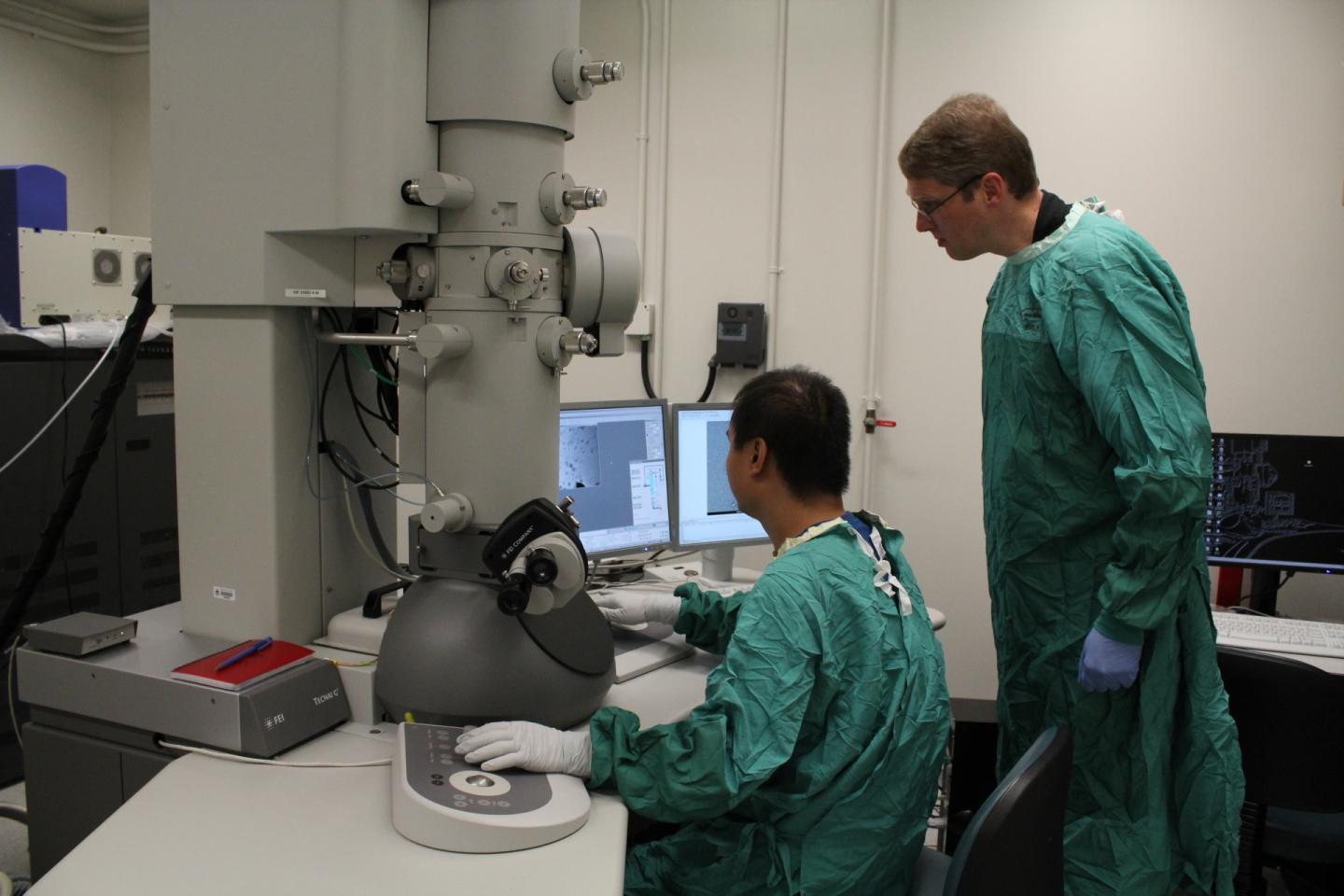
IMAGE

(Edmonton, AB) Groundbreaking research from the University of Alberta has identified the structure of the infectious prion protein, the cause of "mad cow disease" or BSE, chronic wasting disease in deer and elk and Creutzfeldt-Jakob disease in humans, which has long remained a mystery.

The infectious prion protein is a misfolded protein, which makes it very difficult to purify and study. Since it clumps together, standard structural biology techniques cannot be used to study it. Since the protein was first purified in the 1980s researchers have made limited insights into the structure of the protein.

The collaborative study, published in PLOS Pathogens, used electron cryomicroscopy to collect high-resolution electron micrographs. This was the first time this technology has been used on amyloid fibrils of the infectious prion, which are a special form of clumped-together proteins that form fibrils.

"The recent advances to electron cryomicroscopy technology are certainly a breakthrough," says Holger Wille, co-principal investigator and an associate professor in the Department of Biochemistry at the University of Alberta's Faculty of Medicine & Dentistry. "We know the structure of the healthy normal cellular form of the protein, but we knew very little about the infectious prion protein and how it propagates. The use of these high-powered microscopes has finally given us some clarity."

The team had to develop a processing scheme for the data masses. There were thousands of electron micrographs, and they had to extract the best images. After three years of working, developing techniques and processing data the results in the paper are a three-dimensional model for the structure of the infectious prion protein.

"It is not an atomistic model, so we cannot say which position the atoms are in," says Wille. "But this is something we hope to do in the future."

The model can give insights into how the infectious prion protein propagates. The structure argues against existing theories of prion conversion and suggests how the process might actually work. The study suggests how infectious prions replicate by converting non-infectious, cellular versions into copies of themselves.

Moving forward, the researchers want to go into more depth. This study used model system prions, but they are now using the prions that infect cows (BSE), wild animals (Chronic Wasting Disease) and humans (Creutzfeldt-Jakob Disease).

"Ultimately, if we know how the prion propagates, we could come up with clinical interventions to treat or prevent disease," says Wille.

###

This research was supported by the Alberta Prion Research Institute and the Alberta Livestock and Meat Agency.

"The Structural Architecture of an Infectious Mammalian Prion Using Electron Cryomicroscopy," PLOS Pathogens, published online September 8, 2016.

Media Contact

Shelby Soke
[email protected]
403-988-4730
@ualberta_fomd

http://www.med.ualberta.ca

Share12Tweet8Share2ShareShareShare2

Related Posts

Evaluating Pediatric Emergency Care Quality in Ethiopia

February 7, 2026

TPMT Expression Predictions Linked to Azathioprine Side Effects

February 7, 2026

Improving Dementia Care with Enhanced Activity Kits

February 7, 2026

Decoding Prostate Cancer Origins via snFLARE-seq, mxFRIZNGRND

February 7, 2026
Please login to join discussion

POPULAR NEWS

  • Robotic Ureteral Reconstruction: A Novel Approach

    Robotic Ureteral Reconstruction: A Novel Approach

    82 shares
    Share 33 Tweet 21
  • Digital Privacy: Health Data Control in Incarceration

    63 shares
    Share 25 Tweet 16
  • Study Reveals Lipid Accumulation in ME/CFS Cells

    57 shares
    Share 23 Tweet 14
  • Breakthrough in RNA Research Accelerates Medical Innovations Timeline

    53 shares
    Share 21 Tweet 13

About

We bring you the latest biotechnology news from best research centers and universities around the world. Check our website.

Follow us

Recent News

Evaluating Pediatric Emergency Care Quality in Ethiopia

TPMT Expression Predictions Linked to Azathioprine Side Effects

Improving Dementia Care with Enhanced Activity Kits

Subscribe to Blog via Email

Success! An email was just sent to confirm your subscription. Please find the email now and click 'Confirm' to start subscribing.

Join 73 other subscribers
  • Contact Us

Bioengineer.org © Copyright 2023 All Rights Reserved.

Welcome Back!

Login to your account below

Forgotten Password?

Retrieve your password

Please enter your username or email address to reset your password.

Log In
No Result
View All Result
  • Homepages
    • Home Page 1
    • Home Page 2
  • News
  • National
  • Business
  • Health
  • Lifestyle
  • Science

Bioengineer.org © Copyright 2023 All Rights Reserved.