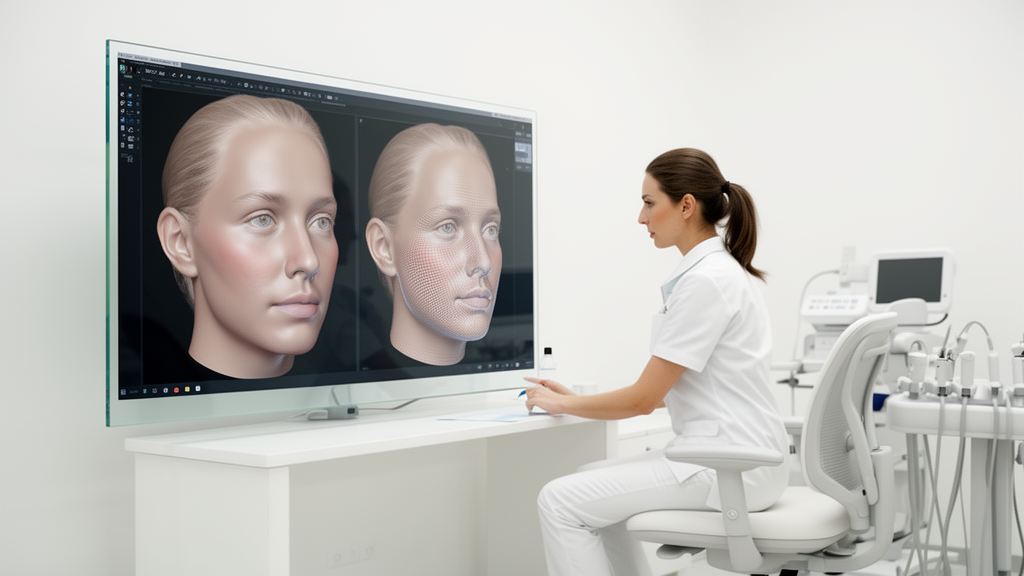
An exploratory proof-of-concept investigation published in BMC Plastic and Reconstructive Surgery demonstrated that machine learning algorithms can quantitatively detect differences in facial appearance between preoperative and postoperative photographs of patients undergoing autologous facial fat transfer. Analyzing paired two-dimensional frontal images from fifty female subjects, the automated platform registered statistically significant postoperative gains across three dedicated indices tracking facial attractiveness, perceived youthfulness, and visible skin characteristics. While the digital metrics recorded measurable improvements across each category, the research team highlighted that the study utilized heterogeneous, publicly sourced photographs without standardized clinical controls, meaning the observed numerical score elevations cannot be definitively or causally attributed to the biological effects of the surgical procedure itself.
Autologous facial fat grafting, frequently designated as lipofilling, has emerged as a cornerstone procedure within modern aesthetic and reconstructive plastic surgery to counter the multifaceted anatomical processes of facial aging. By harvesting adipose tissue from a patient’s own donor site and transferring it into targeted facial planes, surgeons seek to achieve natural volumetric augmentation with minimal donor-site morbidity. Beyond physical volume replacement, scientific interest has increasingly focused on the putative regenerative properties of adipose-derived stem cells and associated bioactive growth factors residing within the grafted tissue, which may contribute to cellular tissue renewal, local angiogenesis, and dermal matrix remodeling.
Despite the widespread clinical adoption of facial lipofilling since structural grafting techniques were popularized in the late 1990s, measuring surgical outcomes with rigorous scientific precision remains exceptionally challenging for clinicians and researchers alike. Historically, postoperative results have been appraised through subjective clinician evaluations, qualitative side-by-side photographic reviews, or subjective patient-reported satisfaction questionnaires. Although these conventional assessments yield valuable clinical insights, they remain vulnerable to considerable observer variability, cognitive bias, and inconsistent reproducibility across different surgical practices and published trials. The historic absence of standardized, objective, and reproducible measurement tools has consequently hampered the ability of plastic surgeons to compare surgical techniques, evaluate graft survival, and establish uniform benchmarks for aesthetic interventions across diverse patient cohorts.
To address this long-standing methodological limitation, researchers deployed an automated computational image-analysis framework known as the ICA Aesthetic Navigation Artificial Intelligence Research Metrics Model, designated as ICAAN ARMM. Operating through machine learning algorithms trained on expansive, real-world datasets encompassing diverse age distributions, multinational backgrounds, and varied ethnic facial morphologies, the platform evaluates predefined anatomical landmarks across facial images. By mathematically mapping the spatial relationships, proportions, contours, and surface textures of the face, the computational model translates visual features into standardized numerical scores ranging from zero to one hundred, where higher values denote more favorable aesthetic characteristics, enabling objective before-and-after comparisons across identical individuals.
The automated software platform evaluated three primary composite indices to quantify structural and surface changes between paired photographs. The Facial Aesthetic Index, or FAI, measures overall facial attractiveness and proportional harmony by calculating facial symmetry, spatial landmark coordinates, and contour balance across facial thirds. The Facial Youthfulness Index, or FYI, computationally estimates perceived facial age by analyzing morphological characteristics traditionally associated with youthfulness, including midfacial volume distribution, jawline definition, and the depth of age-related soft tissue depressions. The third metric, the Skin Quality Index, or SQI, evaluates visible cutaneous features across the facial surface, including textural uniformity, visible superficial irregularities, and pixel-level parameters reflecting perceived skin clarity and smoothness.
The study cohort comprised fifty female individuals whose paired frontal photographs were retrospectively retrieved from publicly accessible aesthetic surgery case records on RealSelf.com. Patient ages spanned from eighteen to over seventy-five years, with exactly half of the cohort aged under forty-five years and the remaining twenty-five subjects aged forty-five or older. The majority of the cohort was documented as Caucasian, representing forty-seven of the fifty subjects, and the documented surgical indications were predominantly aesthetic facial rejuvenation rather than reconstructive repair of acquired deformities. Preoperative and postoperative photographs were screened to ensure adequate frontal alignment, visible landmarks, and sufficient image resolution, while excluding images with severe head rotation, substantial facial obstructions, or obvious artifacts that would prevent algorithmic tracking.
Statistical evaluation of the paired digital measurements was conducted in RStudio using non-parametric methods, specifically paired Wilcoxon signed-rank tests, due to non-normal data distributions across the cohort. Continuous scoring data were presented as medians alongside interquartile ranges, with two-sided significance set at a threshold of p less than 0.05. The investigators calculated effect sizes for the non-parametric paired tests, defining r values derived from standard normal approximations to gauge the relative magnitude of change. In addition, independent group comparisons between younger patients under forty-five and older patients aged forty-five and above were executed using the Mann-Whitney U test, without applying mathematical corrections for multiple hypothesis testing.
Across the entire fifty-patient cohort, the artificial intelligence system identified statistically significant postoperative score elevations across all three evaluated aesthetic parameters. The median Facial Aesthetic Index increased significantly from a baseline of 81.0, with an interquartile range of 72.2 to 86.8, up to a postoperative median of 85.0, with an interquartile range of 75.2 to 89.8, yielding a statistically significant p-value of 0.005 and a moderate effect size of r equal to 0.390. Similarly, the Facial Youthfulness Index rose from a preoperative median of 61.0 to a postoperative median of 66.5, showing a statistically significant p-value of 0.021 and a moderate effect size of r equal to 0.319.
The most pronounced numerical improvement identified by the algorithm occurred within the Skin Quality Index, where median scores climbed from 88.0 preoperatively, with an interquartile range of 82.2 to 91.8, to 91.0 postoperatively, with an interquartile range of 87.0 to 95.0. This difference was highly statistically significant at p less than 0.001 and corresponded to a large effect size of r equal to 0.511. Subgroup comparisons between patients aged under forty-five and those aged forty-five or older revealed a consistent trend toward larger score gains among older individuals across all three metrics, although these age-related variations did not reach statistical significance on Mann-Whitney testing.
To explore the influence of extreme follow-up variations in the primary dataset, which spanned from five days to seven years post-procedure, the authors conducted an exploratory post hoc subgroup analysis restricted to twenty-five subjects photographed between six weeks and four months following surgery. Within this more standardized temporal window, the Facial Aesthetic Index demonstrated a statistically significant increase from a median of 79 to 82, with a p-value of 0.005, while the Skin Quality Index similarly showed a significant elevation from 88 to 92, with a p-value of 0.008. In contrast, the increase in the Facial Youthfulness Index from 64 to 68 failed to achieve statistical significance in this smaller subgroup, registering a p-value of 0.137.
The authors emphasized extensive methodological and technical limitations that preclude interpreting these digital observations as proof of surgical efficacy or biological rejuvenation. Because the photographs were retrospectively gathered from public online portals rather than collected under standardized scientific studio conditions, critical photographic variables remained uncontrolled. Inherent inconsistencies in illumination, color temperature, camera sensor characteristics, focal length, head tilting, facial expressions, cosmetic makeup, hairstyle, and unverified digital image editing or retouching could easily influence facial landmark positioning and automated skin scoring. Furthermore, relying entirely on two-dimensional frontal images inherently fails to capture the three-dimensional volumetric expansion, lateral projection, and contour depth that define autologous fat grafting outcomes.
Crucially, the investigators underscored that the large statistical effect size detected in the Skin Quality Index cannot be directly interpreted as biological proof of dermal tissue renewal or stem-cell-mediated skin revitalization. Apparent changes in image-derived skin quality may reflect cosmetic makeup application, favorable postoperative lighting, digital smoothing filters, or residual postoperative edema rather than true histological remodeling. Additionally, the public data source prevented verification of surgical volumes, donor harvest locations, purification techniques, or whether patients received concomitant aesthetic procedures such as facelifts, blepharoplasties, chemical peels, energy-based resurfacing, or neuromodulator injections, preventing isolated causal attribution to fat transfer alone.
Classified as Level of Evidence IV, the study underscores both the emerging promise and current limitations of applying commercial computer vision models to plastic surgery outcome evaluation. Because the underlying algorithms of the proprietary platform remain opaque, the specific weighting of individual facial features within composite scores cannot be independently audited, nor have formal minimal clinically important difference thresholds or test-retest reliability metrics been established. The researchers concluded that while automated facial analysis represents a feasible, practical adjunct for future photographic assessment, prospective clinical investigations utilizing standardized photographic studios, verified surgical protocols, diverse multi-ethnic patient samples, and validated patient-reported outcome measures such as the FACE-Q are essential before artificial intelligence can guide routine clinical decision-making.
Subject of Research: Artificial intelligence quantitative evaluation of aesthetic outcomes following facial fat transfer
Article Title: Artificial intelligence–based quantitative evaluation of aesthetic outcomes following facial fat transfer
Article References: Alves, A. S., Martineau, J., Pooth, R., Kalbermatten, D. F., Niederegger, T., Bigus, S., Heiland, M., Cetrulo, C. L., Jr., Lellouch, A. G., & Knoedler, L. (2026). Artificial intelligence–based quantitative evaluation of aesthetic outcomes following facial fat transfer. BMC Plastic and Reconstructive Surgery, 2(1), Article 32. https://doi.org/10.1186/s44452-026-00045-5
Image Credits: AI Generated
DOI: 10.1186/s44452-026-00045-5
Keywords: facial fat transfer, autologous fat grafting, artificial intelligence, aesthetic surgery, facial rejuvenation, Facial Aesthetic Index, Facial Youthfulness Index, Skin Quality Index, computer vision, ICAAN ARMM, facial landmark analysis, reconstructive surgery, plastic surgery research, digital image analysis, aesthetic outcome measurement, retrospective cohort study, lipofilling
News Source: Blake Davidson. (November 18, 2026). Artificial Intelligence Evaluates Objective Aesthetic Score Changes Following Facial Fat Transfer. Scienmag.