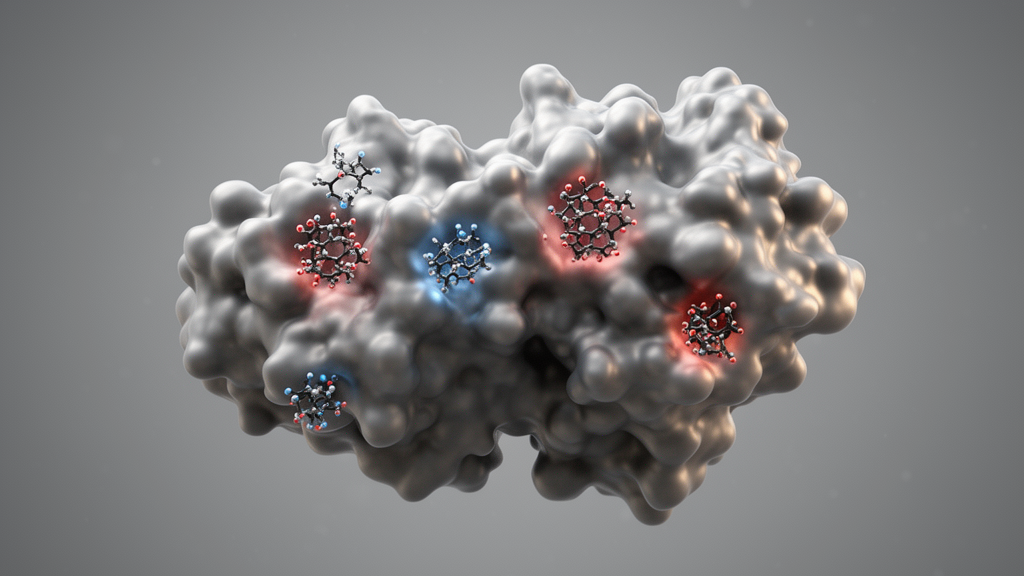
A computational drug discovery team has established an integrated fragment-based de novo design workflow to generate and prioritize candidate small molecules targeting an underexplored allosteric site on histone deacetylase 8 from the parasitic blood fluke Schistosoma mansoni. Current therapeutic management depends almost exclusively on praziquantel, which lacks efficacy against juvenile larval stages of the parasite. Through automated fragment assembly, the investigators generated nine focused chemical libraries comprising 2,355 unique standardized small molecules, establishing a novel reservoir of non-hydroxamate chemotypes designed to modulate parasite epigenetic machinery while avoiding the cross-reactivity associated with conventional active-site inhibitors.
Epigenetic regulation in Schistosoma mansoni is controlled by specialized enzymes that alter chromatin structure without changing underlying DNA sequences. As erasers, histone deacetylases remove acetyl groups from protein lysine residues, regulating transcription, cell signaling, and apoptosis. The smHDAC8 isoform exhibits the highest transcript abundance among all schistosome deacetylases, indicating a vital parasite-specific function. However, developing selective inhibitors has historically been impeded by the intense evolutionary conservation of the catalytic pocket across the HDAC family. While most reported smHDAC8 inhibitors rely on hydroxamate zinc-chelating groups, recent structural studies resolved an allosteric pocket defined by the reference ligand NF2889. This allosteric site provides an alternative target to achieve species-selective inhibition by binding non-conserved outer residues rather than the conserved zinc-dependent catalytic center.
To exploit this allosteric vulnerability, the researchers deployed a structure-based de novo design strategy utilizing LigBuilder version 3. In fragment-based de novo design, fragments are selected from a library and expanded into larger, optimized molecules through growing, linking, or merging strategies. Using the crystallographic coordinate dataset of smHDAC8 complexed with NF2889 from the Protein Data Bank under accession code 7P2U, the team applied LigBuilder’s Cavity module to detect druggable surface cavities. The program identified four distinct binding sites in the allosteric region. The researchers selected Cavity 1 for library construction because it encompasses all seven key residues previously identified in structural characterizations of the allosteric pocket: His189, Glu194, Glu195, Trp198, Thr219, Leu234, and Asn246.
Building blocks for de novo generation were gathered from three distinct fragment libraries balancing biological relevance, diversity, and synthetic accessibility. The primary set comprised 1,214 experimentally available fragments from the Center for Research and Advancement in Fragments and Molecular Targets, designated CRAFT, an initiative focused on parasitic and tropical diseases. The second library provided 177 diversity-oriented fragments from the commercial Life Chemicals Soluble collection. The third source, UNPD-A, provided 177 natural product-derived fragments generated through RECAP fragmentation of the Universal Natural Product Database, filtered to retain fragments with distribution coefficients at pH 7.4 of 3 or less. Within LigBuilder, parameters restricted molecular weights between 175 and 665 g/mol, logP between minus 3 and 7, and controlled hydrogen-bonding capacity. An initial output of 10,097 three-dimensional conformers was standardized using MolVS and RDKit, yielding 2,355 unique small molecules with preserved chiral centers.
To guarantee that the newly assembled molecules possessed realistic chemistry, the 2,355 compounds were evaluated using chemoinformatic assessments of synthetic accessibility and structural diversity. Synthetic feasibility was quantified using the synthetic accessibility score, where values below 6 indicate favorable synthetic tractability. Across all nine sub-libraries, scores exhibited normal distributions with modes between 2 and 4 and an absolute ceiling of 4.4620, confirming that the de novo protocol generated synthetically accessible structures. Diversity evaluations using 1024-bit Morgan2 fingerprints and 166-bit MACCS keys showed minimal internal redundancy, with median pairwise Tanimoto similarity values between 0.135 and 0.206. Core scaffold analyses demonstrated that while benzene was the most frequent ring across all sets, libraries displayed diverse secondary heterocycles including pyridines, pyrazoles, triazoles, and pyrimidines. Bemis-Murcko framework analysis revealed negligible scaffold overlap between fragment sources, confirming that each parent fragment set imparted distinct structural characteristics upon the generated chemical space.
To isolate the most promising candidates, the researchers performed an orthogonal consensus virtual screening protocol combining AutoDock Vina version 1.2.5 and the Molecular Operating Environment. Docking parameters were first validated by redocking co-crystallized NF2889 into smHDAC8, achieving root-mean-square deviations of 1.75 angstroms in MOE and 2.55 angstroms in AutoDock Vina. The 2,355 standardized structures were subsequently docked into the defined allosteric box centered at x equals minus 28.486, y equals minus 0.006, and z equals 32.400. In the initial affinity-based selection, calculated binding energies of NF2889 served as thresholds, identifying 121 compounds outperforming the reference ligand. Enforcing stricter consensus cutoffs—requiring a MOE score below minus 6.50 kcal/mol and an AutoDock Vina score below minus 7.86 kcal/mol—narrowed the candidate pool to the 20 highest-affinity compounds. This top cohort contained 11 molecules derived from CRAFT fragments, 6 from the natural product UNPD-A collection, and 3 from Life Chemicals.
The investigators implemented a second selection strategy based on ligand efficiency to prioritize smaller, potentially more synthetically accessible compounds while maintaining favorable docking performance. Calculated as the docking score divided by heavy-atom count, ligand efficiency normalizes binding strength by molecular size. Initial screening identified 1,900 compounds outperforming NF2889 in size-normalized efficiency. Raising the threshold to a MOE efficiency below minus 0.359 kcal/mol and a Vina efficiency below minus 0.360 kcal/mol isolated the top 20 size-efficient candidates, comprising 7 CRAFT, 8 UNPD-A, and 5 Life Chemicals molecules. These structures were substantially smaller than the affinity-prioritized set, generally featuring a single ring decorated with polar amine, carboxylic acid, or alcohol groups.
To assess structural stability beyond static docking poses, the researchers conducted all-atom molecular dynamics simulations on a representative subset of 10 candidates selected from the pooled 40 molecules using the iSIM complementary structural similarity algorithm. Triplicate 200-nanosecond simulations were carried out in GROMACS 2021.6 utilizing the CHARMM36m force field, CGenFF ligand parameters, and explicit TIP3P water with 0.15 molar sodium chloride and catalytic zinc ions. The simulations revealed that ligand stability exists along a continuum of pocket residence times. Six molecules consistently dissociated from smHDAC8 across replicates, reflecting pose uncertainties or complex instability. However, four compounds—CRAFT_2000_534, UNPDA_1000_58, LCS_2000_552, and CRAFT_2000_359—demonstrated persistent occupancy within the allosteric pocket. LCS_2000_552 exhibited the greatest reproducibility, remaining bound across all three 200-nanosecond replicates.
Trajectory examinations demonstrated distinct binding geometries determined by molecular dimensions relative to cavity volume. Larger candidates—CRAFT_2000_534, UNPDA_1000_58, and LCS_2000_552—adopted partially bound conformations where one terminal moiety remained buried inside the allosteric pocket while the opposite end projected into solvent. Root-mean-square deviation metrics indicated that the buried segments maintained rigid stability, while solvent-exposed portions exhibited substantial conformational mobility. Conversely, the smaller candidate CRAFT_2000_359 remained completely buried inside the pocket, recording a low root-mean-square deviation of 1.79 plus or minus 0.22 angstroms. Binding free energy calculations performed with the molecular mechanics Poisson-Boltzmann surface area method over 50 to 100 nanosecond snapshots yielded predicted binding energies of minus 20.34 kcal/mol for UNPDA_1000_58, minus 19.05 kcal/mol for LCS_2000_552, and minus 14.40 kcal/mol for CRAFT_2000_534. These values surpassed the reference ligand NF2889 at minus 11.68 kcal/mol, while CRAFT_2000_359 scored minus 4.79 kcal/mol despite maintaining continuous physical residence.
Residue-level energy decomposition highlighted tryptophan 198 as a fundamental interaction partner across all analyzed complexes. Trp198 contributed consistently favorable binding free energies through persistent hydrogen bonding, hydrophobic contacts, and aromatic stacking. In human hHDAC8, the corresponding residue is serine 190. Furthermore, dynamic cross-correlation matrix calculations revealed that allosteric ligand binding prompted substantial reorganization of long-range protein dynamics. The binding of candidate modulators shifted intrinsic correlated motions into anti-correlated motions connecting allosteric residues—including 209, 219 through 221, 223, 233 through 235, 244, and 246—with core catalytic residues His141, His142, Gly150, and Phe151.
The computational prioritization concluded with medicinal chemistry and pharmacokinetic assessments using SwissADME and ADMETlab 3.0. Structural alert screening showed that none of the four simulation-stable candidates carried Pan-Assay Interference Compounds flags. CRAFT_2000_534 and LCS_2000_552 triggered Brenk alerts for reactive groups like catechols, hydroquinones, and aminals, which may necessitate synthetic optimization to avoid oxidation or hydrolysis. In contrast, UNPDA_1000_58 and CRAFT_2000_359 were completely free of both PAINS and Brenk alerts, displaying superior drug-likeness profiles. Pharmacokinetic modeling indicated both molecules possess low plasma protein binding (17.5 and 9.8 percent) and high unbound fractions (73.3 and 92.5 percent), ensuring abundant free drug in circulation, paired with minimal risk of cytochrome P450 inhibition. Recognizing that computational models represent approximate hypotheses requiring experimental verification, the authors prioritized UNPDA_1000_58 and CRAFT_2000_359 for chemical synthesis, enzymatic testing, and parasite assays, while releasing all chemical libraries and modeling workflows in public open-access repositories.
Subject of Research: De novo computational design of allosteric smHDAC8 modulators for schistosomiasis
Article Title: Structure-based de novo design and computational prioritization of candidate allosteric smHDAC8 modulators: a fragment-based strategy against schistosomiasis
Article References: Sánchez-López, O., Chávez-Hernández, A. L., Ramírez-Cid, V., Velasco-Velázquez, M., Cordova-Bahena, L., Andrade, C. H., Nonato, M. C., da Silva Emery, F., & Medina-Franco, J. L. (2026). Structure-based de novo design and computational prioritization of candidate allosteric smHDAC8 modulators: a fragment-based strategy against schistosomiasis. Frontiers in Drug Discovery, 6, Article 2020639. https://doi.org/10.3389/fddsv.2026.2020639
Image Credits: AI Generated
DOI: 10.3389/fddsv.2026.2020639
Keywords: schistosomiasis, smHDAC8, allosteric modulators, de novo design, fragment-based drug design, LigBuilder, CRAFT library, molecular dynamics, consensus docking, epigenetics, neglected tropical diseases, MM/PBSA, dynamic cross-correlation, ligand efficiency, SwissADME, Trp198, computational chemistry
News Source: Juliet Wilcox. (November 18, 2026). Computational Screen Identifies Allosteric Compounds Targeting Schistosoma Epigenetic Enzyme smHDAC8. Scienmag.