A spatiotemporal gene expression investigation has established a high-resolution molecular atlas of root-knot nematode infection in tomato roots, detailing the cellular reprogramming that drives the formation of nutrient-supplying giant cells. Parasitic nematodes of the genus Meloidogyne represent persistent agricultural pests capable of devastating crop yields by invading host root systems and transforming normal vascular cells into enlarged, multinucleated feeding structures. By applying spatial transcriptomic sequencing to Moneymaker tomato root galls at three, five, and seven days post-inoculation with Meloidogyne incognita, researchers mapped distinct spot clusters across consecutive infection stages. The investigation confirmed five major cellular lineages within infected galls, revealing that giant-cell populations localize within xylem, stele, and root meristem tissues. Beyond resolving spatial architecture, the research team identified novel marker genes specific to feeding sites and deployed virus-induced gene silencing to disrupt four key cell cycle and transcriptional regulators. Targeted silencing of these individual candidate genes decreased total gall formation by up to seventy percent and markedly restricted the surface area of developed giant cells, uncovering functional vulnerabilities in the parasitic process.
Root-knot nematodes rely entirely on specialized feeding structures known as giant cells, which are generated when root vascular cells undergo successive rounds of nuclear division without undergoing cytokinesis. These metabolically hyperactive cells serve as the permanent nutrient reservoirs demanded by developing juveniles during their sedentary parasitic phase. Despite decades of investigation examining plant cell cycle activation, cytoskeleton rearrangements, and hormone signaling shifts during gall induction, defining the precise spatial and temporal dynamics of giant-cell differentiation has remained difficult. Conventional bulk transcriptomic sequencing blends divergent cellular populations, obscuring cell-type heterogeneity within distorted root tissues. Single-cell and single-nucleus RNA sequencing platforms address heterogeneity but forfeit essential spatial coordinate information during tissue dissociation procedures, while mechanical isolation risks losing fragile cell lineages such as meristematic cells. Spatial transcriptomic technology circumvents these technical constraints by preserving morphological tissue architecture alongside comprehensive gene expression capture across intact microscopic sections of nematode-induced galls.
The experimental framework utilized Moneymaker tomato plants cultivated under controlled photoperiod conditions and inoculated at the three- to five-leaf developmental stage with five thousand pre-parasitic second-stage juveniles hatched from egg masses propagated on host plants. Galls gathered from infected root systems at three, five, and seven days post-inoculation were embedded in optimal cutting temperature compound and cryosectioned at a thickness of fifteen micrometers. Tissue sections stained with toluidine blue were placed on chilled BMKMANU S1000 gene expression capture slides, each harboring two million barcoded primer spots with individual spot diameters of two point five micrometers across eight discrete capture areas. Sequencing libraries synthesized via reverse transcription and adapter ligation were analyzed on an Illumina NovaSeq 6000 sequencing system. Stringent quality filtering yielded 336,789,621 clean reads representing 101.04 gigabases for three-day samples, 501,573,660 clean reads representing 150.47 gigabases for five-day samples, and 563,761,625 clean reads representing 169.13 gigabases for seven-day samples, with tomato genome mapping efficiencies exceeding ninety-four percent across all examined timepoints.
Quantitative spatial gene expression profiling conducted with BSTMatrix software and Seurat algorithms resolved multi-resolution supspot arrays into distinct regional groupings. At supspot level six, the three sequential infection timepoints comprised 1,835, 3,883, and 8,067 supspots, exhibiting median unique molecular identifier counts of 4,865, 1,060, and 564, and median gene detections of 2,561, 760, and 441 per supspot, respectively. Uniform manifold approximation and projection dimensionality reduction categorized these spatial expressions into eighteen discrete clusters at three days, eighteen clusters at five days, and twenty-five clusters at seven days post-inoculation. Eight clusters displaying exceptionally low gene detection rates and poor sequencing quality were correlated with hollow necrotic voids carved by nematode penetration and were systematically excluded from downstream cluster evaluations. Gene expression normalization via sctransform and variance stabilization identified highly variable genes, establishing a rigorous statistical framework for identifying differentially expressed transcripts between distinct tissue compartments.
To reliably categorize the cellular identities of spatial clusters across distorted gall sections, homologous marker genes previously characterized in Arabidopsis thaliana, rice, tobacco, and maize were identified in the Moneymaker tomato genome via reciprocal best BLAST hits. Combining histological validation with regional transcript abundance enabled the classification of five predominant cell lineages comprising twenty-seven cortex clusters, seven meristem clusters, seven phloem clusters, seven stele clusters, and five xylem clusters across the complete dataset. Cluster five in three-day galls exhibited unique expression of tomato meristem homologs including Solyc_MM_10G000326 and Solyc_MM_10G002333, while cluster thirteen expressed the meristem division factor Solyc_MM_06G002207. Phloem domains displayed prominent upregulation of markers such as Solyc_MM_01G002015, stele domains were defined by Solyc_MM_03G002652 and Solyc_MM_12G000579, and xylem clusters demonstrated enriched levels of ACL5 homologs Solyc_MM_08G001154 and Solyc_MM_09G002242. Module scoring confirmed that selected marker signatures maintained tight anatomical localization across both healthy tissue regions and nematode-infected lesions.
The spatial localization of giant cells was resolved by assessing the expression of conserved feeding-site regulatory homologs, including auxin-responsive elements, cyclin-dependent kinases, and cytoskeleton factors. Solyc_MM_04G002785, homologous to Arabidopsis ARF5, and the auxin regulator Solyc_MM_09G002537 showed marked elevation across feeding zones throughout infection. At three days post-inoculation, giant-cell clusters were mapped to stele cluster nine, xylem clusters ten and seventeen, and meristem cluster thirteen. At five days, giant-cell signatures mapped to stele cluster four and xylem clusters twelve and fourteen, whereas seven-day samples localized giant cells within xylem cluster eight, stele cluster twelve, and meristem clusters eleven, nineteen, and twenty. The discovery of meristem-derived giant-cell clusters adds a vital dimension to prior single-nucleus sequencing studies that observed feeding-site origin only within xylem and stele, corroborating developmental models wherein meristematic cells retain transient pluripotency during nematode-directed gall organogenesis.
Analysis of cell-to-cell signaling using the PlantPhoneDB database and 1,751 tomato ligand-receptor pairings uncovered a profound reorganization of intercellular coordination throughout the course of infection. Between giant cells and adjacent neighboring cells, the total tally of statistically significant ligand-receptor communication pairs displayed an abrupt, cliff-like drop from three days to five and seven days post-inoculation. During early infection at three days, intense ligand-receptor activity coordinated the complex cellular reprogramming, cell wall modification, localized nutrient shunting, and signal recruitment necessary to establish feeding sites. By five days post-inoculation, feeding-site morphology and cellular expansion had largely stabilized, matching a sharp decrease in active signaling channels. At seven days post-inoculation, giant cells completed functional maturation as specialized nutrient reservoirs dedicated to nematode growth, accompanied by the lowest recorded counts of receptor-mediated intercellular exchange.
Differential expression analysis comparing giant-cell clusters against surrounding tissues revealed candidate marker genes that were subsequently evaluated through chromogenic RNA in situ hybridization. Digoxigenin-labeled antisense RNA probes synthesized with T7 RNA polymerase targeted four candidate genes in five-day gall tissue and three candidate genes in seven-day tissue sections. In five-day galls, transcripts of the aquaporin gene Solyc_MM_09G000177 and the chromatin-remodeling high-mobility group gene Solyc_MM_05G002120 localized specifically within developing giant cells. In seven-day sections, strong hybridization signals verified the feeding-site specificity of Solyc_MM_05G002120 alongside Solyc_MM_11G002171, encoding a eukaryotic peptide chain release factor GTP-binding subunit, and Solyc_MM_01G003484, encoding a translationally controlled tumor protein homolog. Control hybridizations employing sense RNA probes produced no detectable hybridization signal, confirming the anatomical precision of the spatial transcriptomic determinations.
To decipher the transitional regulatory steps transforming host tissues into nematode feeding sites, pseudotime trajectory analysis was executed on vascular bundle cells using Monocle 2. Dimensionality reduction with DDRTree mapped cell lineages along branching trajectories, illustrating where vascular precursor cells bifurcate toward either normal vascular differentiation or aberrant giant-cell fates. Branched expression analysis modeling identified clusters of genes whose transcription patterns diverged across these branch points. Early differentiation at three days post-inoculation was driven by the activation of cyclin-dependent kinases, G2 and mitotic-specific cyclins, division switch factor CCS52B, and the transcription factor MYB3R-1-like. Intermediate and later trajectory phases at five and seven days exhibited coordinated transcription of early nodulin-like transporters, tubulin chains, eukaryotic translation initiation and elongation factors, and nucleosome-associated histone proteins, reflecting continuous DNA replication and intensified metabolic demands.
Functional validation centered on four candidate genes identified through trajectory analysis that showed consistent, significant upregulation across root galls at three, five, and seven days post-inoculation during quantitative reverse transcription PCR assays. These targets comprised Solyc_MM_04G002940, encoding a B2-type cyclin-dependent kinase crucial for G1-to-S and G2-to-M phase cell cycle transitions; Solyc_MM_06G002207, encoding cell division cycle 20.2; Solyc_MM_03G001989, encoding cell division control 20-1; and Solyc_MM_08G001558, encoding a MYB3R-1-like transcription factor homologous to tobacco mitotic activators that regulate cytokinesis. Gene knockdown experiments using virus-induced gene silencing achieved robust transcript suppression in Moneymaker tomato plants. When challenged two weeks post-infiltration with six hundred pre-parasitic second-stage juveniles, gene-silenced plants exhibited average gall reductions of sixty-eight percent for Solyc_MM_04G002940, sixty-nine percent for Solyc_MM_06G002207, seventy percent for Solyc_MM_03G001989, and sixty-four percent for Solyc_MM_08G001558 at fourteen days post-inoculation relative to control plants.
Histological examination of gall sections stained with Safranin O-Fast Green confirmed that knocking down these four cell cycle and division regulators caused severe structural impairments in giant cells. Microscopic cross-sections demonstrated that giant cells inside galls from silenced lines were significantly smaller in cross-sectional surface area than those observed in unsilenced control plants, while baseline tomato root morphology remained unaffected at this early developmental stage. The significant arrest in feeding-site expansion and gall formation highlights the indispensable role of host cell cycle deregulation in facilitating nematode feeding. Because these regulatory factors are specifically induced during initial gall ontogenesis to sustain repeated rounds of DNA synthesis and incomplete mitosis, targeted suppression of these molecular pathways presents promising candidates for molecular breeding programs aiming to engineer root-knot nematode resistance in commercial tomato crops.
Subject of Research: Spatiotemporal gene expression profiling of Meloidogyne incognita-induced giant cell formation in tomato roots
Article Title: A spatiotemporal atlas of giant-cell formation during Meloidogyne incognita infection in tomato roots
Article References: Jiang, L., Chen, D., Shi, Q., Huang, T., Lin, R., Li, J., Dai, K., Wang, C., Ling, W., Feng, C., Cao, H., Wang, R. Y. L., Xie, B., & Yang, J. (2026). A spatiotemporal atlas of giant-cell formation during Meloidogyne incognita infection in tomato roots. Molecular Horticulture, 6(1), Article 66. https://doi.org/10.1186/s43897-026-00272-5
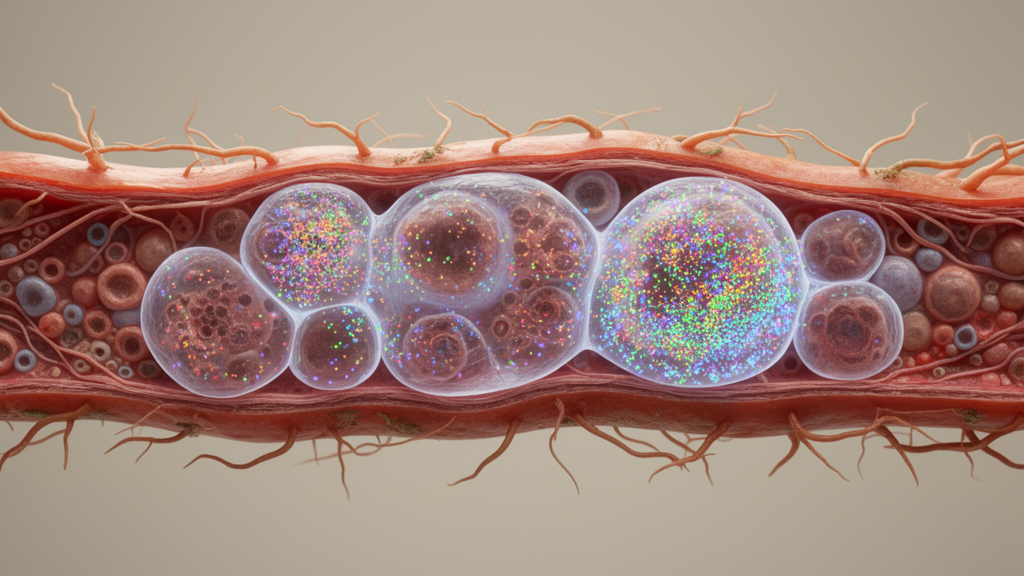
Image Credits: AI Generated
DOI: 10.1186/s43897-026-00272-5
Keywords: Meloidogyne incognita, root-knot nematodes, Solanum lycopersicum, Moneymaker tomato, spatial transcriptomics, giant cells, root galls, BMKMANU S1000, virus-induced gene silencing, pseudotime trajectory analysis, cell cycle regulation, MYB3R transcription factors, RNA in situ hybridization, ligand-receptor interactions, plant parasitism, meristem pluripotency, vascular bundle differentiation
News Source: Brooke Gardner. (November 18, 2026). Spatial Transcriptomics Maps Giant Cell Formation in Nematode-Infected Tomato Roots. Scienmag.