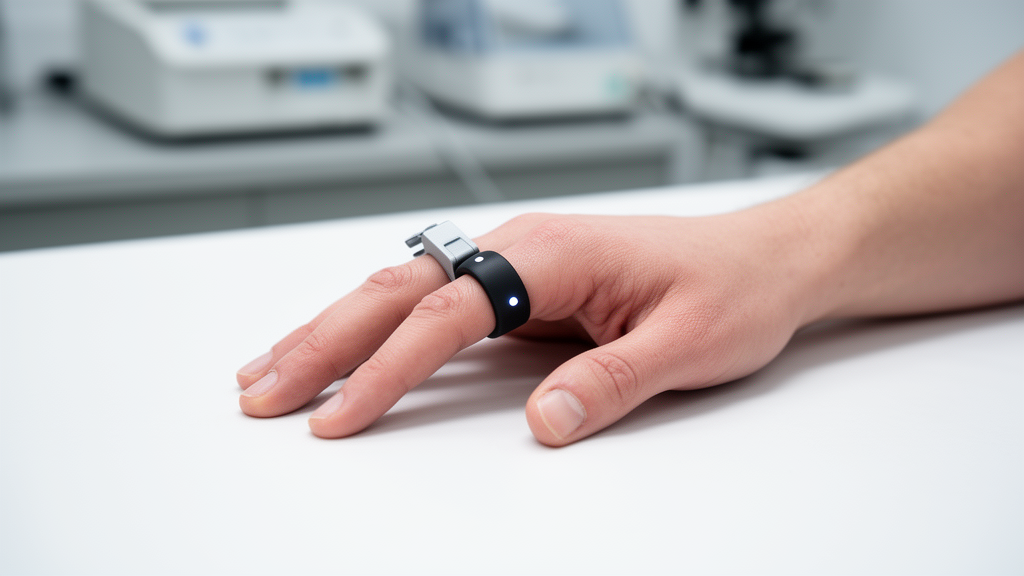
In a clinical validation conducted under controlled desaturation conditions, researchers demonstrated that a novel ring-shaped pulse oximeter adapted to the finger root achieved measurement accuracy matching traditional fingertip devices. Pulse oximetry serves as a vital noninvasive surrogate for arterial blood oxygen saturation, yet standard sensors positioned over the distal nail bed frequently suffer from motion displacement, venous compression, or perfusion vulnerabilities. The comparative trial evaluated whether reconfiguring the optical pathway toward proximal digital arteries could sustain precision while overcoming mechanical drawbacks of conventional hardware. Testing sensors against gold-standard co-oximetry across steady-state inspired hypoxia levels between seventy and one hundred percent saturation revealed that the finger-root ring maintained an accuracy root mean square within the two percent regulatory threshold. The multicenter trial demonstrates that transmissive optical sensing can be relocated to the digital base without sacrificing diagnostic performance.
Peripheral pulse oxygen saturation monitoring operates upon the physical principles of the Beer-Lambert law, analyzing differential absorption of red and infrared light transmitted through vascularized tissue to estimate oxygenated hemoglobin. In modern clinical environments, real-time arterial oxygenation tracking provides critical early warning of hypoxemia, directly enabling timely interventions that improve patient survival and clinical outcomes. Nevertheless, clinical accuracy can be compromised by numerous physiological and environmental factors, including peripheral hypoperfusion, severe anemia, abnormal hemoglobin species, chemical dye residues, and ambient illumination. Furthermore, involuntary patient movements arising from tremors, agitation, or delirium frequently generate substantial optical artifacts that degrade photoplethysmographic signal fidelity. Conventional fingertip sensors also exhibit vulnerability to cosmetic nail polish, superficial dirt, and mechanical compression that can restrict localized capillary blood flow, provoking physical discomfort and increasing the likelihood of sensor dislodgement during extended monitoring.
Most commercial pulse oximeters adhere to fingertip-adapted architectures categorized into hinged finger-clip and enclosed finger-case geometries. These classic configurations align an optical emitter directly above the fingernail and a photodetector beneath the finger pulp along the antero-posterior axis, interrogating capillary hemoglobin within the distal digital bed. In contrast, the newly validated 512RS ring-shaped device incorporates an alternative layout positioning its light source and photodetector on opposing lateral sides of the finger root. This distinct structural orientation is engineered specifically to measure transmissive optical absorption through the two proper palmar digital arteries ascending bilaterally along the digit.
To establish whether lateral arterial interrogation delivers clinical accuracy equivalent to conventional capillary sensing, investigators executed a retrospective analysis of desaturation data collected from two multicenter clinical trials. Validation protocols were conducted between November 2020 and June 2022 at the Third Affiliated Hospital of Sun Yat-sen University and the First Affiliated Hospital of Jinan University in Guangzhou, China. Both clinical protocols received approval from institutional ethics committees and complied with the Declaration of Helsinki, ISO 80601-2-61: 2017 international safety standards, national medical standards YY 0784-2010, and Chinese regulatory evaluation guidelines. The trials enrolled thirty-six healthy adult volunteers aged eighteen to forty-five categorized as American Society of Anesthesiologists physical status I. Inclusion criteria mandated baseline total hemoglobin concentrations exceeding ten grams per deciliter, carboxyhemoglobin fractions below three percent, and methemoglobin fractions below two percent, while exclusion criteria eliminated candidates exhibiting positive Allen tests, abnormal peripheral circulation, smoking history, or environmental carbon monoxide exposure.
The clinical validation followed a standardized two-phase stepwise steady-state inspired hypoxia protocol designed to safely elicit controlled hypoxemic states while minimizing participant risk. Volunteers reclined in a supine position wearing tightly sealed respiratory face masks coupled to breathing circuits that regulated fractions of inspired oxygen by blending ambient air with nitrogen gas. The titration systematically steered blood oxygen saturation across five sequential plateaus: higher than ninety-seven percent, ninety-two to ninety-six percent, eighty-five to ninety-one percent, seventy-eight to eighty-four percent, and seventy to seventy-seven percent. Saturation plateaus were maintained until noninvasive readings stabilized within a three percent margin for over thirty seconds, whereupon arterial blood samples were drawn for co-oximetry verification. Following a resting period of twenty seconds, duplicate samples were acquired to capture three measurement pairs per plateau stage. Each subject completed two successive hypoxia rounds separated by a five-minute normoxic recovery interval, restricting total desaturation duration to within ninety minutes.
Reference measurements were derived from ultrasound-guided radial artery catheterization placed in the quiescent arm, with blood samples analyzed immediately using an automated ABL90 FLEX PLUS analyzer. Simultaneously, the contralateral hand and forearm were secured within a motorized motion-simulating apparatus designed to mimic physical disturbances encountered during patient agitation and transport. The robotic platform reproduced rhythmic tapping and rubbing motions at frequencies of two to four hertz with an excursion range of one to two centimeters, alongside irregular non-repetitive movements operating at one to five hertz across two to three centimeters. Corresponding oximeter sensors were applied simultaneously to identical digits on both hands, allowing paired comparisons under simultaneous motion and quiescent conditions. Across thirty-six volunteers, the trials compiled 2,015 valid paired data points spanning arterial reference saturations from 66.3 percent to 99.99 percent, encompassing 718 pairs for the novel ring sensor and 1,297 pairs for control sensors.
Comprehensive statistical evaluation demonstrated that all three oximeter sensor configurations fulfilled international standards by maintaining overall accuracy root mean square values well below the two percent regulatory ceiling. The lateral finger-root ring sensor achieved an overall accuracy root mean square of 1.41 percent, comparing favorably with 1.57 percent recorded for the enclosed finger-case sensor and 1.70 percent observed for the hinged finger-clip model. Bland-Altman agreement analysis revealed narrow limits of agreement for the ring sensor, ranging from minus 2.97 percent to positive 2.59 percent, matching closely with pooled control limits spanning minus 3.46 percent to positive 3.02 percent. Quantile-quantile scatter plots and linear regression modeling yielded high coefficients of determination, with the ring device producing an R-squared value of 0.980 and control sensors yielding 0.976. These tight distribution fits confirmed that moving optical components to the digital base preserved measurement linearity across clinically relevant saturation gradients.
Stratified subgroup analyses confirmed consistent optical tracking when data were partitioned across distinct arterial saturation deciles and physiological testing conditions. In the high saturation stratum spanning ninety to one hundred percent, the finger-root ring sensor demonstrated an accuracy root mean square of 1.11 percent, whereas across the intermediate eighty to ninety percent range it achieved 1.47 percent. Under quiet resting conditions, the ring sensor registered an accuracy root mean square of 1.32 percent with agreement limits spanning minus 2.86 percent to positive 2.34 percent, while control sensors demonstrated agreement limits between minus 3.36 percent and positive 3.04 percent. When subjected to motion disturbances, the ring sensor maintained an accuracy root mean square of 1.48 percent, agreement limits of minus 3.08 percent to positive 2.84 percent, and an R-squared of 0.977. Nonparametric Mann-Whitney testing indicated no statistically significant difference in measurement error distributions between the ring device and control hardware during resting or dynamic motion.
The investigation also evaluated sensor behavior across skin pigmentation levels, addressing clinical concerns regarding optical overestimation and racial disparities in oximeter performance. Using the PANTONE STG201 skin tone guide, participants were categorized into lightly pigmented cohorts indexing from 1Y01 SP to 5R07 SP and darkly pigmented cohorts indexing from 1Y08 SP to 4R15 SP. The novel finger-root ring sensor achieved an accuracy root mean square of 1.44 percent among light-skinned volunteers and 1.33 percent among dark-skinned volunteers, exhibiting no significant divergence from control sensors. Crucially, researchers inspected the dataset for occult hypoxemia, an insidious discrepancy wherein pulse oximeters falsely record normal readings between ninety-two and ninety-six percent while arterial saturation falls below eighty-eight percent. Analysis of all data pairs within this target range revealed that the lowest observed co-oximetry reference value remained at ninety percent in both pigmentation groups, demonstrating that none of the tested devices produced occult hypoxemic errors under study conditions.
Alongside physiological accuracy metrics, investigators collected qualitative ergonomic feedback using standardized questionnaires administered to participating volunteers and clinical personnel upon protocol completion. Participants scored device performance across practical operational domains using a ten-point Likert scale ranging from one for strongly disagree to ten for strongly agree. Evaluated criteria encompassed device attachment stability, freedom of digital movement, skin-friendly material texture, and overall fabric breathability during prolonged application. Tabulated responses revealed that the 512RS ring sensor received statistically significant superior ratings across all four ergonomic categories compared with traditional finger-case and finger-clip models.
Despite these encouraging validation metrics, investigators highlighted several methodological constraints inherent to the study design that warrant measured interpretation prior to broad clinical adoption. Experimental trials were conducted exclusively in healthy young adult volunteers residing within a controlled laboratory environment, intentionally excluding patients with severe anemia, sepsis, cardiovascular shock, or advanced peripheral vascular insufficiency. Furthermore, the trial cohort was predominantly composed of Asian participants whose subtle variations in dermal pigmentation may not capture the broader range of melanin density encountered in diverse global demographics. Mechanically, the tested 512RS ring sensor is currently sized for finger circumferences ranging from 53 to 80 millimeters, which corresponds approximately to body mass index values between 24 and 33. In critically ill patients vulnerable to peripheral edema, circumferential ring placement demands vigilant monitoring and timely physical adjustment to prevent localized tissue ischemia. Future clinical investigations must rigorously evaluate the ring sensor across diverse inpatient intensive care settings and varied co-oximetry analyzer platforms.
Subject of Research: Clinical accuracy validation of a finger-root ring pulse oximeter during controlled hypoxia
Article Title: Performance validation of a new finger-root-adapted ring-shaped oximeter sensor during stepwise steady-state inspired hypoxia
Article References: Zhang, Y., Gao, L., Zhu, W., Chen, W., Liu, Y., Chen, H., Wang, Y., Li, Y., Huang, F., Tang, J., & Li, S. (2026). Performance validation of a new finger-root-adapted ring-shaped oximeter sensor during stepwise steady-state inspired hypoxia. Journal of Clinical Monitoring and Computing. https://doi.org/10.1007/s10877-026-01500-5
Image Credits: AI Generated
DOI: 10.1007/s10877-026-01500-5
Keywords: pulse oximetry, arterial oxygen saturation, hypoxia protocol, finger-root sensor, ring oximeter, co-oximetry, transmissive oximeter, proper palmar digital arteries, accuracy root mean square, Bland-Altman analysis, occult hypoxemia, skin pigmentation, motion artifact, ISO 80601-2-61, clinical device validation, photoplethysmography, ergonomic assessment
News Source: Ophelia Keating. (November 18, 2026). Finger-Root Ring Oximeter Matches Conventional Sensor Accuracy in Controlled Hypoxia Trial. Scienmag.