In a prospective, double-blinded randomized clinical trial conducted in Egypt, researchers found that adding bilateral lower-limb crepe bandage wrapping to a continuous prophylactic infusion of norepinephrine significantly decreased the incidence of post-spinal maternal hypotension during elective cesarean delivery. The clinical trial, which enrolled one hundred sixty-eight parturients undergoing scheduled cesarean sections under subarachnoid anesthesia, demonstrated that mothers who received tightly applied leg compression alongside norepinephrine experienced an 8.3 percent incidence of hypotension compared to 21.4 percent among those who received the vasopressor infusion alone. This reduction yielded a relative risk of 0.39 with a 95 percent confidence interval spanning from 0.17 to 0.88, demonstrating a statistically significant protective advantage from the non-pharmacological adjunct. Investigators observed that combining mechanical compression with targeted pharmacological vasoconstriction offered superior circulatory support compared to isolated drug administration, addressing one of the most frequent and persistent clinical complications encountered during obstetric regional anesthesia without escalating procedural complications or maternal distress.
Post-spinal maternal hypotension represents a pervasive complication during obstetric surgical deliveries, traditionally occurring in seventy to eighty percent of women undergoing cesarean operations under spinal anesthesia when proactive preventative strategies are omitted. The acute decline in maternal blood pressure stems from rapid physiological changes induced by the intrathecal local anesthetic injection, which triggers extensive sympathetic nerve blockade below the level of the sensory block. This drug-induced sympathectomy abolishes normal arterial and arteriolar vascular tone, precipitating sudden vasodilation throughout the lower systemic vasculature. Concurrently, sympathetic denervation within the highly capacious venous capacitance vessels of the lower extremities fosters massive peripheral venous pooling, severely impairing venous return toward the right cardiac chambers. Compounding these vascular alterations, the mechanical weight of the gravid uterus exerts significant aortocaval compression while parturients lie in a recumbent position, further impeding central preload and diminishing effective maternal cardiac output, which can lead to maternal nausea, vomiting, dizziness, cardiovascular collapse, fetal acidosis, and depressed neonatal vitality.
To counteract these profound hemodynamic disruptions, obstetric anesthesiologists routinely employ multiple preventive strategies, encompassing intravenous fluid co-loading, patient positioning such as left lateral tilt, and various vasoactive medications. Among pharmacological interventions, continuous infusions of alpha-1 adrenergic receptor agonists have gained extensive clinical acceptance for mitigating spinal-induced arterial dilation. In recent investigations, norepinephrine has emerged as a particularly advantageous vasopressor due to its distinctive pharmacological profile combining potent alpha-1 vasoconstrictor action with modest beta-adrenergic agonist activity. In low-resource healthcare environments, specialized mechanical tools like automated intermittent pneumatic compression garments are often cost-prohibitive or inaccessible, driving interest toward simple, reusable, and inexpensive mechanical aids like crepe elastic bandages capable of mechanically redistributing pooled venous blood from extremities directly back into central circulation.
To rigorously test whether combining these distinct physical and pharmacological interventions provides synergistic maternal hemodynamic protection, investigators initiated a clinical trial at a tertiary university hospital in Egypt following institutional ethical review board approval and registration on ClinicalTrials.gov. The randomized investigation evaluated adult parturients categorized as American Society of Anesthesiologists physical status II, aged eighteen years or older, carrying single full-term pregnancies between thirty-seven and forty-one weeks of gestation scheduled for elective cesarean section. To ensure clear evaluation of primary hemodynamic outcomes and patient safety, the trial established stringent exclusion parameters, omitting individuals with pre-existing cardiac comorbidities, baseline systolic blood pressure below one hundred millimeters of mercury, hypertensive pregnancy disorders, active peripartum bleeding, peripheral vascular diseases, history of deep venous thrombosis, and severe maternal obesity defined by a body mass index equal to or exceeding forty kilograms per square meter. Prospective withdrawal criteria accounted for failure of subarachnoid block necessitating conversion to general anesthesia or massive intraoperative hemorrhage exceeding five hundred milliliters.
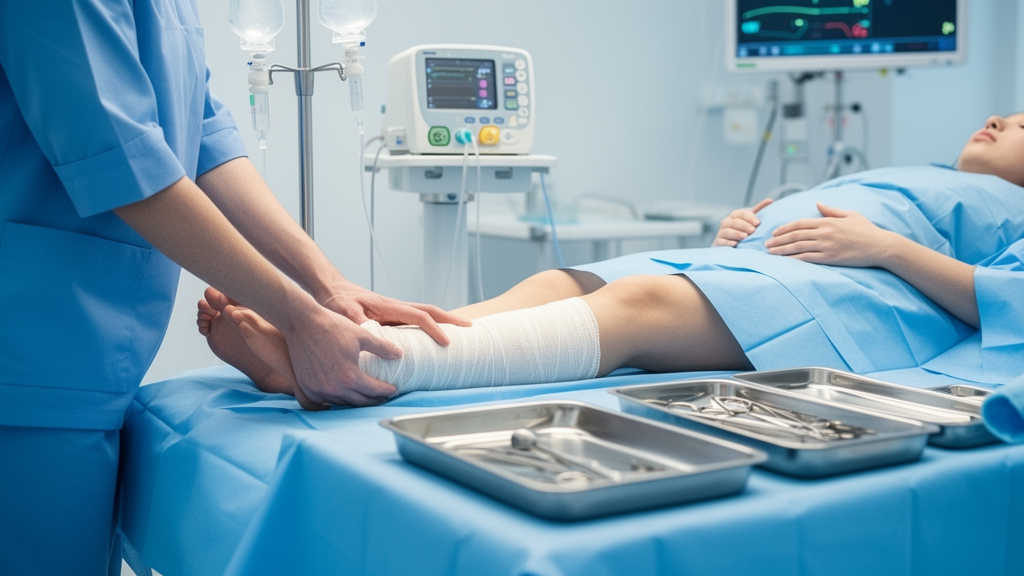
Upon entering the operating theater, parturients underwent baseline monitoring including pulse oximetry, electrocardiography, and automated non-invasive blood pressure assessments recorded every two minutes, alongside prophylactic administration of intravenous famotidine and granisetron. Participants were allocated through permuted block randomization into two equal cohorts of eighty-four patients: the norepinephrine-only control group and the combined norepinephrine and leg wrapping intervention group. To maintain strict blinding among attending clinicians, outcome evaluators, and data analysts, an independent resident opened sequentially numbered opaque envelopes containing allocation codes and intervention instructions. In the intervention cohort, the unblinded resident applied identical ten-centimeter crepe bandages starting from the ankles to the mid-thigh while legs were elevated at forty-five degrees, wrapping tightly with a fifty percent overlap to deliver two-layer compressive force while confirming distal great toe capillary refill under two seconds. In the control cohort, bandages were applied loosely without compressive tension to provide a sham intervention, after which surgical drapes concealed the lower extremities from attending anesthesiologists.
Standardized subarachnoid anesthesia was administered in the sitting position using a twenty-five-gauge Quincke spinal needle at the lumbar three-four or four-five intervertebral spaces, injecting eleven milligrams of hyperbaric bupivacaine coupled with fifteen micrograms of fentanyl. A rapid crystalloid co-load of fifteen milliliters per kilogram was initiated simultaneously, restricted to a total volume ceiling of 1.5 liters. At the precise moment cerebrospinal fluid was identified, the dedicated resident initiated the standardized study infusion, delivering a ten-microgram bolus followed by a constant rate of 0.05 micrograms per kilogram per minute of norepinephrine diluted in normal saline. Parturients were subsequently positioned supine with left lateral uterine tilt. Intravenous ephedrine was designated for rescue therapy, administered in nine-milligram increments for maternal hypotension, defined as a systolic blood pressure drop exceeding twenty percent from baseline, and fifteen-milligram increments for severe hypotension exceeding a forty percent reduction, alongside specific intravenous atropine protocols for symptomatic or severe intraoperative bradycardia below fifty-five beats per minute.
The primary efficacy outcome of the trial centered on the incidence of maternal post-spinal hypotension occurring between intrathecal drug administration and delivery of the neonate. Analysis of the one hundred sixty-eight enrolled patients, all of whom completed the study under modified intention-to-treat criteria without dropouts or conversions to general anesthesia, revealed a substantial drop in hypotensive occurrences from 21.4 percent in the norepinephrine alone group down to 8.3 percent in the combined wrapping group. Time-to-event analysis using Kaplan-Meier curves with the log-rank test identified a statistically significant delay in the onset of hypotensive events among patients receiving compressive wrapping, demonstrating a restricted mean time to hypotension of 21.1 minutes compared to 19.7 minutes in the control cohort. Univariable Cox proportional hazards regression confirmed that mothers managed with norepinephrine alone faced an increased risk of developing hypotension prior to delivery, showing a hazard ratio of 2.82 with a 95 percent confidence interval from 1.18 to 6.76 while meeting all proportional hazards assumptions.
Beyond overall incident rates, longitudinal hemodynamic evaluation underscored significant differences in cardiovascular stability across the observation window spanning from baseline through thirty minutes post-induction. Repeated-measures mixed-design analysis of variance demonstrated statistically significant group-by-time interaction effects for both maternal systolic blood pressure and heart rate trajectories, indicating that circulatory patterns diverged substantially over time between the study arms. While the main between-group effect for systolic blood pressure narrowly fell short of conventional significance with a p-value of 0.058, the group-by-time interaction reached statistical significance at 0.028, reflecting noticeably smoother blood pressure maintenance in the wrapped cohort. Maternal heart rate likewise displayed superior stability, exhibiting both a significant main group effect with a p-value of 0.010 and a significant group-by-time interaction with a p-value of 0.003. These parallel findings confirm that compressive bandaging actively countered the typical precipitous hemodynamic fluctuations observed during the critical phase between subarachnoid blockade and surgical extraction of the infant.
In contrast to the clear divergence in primary hypotension incidence, evaluation of secondary clinical endpoints demonstrated broad equivalence across cohorts, with no statistically significant differences in maternal adverse events or newborn outcomes. Severe maternal hypotension remained exceedingly rare in both groups, and post-delivery hypotensive episodes did not differ between treatment arms. Overall rescue vasopressor utilization showed a non-significant trend toward lower ephedrine requirements in the leg wrapping cohort, which authors noted was influenced by a statistical floor effect arising from a median requirement of zero milligrams across both cohorts. The occurrences of intraoperative hypertension, bradycardia, tachycardia, nausea, and vomiting were similarly low and statistically comparable between groups. Crucially, neonatal assessment revealed no adverse consequences from mechanical compression or continuous vasopressor infusion, with umbilical arterial blood gas measurements, including arterial blood pH, carbon dioxide tension, oxygen tension, and lactate concentrations, demonstrating identical metabolic status alongside equivalent five-minute Apgar vitality scores across all delivered newborns.
Despite the clear experimental benefits reported by the investigative team, several clinical and methodological limitations warrant careful consideration when interpreting these findings for routine practice. The authors emphasized that the restricted mean time gain of 1.4 minutes before hypotensive onset offers limited standalone biological protection to the fetus given the brief interval preceding surgical delivery. Furthermore, the trial was conducted at a single Egyptian medical center and specifically excluded parturients with preeclampsia or underlying cardiovascular pathologies, which restricts immediate generalization to high-risk obstetric populations. Bandages were applied manually by a single trained resident without objective interface pressure transducers, introducing potential operator variability in settings lacking standardized compression techniques. In addition, patients could perceive compressive tightness prior to sensory block onset, posing blinding challenges, and blood pressure monitoring relied upon oscillometric systolic rather than continuous mean arterial measurements. Nonetheless, combining low-cost crepe bandaging with fixed-dose norepinephrine provides an accessible, non-invasive therapeutic synergy that substantially reduces maternal hypotension during elective cesarean surgery.
Subject of Research: Prophylactic leg wrapping combined with norepinephrine infusion for post-spinal hypotension during cesarean section
Article Title: The efficacy of adding leg wrapping to prophylactic norepinephrine infusion in reducing the incidence of post-spinal hypotension in elective cesarean section: a prospective double-blinded randomized clinical trial
Article References: Abdelhady, M. A., Hamed, M. A., Abdelrayif, A. M., Mohammed, A. A., Bassiouny, M. M., & Ragab, M. H. (2026). The efficacy of adding leg wrapping to prophylactic norepinephrine infusion in reducing the incidence of post-spinal hypotension in elective cesarean section: a prospective double-blinded randomized clinical trial. Journal of Anesthesia, Analgesia and Critical Care, 6(1), Article 140. https://doi.org/10.1186/s44158-026-00467-8
Image Credits: AI Generated
DOI: 10.1186/s44158-026-00467-8
Keywords: cesarean delivery, spinal anesthesia, maternal hypotension, norepinephrine infusion, leg wrapping, crepe bandages, hemodynamic stability, systolic blood pressure, heart rate, vasopressors, subarachnoid block, obstetric anesthesia, ephedrine, umbilical arterial blood gas, Apgar score, sympatholysis, venous pooling, randomized clinical trial
News Source: Ophelia Keating. (November 18, 2026). Adding Leg Wrapping to Norepinephrine Infusion Curbs Post-Spinal Cesarean Hypotension. Scienmag.