• HOME
  • NEWS
  • EXPLORE
    • CAREER
      • Companies
      • Jobs
    • EVENTS
    • iGEM
      • News
      • Team
    • PHOTOS
    • VIDEO
    • WIKI
  • BLOG
  • COMMUNITY
    • FACEBOOK
    • INSTAGRAM
    • TWITTER
Thursday, November 19, 2026
BIOENGINEER.ORG
No Result
View All Result
  • Login
  • HOME
  • NEWS
  • EXPLORE
    • CAREER
      • Companies
      • Jobs
        • Lecturer
        • PhD Studentship
        • Postdoc
        • Research Assistant
    • EVENTS
    • iGEM
      • News
      • Team
    • PHOTOS
    • VIDEO
    • WIKI
  • BLOG
  • COMMUNITY
    • FACEBOOK
    • INSTAGRAM
    • TWITTER
No Result
View All Result
Bioengineer.org
No Result
View All Result
Home NEWS Science News Health

Polarized Light Microscopy Measures Collagen Disruption in Chronic Otitis Media

by
November 18, 2026
in Health
Reading Time: 2 mins read
0
Polarized Light Microscopy Measures Collagen Disruption in Chronic Otitis Media

Polarized Light Microscopy Measures Collagen Disruption in Chronic Otitis Media

Share on FacebookShare on TwitterShare on LinkedinShare on RedditShare on Telegram

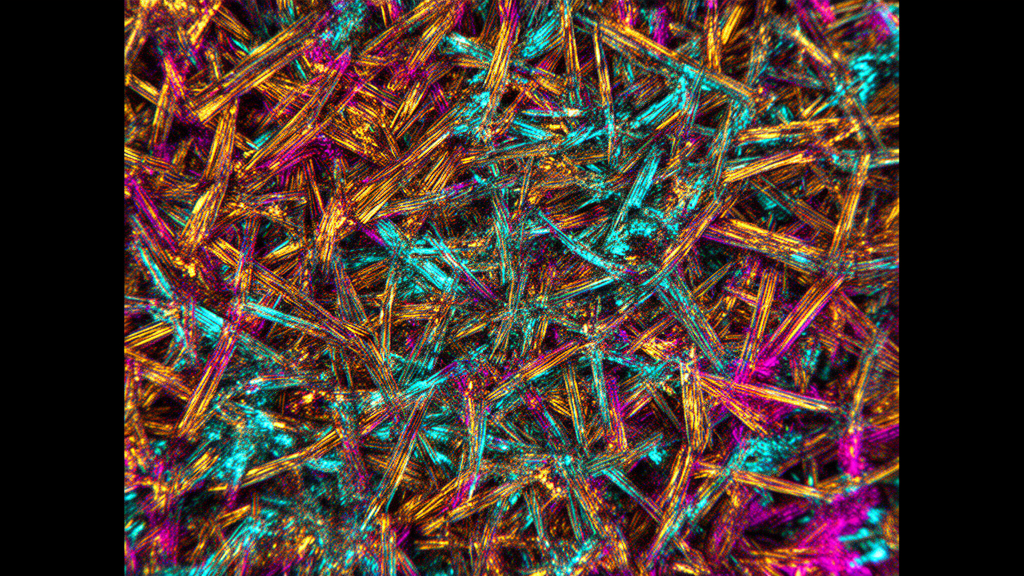
Quantitative polarized light microscopy has revealed significant reductions in optical retardance across disrupted collagen layers of mouse tympanic membranes affected by chronic otitis media. In the study conducted by researchers at Rosalind Franklin University of Medicine and Science and Northwestern University, structurally altered regions of diseased membranes exhibited a mean optical retardance of 4.62 ± 1.34 nm, reflecting localized degradation and disorganization of the underlying tissue architecture.

Chronic otitis media causes progressive structural remodeling within the tympanic membrane, initiating with epithelial hyperplasia before advancing to the disruption of the organized collagen framework responsible for its mechanical behavior. This deterioration of collagen integrity is clinically associated with an increased susceptibility to membrane retraction and perforation. However, clinicians currently lack an established method capable of directly evaluating layer-specific tympanic membrane microstructure in vivo.

To investigate microstructural changes during disease progression, the investigators intranasally inoculated mice to induce otitis media. Middle ear involvement was monitored and confirmed via auditory brainstem response measurements recorded at baseline prior to inoculation, as well as at 7 and 28 days post-inoculation.

At 28 days post-inoculation, tympanic membranes from both control mice and infected mice were harvested, embedded, and sectioned at a thickness of 7 µm. The team then quantified optical retardance in the collagen layers using quantitative polarized light microscopy to assess the extent of structural alteration.

Microscopic measurements demonstrated distinct regional differences in tissue organization at 28 days post-inoculation. While disrupted membrane regions exhibited a mean retardance of 4.62 ± 1.34 nm, adjacent unaltered regions within the very same tympanic membranes showed a significantly higher mean retardance of 9.78 ± 0.95 nm. Healthy control tympanic membranes displayed comparable values of 9.16 ± 0.87 nm, with retardance in altered regions measuring significantly lower than both unaffected control tissue and adjacent unaltered zones (p < 0.05 for both comparisons).

The utility of polarized light microscopy for identifying collagen breakdown was also validated in harvested human tympanic membranes subjected to experimental heat damage, which produced retardance changes similar to those recorded in the mouse model. The authors noted that establishing quantitative polarized light microscopy metrics offers biological support for polarization-sensitive optical coherence tomography, an imaging modality that could eventually be integrated into specialized otoscopes to assess tympanic membrane layer integrity in living patients.

Subject of Research: Microstructural collagen alterations in tympanic membranes during chronic otitis media

Article Title: Polarized light microscopy to quantify changes in the tympanic membrane microstructure in chronic otitis media

Article References: Villa, J., Cobas, D., Cury, J., Rand, D., Tan, X., Reynolds, J., Ahmed, Z., Stutzmann, G. E., & Richter, C.-P. (2026). Polarized light microscopy to quantify changes in the tympanic membrane microstructure in chronic otitis media. Frontiers in Audiology and Otology, 4, 1910065. https://doi.org/10.3389/fauot.2026.1910065

Image Credits: AI Generated

DOI: 10.3389/fauot.2026.1910065

Keywords: tympanic membrane, chronic otitis media, polarized light microscopy, optical retardance, collagen integrity, birefringence, polarimetry, eardrum microstructure, auditory brainstem response, polarization-sensitive optical coherence tomography, tissue degradation, epithelial hyperplasia, membrane perforation, membrane retraction, middle ear disease, otology, mouse model

News Source: Ophelia Keating. (November 18, 2026). Polarized Light Microscopy Measures Collagen Disruption in Chronic Otitis Media. Scienmag.


Tags: auditory brainstem responsebirefringencechronic otitis mediacollagen integrityeardrum microstructureepithelial hyperplasiamembrane perforationmembrane retractionmiddle ear diseasemouse modeloptical retardanceotologypolarimetrypolarization-sensitive optical coherence tomographyPolarized Light Microscopytissue degradationtympanic membrane
Share12Tweet7Share2ShareShareShare1

Related Posts

Retromer Complex Enhancement Shows Preclinical Promise Across Neurodegenerative Disease Models

Retromer Complex Enhancement Shows Preclinical Promise Across Neurodegenerative Disease Models

November 19, 2026
Nasal PET Imaging Detects Early Immune Changes in Alzheimer's Model Mice

Nasal PET Imaging Detects Early Immune Changes in Alzheimer’s Model Mice

November 19, 2026

Adolescents with Down and Fragile X Syndromes Show Similar Grammar Abilities

November 19, 2026

Virtual Reality Skeletal Hand Models Modulate Attention in Functional Tremor Patients

November 19, 2026

POPULAR NEWS

  • Updated ArrayAnalysis Platform Expands Interactive Analysis for Microarray and RNA-seq Data

    Updated ArrayAnalysis Platform Expands Interactive Analysis for Microarray and RNA-seq Data

    29 shares
    Share 12 Tweet 7
  • Stem Cells in Pituitary Tumors Show Multilineage Endocrine Potential

    29 shares
    Share 12 Tweet 7
  • Biotechnology Advances Expand Broodstock Management and Artificial Reproduction in Rainbow Trout

    29 shares
    Share 12 Tweet 7
  • Non-Vascular Ehlers-Danlos Surgery Carries High Complication Rates but No Life-Threatening Risks

    29 shares
    Share 12 Tweet 7

About

We bring you the latest biotechnology news from best research centers and universities around the world. Check our website.

Follow us

Recent News

Retromer Complex Enhancement Shows Preclinical Promise Across Neurodegenerative Disease Models

Nasal PET Imaging Detects Early Immune Changes in Alzheimer’s Model Mice

Adolescents with Down and Fragile X Syndromes Show Similar Grammar Abilities

Subscribe to Blog via Email

Enter your email address to subscribe to this blog and receive notifications of new posts by email.

Join 89 other subscribers
  • Contact Us

Bioengineer.org © Copyright 2023 All Rights Reserved.

Welcome Back!

Login to your account below

Forgotten Password?

Retrieve your password

Please enter your username or email address to reset your password.

Log In
No Result
View All Result
  • Homepages
    • Home Page 1
    • Home Page 2
  • News
  • National
  • Business
  • Health
  • Lifestyle
  • Science

Bioengineer.org © Copyright 2023 All Rights Reserved.