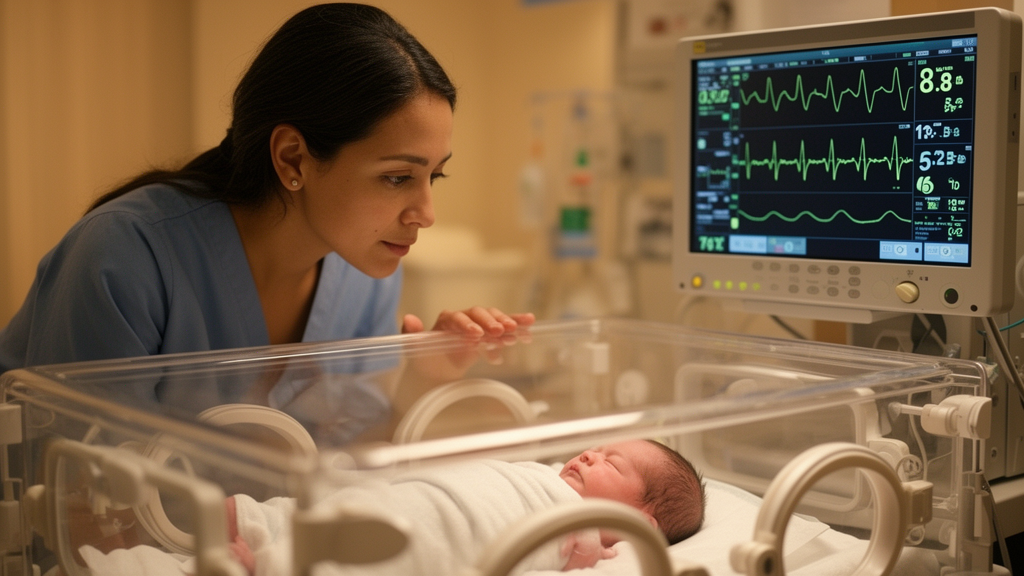
In a secondary analysis of the Postpartum Care in the Neonatal Intensive Care Unit, or PeliCaN, randomized controlled trial published in Maternal Health, Neonatology and Perinatology, researchers evaluated whether a novel care delivery model featuring bedside doulas and certified nurse midwives improved parental psychological outcomes six months after childbirth. The investigation revealed that birthing parents assigned to the specialized intervention demonstrated lower average depression and post-traumatic stress symptom scores than those receiving routine postpartum care, although these quantitative differences did not achieve statistical significance. Despite the lack of statistical divergence on standardized screening surveys, the study uncovered a profound exploratory clinical finding regarding crisis intervention in high-risk neonatal environments. Specifically, doulas integrated directly into the intensive care nursery successfully identified and facilitated emergency psychiatric intervention for two parents experiencing acute suicidal crises following the loss of their infants. Notably, neither participant had indicated thoughts of self-harm during formal questionnaire evaluations, underscoring critical real-world observations regarding postpartum psychological surveillance.
The hospitalization of a newborn within a neonatal intensive care unit represents an intensely distressing experience for postpartum parents, carrying severe and enduring psychosocial and mental health consequences. Prior empirical studies cited by the research team demonstrate that up to thirty-five percent of parents with infants admitted to intensive care nurseries experience acute stress disorder during the initial days of infant hospitalization, with fifteen percent subsequently experiencing persistent post-traumatic stress disorder. These psychological disruptions not only jeopardize the long-term emotional well-being of birthing parents, but also exert documented detrimental effects on parental engagement, parent-infant bonding, successful lactation initiation, and broader child health trajectories. This elevated vulnerability is further magnified by the substantial baseline burden of pre-existing medical conditions and psychiatric comorbidities commonly observed among patient populations whose infants require neonatal intensive care admission, creating a compounded clinical scenario wherein acute environmental trauma intersects with pre-existing maternal vulnerabilities.
Despite well-documented clinical evidence highlighting the destructive impact of intensive care nursery hospitalizations on maternal mental health, the consistent delivery and parental receipt of standard postpartum care remain remarkably difficult to achieve. Existing qualitative investigations identified by the authors emphasize that postpartum parents confront substantial structural and logistical hurdles, including profound time constraints, transportation barriers, and an institutional absence of healthcare system prioritization regarding maternal physical and psychological wellness while clinical attention concentrates almost exclusively on the critically ill infant. As a direct consequence of these persistent systemic impediments, many postpartum individuals forego essential medical examinations entirely, leading to substantial unmet healthcare needs across the postpartum transition. Foregone care frequently translates into inadequate mental health screening, prolonged delays in obtaining formal psychiatric referrals, and untreated mental health conditions that persist without therapeutic intervention during a particularly sensitive window of acute vulnerability for developing families.
To confront these pervasive barriers to care delivery, the original Postpartum Care in the Neonatal Intensive Care Unit pilot study was established to examine a novel clinical care model that embedded doula support and certified nurse midwifery directly into the hospital nursery environment. Under this integrated delivery framework, trained doulas provided continuous emotional, educational, and informational assistance to parents at the infant bedside while coordinating comprehensive maternal clinical visits conducted by a certified nurse midwife either in person within the intensive care nursery or via interactive telemedicine. In earlier published findings from the parent randomized trial, this innovative approach successfully decreased the overall time elapsed before postpartum care was received and generated markedly more comprehensive clinical visits compared with conventional postpartum care routines, demonstrating the operational feasibility of bringing maternal health services directly to parents facing prolonged infant hospitalizations while simultaneously contributing to measurable improvements in infant breastfeeding outcomes observed among enrolled families.
Building directly upon those initial operational successes, the investigators conducted a secondary analysis to determine whether the PeliCaN intervention was associated with measurable improvements in parental mental health outcomes compared to standard postpartum care pathways. The authors specifically hypothesized that postpartum parents randomized to the doula-coordinated model would exhibit enhanced psychological outcomes, characterized by reduced depressive symptoms and lower post-traumatic stress scores at six months following delivery. Conducted at an urban tertiary care center, the trial recruited postpartum birthing parents who delivered preterm infants prior to thirty-four weeks of gestation with an anticipated intensive care nursery admission exceeding one week between November 2022 and November 2023. Individuals who did not speak English or whose newborns were expected to remain hospitalized for less than one week were excluded from participation, and this secondary analysis further restricted the analytical cohort to parents who completed mental health assessments, thereby isolating participants with complete baseline and follow-up screening records.
To ensure rigorous methodological balance across study arms, the original trial implemented a blocked randomization protocol structured to distribute participants evenly according to health insurance classification, comparing public versus private coverage, as well as infant gestational age, stratified into cohorts delivering prior to twenty-nine weeks versus at or beyond twenty-nine weeks of gestation. Parents assigned to the intervention received hybrid doula support, which incorporated at least one face-to-face in-person encounter supplemented by continuous remote communication via cellular text messaging, telephone calls, and video conferences. Doulas assisted participants in navigating hospital environments, delivered continuous emotional encouragement, and coordinated specialized postpartum evaluations with the study certified nurse midwife. Parental psychological outcomes were systematically tracked using the Edinburgh Postnatal Depression Scale administered at baseline enrollment and at six months postpartum, while traumatic stress symptoms were quantified at six months postpartum utilizing the PTSD Checklist for DSM-5, providing standardized metrics across both acute depressive and post-traumatic stress symptomatology.
Of the thirty-seven postpartum birthing parents originally enrolled in the parent randomized controlled trial, thirty-four individuals completed the formal mental health screening evaluations and were included in this secondary investigation. A comprehensive evaluation of baseline participant demographics and clinical characteristics indicated that parents allocated to the intervention arm were significantly more likely to be nulliparous compared to those in the usual care group, reflecting a proportion of 47.1 percent versus 11.8 percent with a statistically significant p-value of 0.02. Beyond this marked difference in obstetric parity, the two study cohorts exhibited no other statistically significant differences across baseline characteristics, including documented histories of pre-existing mental health conditions. Relevant demographic variables and obstetric outcomes were systematically retrieved from electronic medical records, while participant race and ethnicity were established through direct participant self-reporting during study enrollment procedures, ensuring comprehensive documentation of baseline maternal health profiles across both randomized study cohorts.
Six months after delivery, quantitative assessment revealed that participants randomized to the intervention arm recorded a lower mean score on the Edinburgh Postnatal Depression Scale of 4.82 compared to 5.82 among control participants receiving usual postpartum care, representing a difference that was not statistically significant with an associated p-value of 0.56. Similarly, the mean score on the PTSD Checklist for DSM-5 was lower among intervention participants at 18.7 compared to 22.2 in the control cohort, which likewise did not achieve statistical significance with a p-value of 0.40. These comparative findings remained essentially unchanged after researchers performed planned statistical adjustments to account for the baseline demographic imbalance in participant parity. Because this secondary analysis represented an exploratory evaluation of a pilot trial that was not statistically powered to detect subtle differences in maternal psychiatric scores, standardized effect sizes were intentionally not calculated by the authors, reflecting methodological caution in interpreting preliminary numerical trends from small cohorts.
Regarding infant outcomes, two parents in the intervention arm experienced neonatal deaths, with one infant passing away on day of life eleven within the intensive care unit and the other infant dying on day of life sixty-four, more than a month following discharge from the hospital nursery. The remaining infants survived to hospital discharge and were alive during data collection six months postpartum. On routine survey evaluations, no participant across either study group endorsed thoughts of self-harm on question ten of the Edinburgh Postnatal Depression Scale at baseline or six months. However, the two intervention participants who suffered neonatal losses independently disclosed experiencing acute psychiatric crises and suicidality directly to their assigned doulas outside the structured screening evaluations. The supporting doulas responded rapidly, conducting a phone assessment in one case and an urgent home visit in the other due to concerns regarding imminent self-harm, successfully connecting both parents to emergency psychiatric care.
The authors emphasized that maternal mental health conditions and suicide represent a leading cause of pregnancy-related mortality in the United States, highlighting an urgent necessity for innovative care models that bridge support gaps for vulnerable postpartum families. While prior systematic reviews encompassing twenty-two trials have demonstrated that doula care consistently mitigates maternal anxiety, the researchers noted several important methodological limitations within their own study, including a single-center design, a small sample size, lack of participant and clinician blinding, and the exclusion of non-English-speaking patients. Furthermore, physical co-location within a compact intensive care unit may have introduced a subtle contamination effect across treatment arms. Nevertheless, the investigators concluded that embedding doulas into intensive care settings provides crucial clinical value by cultivating trusting interpersonal relationships that encourage emergency disclosure during acute distress, and an expanded trial powered specifically to evaluate maternal mental health outcomes across community doula partnerships is currently underway.
Subject of Research: Postpartum mental health outcomes and embedded doula care in the neonatal intensive care unit
Article Title: Six-month mental health outcomes among participants in a postpartum care in the NICU (PeliCaN) trial: secondary analysis of a randomized controlled trial
Article References: Zafman, K. B., Darden, N., Walker, L., Power, M., Ledyard, R., Kornfield, S. L., Shanmugan, S., Durnwald, C., & Burris, H. H. (2026). Six-month mental health outcomes among participants in a postpartum care in the NICU (PeliCaN) trial: secondary analysis of a randomized controlled trial. Maternal Health, Neonatology and Perinatology, 12(1), Article 54. https://doi.org/10.1186/s40748-026-00303-5
Image Credits: AI Generated
DOI: 10.1186/s40748-026-00303-5
Keywords: neonatal intensive care unit, postpartum care, doula support, maternal mental health, Edinburgh Postnatal Depression Scale, PTSD Checklist for DSM-5, PeliCaN trial, preterm birth, certified nurse midwife, randomized controlled trial, postpartum depression, post-traumatic stress disorder, acute suicidal crisis, neonatal death, telemedicine postpartum visits, parental engagement, nulliparity, maternal health disparities
News Source: Glenn Wilkins. (November 18, 2026). Doula Support in NICU Enabled Crisis Detection Despite Similar Mental Health Scores. Scienmag.