An ethnobotanical field study conducted in the Agarfa and Lega-hida districts of southeastern Ethiopia has documented 145 medicinal plant species utilized by the local Oromo community. The documented medicinal plants were employed to treat 16 disease categories spanning a total of 108 human ailments. According to the research findings, 69 percent of these recorded botanical resources were collected directly from the wild rather than from cultivated sources, underscoring the community’s reliance on naturally occurring vegetation for traditional healthcare remedies across the region.
The investigation was designed to address a recognized gap in regional ethnobotanical documentation. While medicinal plants have long served magico-religious medicinal purposes across Ethiopia, much of the associated indigenous ethnobotanical knowledge has remained underexplored and poorly documented in scientific literature. By documenting the traditional practices of the local Oromo community residing in the Agarfa and Lega-hida districts, the research team focused on highlighting previously unreported medicinal uses and accompanying preparation practices to support the future validation of claims regarding medicinal plant healing potential.
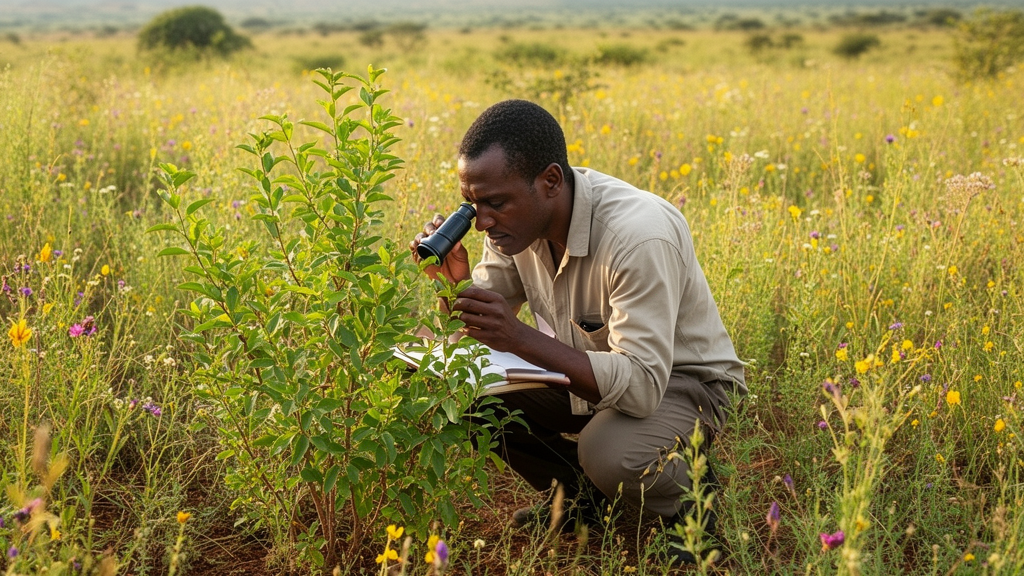
To record and systematically evaluate this community knowledge, the researchers purposefully selected and interviewed 81 local informants. The field methodology combined multiple interactive and observational approaches, including semi-structured questionnaires, focus group discussions, guided field observations, and the collection of physical plant specimens. The researchers then analyzed the compiled ethnomedicinal knowledge through descriptive and inferential statistics, assessing the overall significance of the documented medicinal plants with specific quantitative indices alongside Spearman’s correlation analysis.
Traditional remedy preparation in the two districts centered on two widely practiced formulation methods, encompassing simple single-plant remedies as well as complex polyherbal concoctions. Notably, the study documented 47 distinct polyherbal formulations for the first time, with each concoction combining between 2 and 11 separate medicinal plant species. In terms of specific preparation techniques and administrative routes, decoctions constituted the most common preparation method at 27.6 percent of the recorded recipes, while oral ingestion served as the primary route of administration, accounting for 53.8 percent of all documented applications.
Specific botanical taxa were repeatedly identified throughout the surveys, with Carissa spinarum L., Sida tenuicarpa Vollesen, and Kalanchoe laciniata (L.) DC. frequently cited as standalone simple remedies, as ingredients in polyherbal mixtures, or across both formulation categories. Among all recorded species, Carissa spinarum L. demonstrated the highest use value at 0.51 and the highest relative frequency citation at 0.44. Based on these elevated quantitative scores, the authors identified this species as a particularly promising candidate for subsequent ethnopharmacological investigation.
Quantitative analysis of informant agreement indicated strong consensus across major health concerns, led by skin diseases with the highest informant consensus factor of 0.84, followed by gastrointestinal conditions with a consensus factor of 0.82. Furthermore, statistical evaluation revealed a Spearman correlation coefficient of 0.61 between relative frequency citation and use value. This measurement established a statistically significant positive association between the frequency with which a medicinal plant was cited by community informants and its calculated overall use value.
In total, the researchers documented 12 medicinal plant species featuring previously unreported medicinal uses among the local population. The study authors concluded that these findings highlight the depth of indigenous ethnomedicinal knowledge preserved within the Agarfa and Lega-hida districts. They emphasized that uncovering these undocumented botanical applications reinforces an urgent need for the ongoing preservation, systematic documentation, and scientific validation of traditional healing claims and community knowledge systems.
Subject of Research: Ethnobotanical documentation of medicinal plants in southeastern Ethiopia
Article Title: Ethnobotanical study of medicinal plants and associated indigenous knowledge in the Agarfa and Lega-hida districts, Southeastern Ethiopia
Article References: Juneidi, S., Dekebo, A., Midaksa, A., Kumsa, L., Tafess, K., Abdo, T., Tiruneh, S., & Faruque, M. O. (2026). Ethnobotanical study of medicinal plants and associated indigenous knowledge in the Agarfa and Lega-hida districts, Southeastern Ethiopia. Journal of Ethnobiology and Ethnomedicine. https://doi.org/10.1186/s13002-026-00970-w
Image Credits: AI Generated
DOI: 10.1186/s13002-026-00970-w
Keywords: ethnobotany, medicinal plants, indigenous knowledge, Oromo community, Agarfa district, Lega-hida district, southeastern Ethiopia, polyherbal formulations, Carissa spinarum, Sida tenuicarpa, Kalanchoe laciniata, decoctions, oral administration, informant consensus factor, skin diseases, gastrointestinal diseases, use value, relative frequency citation
News Source: Drew Townsend. (November 18, 2026). Study Documents 145 Medicinal Plants Across Two Districts in Southeastern Ethiopia. Scienmag.