In an assessor-blinded randomized controlled trial published in Head and Face Medicine, researchers found that a four-week multimodal rehabilitation program combining manual therapy, auricular electrical stimulation with filiform needles, and stabilization exercises provided significantly greater short-term clinical improvements than conventional physiotherapy alone. The clinical investigation assessed individuals presenting with coexisting cervicogenic headache and myogenous temporomandibular disorders, testing whether an integrated therapeutic approach addressing both cervical and mandibular regions could outperform standard single-focus conservative care. Post-intervention assessments revealed statistically significant benefits across all primary and secondary functional metrics, highlighting substantial short-term relief in pain, disability, mandibular mobility, and quality of life.
The underlying clinical rationale for the trial stems from the frequent clinical coexistence of cervicogenic headache and temporomandibular disorders, which share common neuromusculoskeletal and nociceptive pathways. When these conditions occur concurrently, patients frequently experience persistent head and facial pain, substantial functional limitation in daily activities, and a noticeably reduced health-related quality of life. Although previous multimodal rehabilitation strategies directed at cervical and temporomandibular dysfunction have demonstrated encouraging clinical benefits in earlier research literature, the investigators noted that high-quality randomized controlled trials evaluating integrated rehabilitation programs remained notably limited prior to this study.
To address this evidence gap, study authors Ramesh Chandra Patra, A Yashudas, and Animesh Hazari designed and executed a prospective randomized controlled trial registered with the Clinical Trials Registry – India under identifier CTRI/2019/05/019401. The clinical trial recruited a total of 150 participants diagnosed with cervicogenic headache alongside coexisting myogenous temporomandibular disorders. The participant cohort was randomized into two equal parallel groups: an experimental intervention arm comprising 75 individuals and an active control group consisting of 75 individuals. The study maintained assessor blinding throughout outcome evaluations to safeguard against assessment bias.
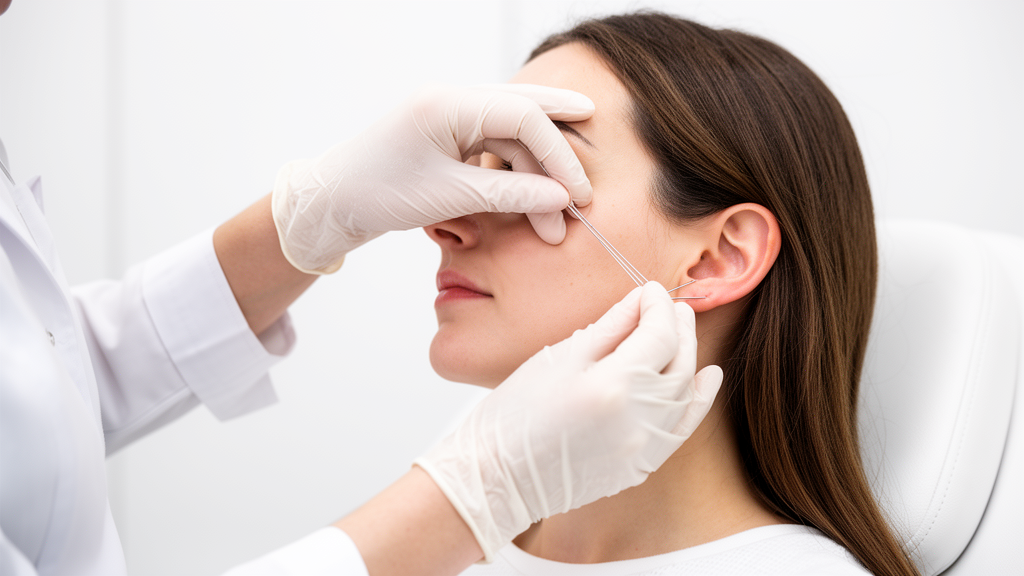
The therapeutic regimens were administered over an intervention timeline spanning four weeks. Participants assigned to the experimental cohort received an integrated multimodal protocol consisting of manual therapy, stabilization exercises, and electrical needling applied directly to the auricular region using filiform needles. In contrast, participants allocated to the control cohort were treated exclusively with conventional physiotherapy protocols. To carefully evaluate participant safety across both physical intervention programs, the clinical research team actively monitored participants for any potential adverse events immediately following each treatment session throughout the four-week period.
The trial evaluated treatment efficacy through a comprehensive set of primary and secondary clinical outcome measures, recorded at baseline prior to treatment initiation and immediately following the completion of the four-week intervention. Primary outcome measures focused directly on symptom severity and primary disability, specifically evaluating pain intensity through the Numeric Pain Rating Scale and assessing headache-related disability via the Headache Disability Index. Secondary outcome measures examined broader physical and functional domains, capturing pressure pain threshold, maximum mouth opening, jaw functional limitation, neck disability, and oral health–related quality of life.
To evaluate therapeutic outcomes between the two arms, the researchers conducted between-group comparisons using analysis of covariance, specifically adjusting for baseline values across all parameters. Following the four-week intervention, the experimental group demonstrated statistically significantly greater improvements compared with the conventional physiotherapy control group across pain intensity, headache-related disability, pressure pain threshold, maximum mouth opening, neck disability, and jaw-related functional outcomes, with every outcome metric achieving a significance level of p < 0.001. All observed between-group differences remained statistically significant following the application of a Bonferroni correction, which maintained an adjusted significance threshold of p < 0.007.
Beyond achieving statistical significance, the improvements documented in the experimental cohort demonstrated clear clinical relevance. The observed between-group differences exceeded the established minimal clinically important difference thresholds across all evaluated outcome measures. Furthermore, active monitoring confirmed that no adverse events occurred during the course of the four-week trial. In concluding their report, the authors highlighted that while electrical auricular needling integrated with manual therapy and stabilization exercises yielded superior short-term improvements in pain, jaw function, cervical mobility, and oral health–related quality of life, confirming the long-term effectiveness of this multimodal rehabilitation approach will require future randomized controlled trials.
Subject of Research: Multimodal physical rehabilitation for coexisting cervicogenic headache and temporomandibular disorders
Article Title: Effectiveness of a multimodal rehabilitation program incorporating manual therapy, electrically stimulated auricular needling, and stabilization exercises in individuals with cervicogenic headache and temporomandibular disorders: a randomized controlled trial
Article References: Patra, R. C., Yashudas, A., & Hazari, A. (2026). Effectiveness of a multimodal rehabilitation program incorporating manual therapy, electrically stimulated auricular needling, and stabilization exercises in individuals with cervicogenic headache and temporomandibular disorders: a randomized controlled trial. Head & Face Medicine. https://doi.org/10.1186/s13005-026-00652-8
Image Credits: AI Generated
DOI: 10.1186/s13005-026-00652-8
Keywords: cervicogenic headache, temporomandibular disorders, auricular needling, electrical stimulation, manual therapy, stabilization exercises, multimodal rehabilitation, randomized controlled trial, physiotherapy, Numeric Pain Rating Scale, Headache Disability Index, pressure pain threshold, maximum mouth opening, jaw functional limitation, neck disability, oral health-related quality of life, myogenous TMD, clinical rehabilitation
News Source: Ophelia Keating. (November 18, 2026). Auricular Needling and Manual Therapy Improve Cervicogenic Headache and Jaw Function. Scienmag.