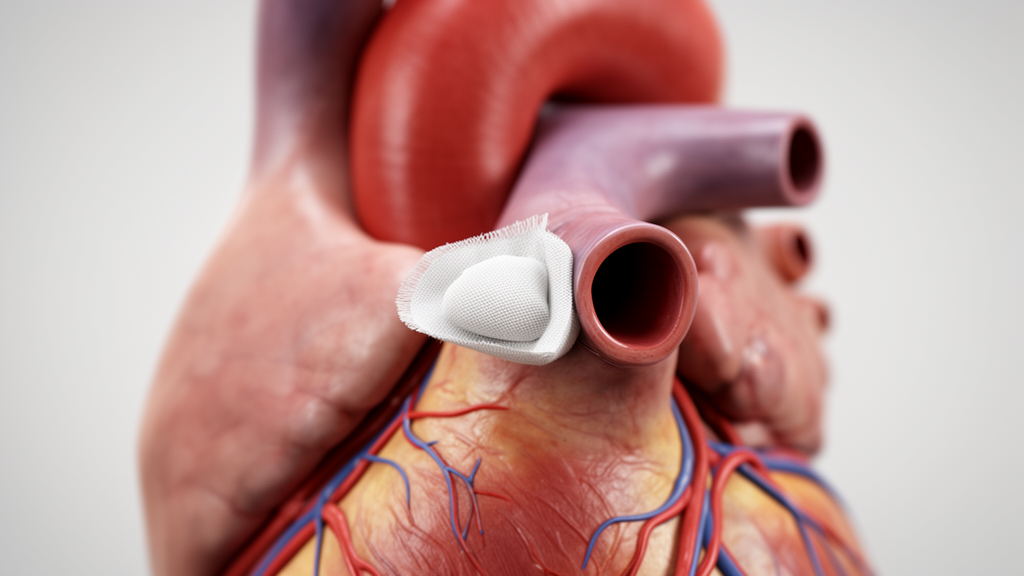
A clinical report published in the Journal of Cardiothoracic Surgery describes an acute case of left coronary ostial embolization caused by a migrated surgical pledget following redo mitral valve replacement. The peer-reviewed report, authored by Tongkai Ge, Dandong Luo, Jimei Chen, and Xiaofeng Li, documents the rare surgical complication in a 64-year-old female patient. The patient had previously undergone bioprosthetic mitral valve replacement and subsequently presented for redo surgery due to the development of severe intraprosthetic regurgitation.
In their clinical background, the authors emphasized that redo mitral valve replacement procedures carry elevated surgical complexity along with substantially increased perioperative risk. Although acute coronary obstruction precipitated by retained surgical materials is recognized as an extremely rare event in cardiac surgery, the medical team noted that such an obstruction can trigger severe, fatal myocardial ischemia if coronary blood flow is compromised.
During the reoperation, the surgical team encountered catastrophic cardiac complications shortly after successfully separating the patient from cardiopulmonary bypass. The patient abruptly developed ventricular fibrillation accompanied by acute, severe myocardial dysfunction. In response to the sudden circulatory collapse, the clinical team immediately reinstituted cardiopulmonary bypass support and subsequently initiated mechanical circulatory support using extracorporeal membrane oxygenation to stabilize hemodynamic function.
To identify the anatomical etiology behind the acute ventricular arrhythmia and profound myocardial impairment, the clinicians performed emergent coronary angiography. The angiographic examination revealed an apparent thrombus-like lesion situated directly at the left coronary ostium, while distal vessel perfusion showed preserved TIMI grade 3 flow. Despite the visual appearance of a vascular thrombus, repeated catheter-directed aspiration attempts completely failed to retrieve any thrombotic material from the site.
Because aspiration failed to extract any thrombotic debris, the interventional team proceeded with intravascular ultrasound imaging to evaluate the coronary obstruction. The intravascular ultrasound scan demonstrated that the intraluminal obstruction was a solid, non-thrombotic mass rather than a standard blood clot. This critical diagnostic finding ruled out acute thrombosis and prompted immediate surgical re-exploration to inspect the coronary ostium directly.
Direct surgical re-exploration confirmed complete mechanical occlusion of the left coronary ostium by a retained surgical pledget that had migrated from the patient’s prior cardiac operation. Following surgical removal of the migrated pledget, the patient exhibited rapid recovery of myocardial contractility. With restored cardiac function, the medical team successfully weaned and discontinued extracorporeal membrane oxygenation on the following day.
The authors concluded that coronary ostial embolization resulting from a retained surgical pledget represents an exceptionally rare but life-threatening complication of redo mitral valve surgery. Based on the successful management of this case, they emphasized that early diagnostic recognition, intravascular ultrasound imaging, timely surgical intervention, and temporary mechanical circulatory support are crucial components for achieving favorable patient survival.
Subject of Research: Coronary ostial embolization by a migrated surgical pledget after cardiac surgery
Article Title: Left coronary ostial embolization by a migrated pledget after redo mitral valve replacement: a case report
Article References: Ge, T., Luo, D., Chen, J., & Li, X. (2026). Left coronary ostial embolization by a migrated pledget after redo mitral valve replacement: a case report. Journal of Cardiothoracic Surgery. https://doi.org/10.1186/s13019-026-04770-x
Image Credits: AI Generated
DOI: 10.1186/s13019-026-04770-x
Keywords: coronary ostial embolization, migrated pledget, redo mitral valve replacement, intraprosthetic regurgitation, bioprosthetic mitral valve, ventricular fibrillation, myocardial dysfunction, cardiopulmonary bypass, extracorporeal membrane oxygenation, coronary angiography, TIMI grade 3 flow, intravascular ultrasound, mechanical circulatory support, retained surgical materials, myocardial ischemia, surgical exploration, Journal of Cardiothoracic Surgery
News Source: Ophelia Keating. (November 18, 2026). Migrated Pledget Occluded Left Coronary Ostium Following Redo Mitral Valve Replacement. Scienmag.