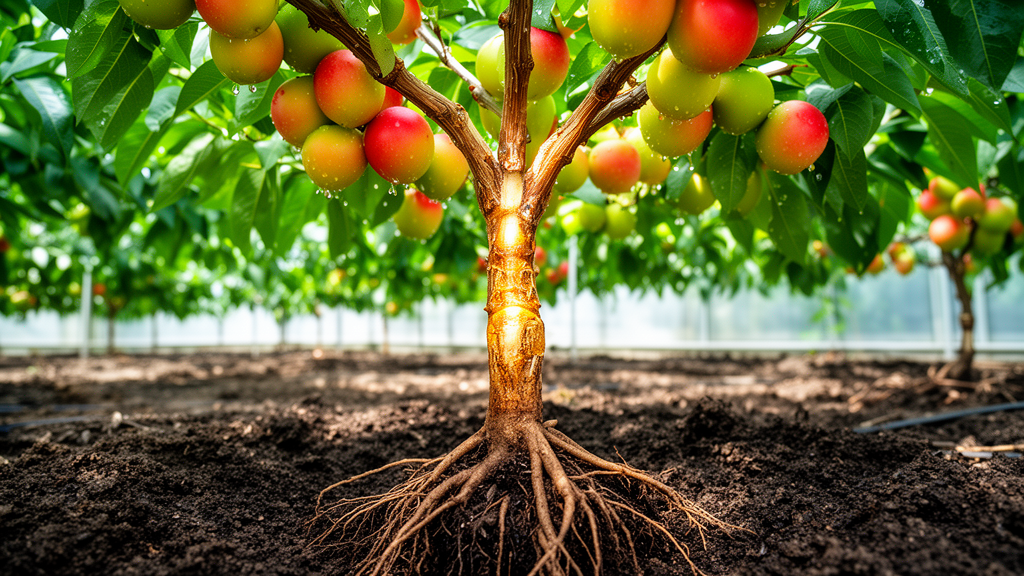
In a comprehensive review published in Horticulture Advances, researchers led by Muhammad Mohsin Kaleem and Zhilong Bie establish a systemic paradigm for how rootstocks govern scion fruit quality in vegetable and fruit crops. While grafting has been practiced for over four thousand years to enhance plant vigor and stress resistance, its influence on fruit characteristics has historically relied on empirical trial and error. Conventional breeding for complex quality traits remains constrained by prolonged selection cycles spanning ten years or more. This synthesis demonstrates that rootstocks act as dynamic physiological regulators, reprogramming scion metabolism through mineral nutrient allocation, long-distance hormonal signaling, mobile macromolecular transport, and epigenetic remodeling. By synthesizing findings across horticultural systems, the authors show how subterranean rootstocks actively determine the organoleptic and nutritional attributes of harvestable crops.
Rootstocks exert broad control over external morphology and internal sensory attributes across diverse horticultural crops. Observed physiological shifts show that rootstock genotype determines fruit shape in pumpkin, enhances fruit dimensions in pepper, and increases epicuticular wax deposition on cucumber peels. In tomato, grafting onto specific rootstocks elevates total soluble solids, lycopene, and vitamin C. In watermelon, grafting onto ‘Snow Vine No. 2’ rootstocks significantly increases fructose, glucose, malic acid, ascorbic acid, alpha-carotene, and lutein compared with self-rooted controls. In apple, distinct dwarfing rootstocks alter specific quality parameters: 62-396 produces larger, elongated fruit with peak malic acid, 60-160 yields superior firmness, total phenolics, and titratable acidity, while M9-T337 maximizes fructose accumulation. Similar modulations of sugars, acids, and aroma profiles occur in melon, peach, cherry, lime, citrus, and table grapes.
Mineral nutrient acquisition and vascular transport represent the primary physiological foundation through which rootstocks shape fruit metabolism. Essential ions including potassium, magnesium, phosphorus, and nitrogen serve as critical triggers for carbohydrate synthesis and partitioning. Rootstock-enhanced potassium uptake stimulates foliar photosynthetic enzymes and accelerates sucrose metabolism in developing fruits. Carbon-13 sucrose tracing in citrus confirms that potassium accelerates sugar translocation from source leaves to sink fruits while reducing leaf sucrose retention. In pear, high potassium availability upregulates sucrose phosphate synthase, sucrose synthase, and invertase. Furthermore, strawberry investigations demonstrate that overexpressing the potassium channel FaTPK enhances expression of the sucrose transporter SUT1, while targeted magnesium and phosphate applications in citrus, longan, and pomelo enhance total soluble solids and sucrose accumulation by coordinating tonoplast sugar transporters.
The molecular architecture of mineral transport highlights how root systems govern ion homeostasis through specialized transporter families. Potassium uptake from soil is mediated by transporters including AKT1, KUP7, and HAK family members, while phosphate absorption relies on PHT1 and PHO1 transporters regulated by transcription factors such as CaPHR3 in pepper. In grafted tomato, ripening-associated induction of HAK6, HAK10, HAK15, and HAK19 facilitates potassium translocation to enhance carotenoid accumulation. In pumpkin rootstocks, upregulation of HAK5;3 elevates leaf potassium in cucumber scions, while bottle gourd rootstocks enhance glucose and sucrose in watermelon under potassium deficiency. In grapevine, the phloem channel VvK3.1 directs potassium into berries, whereas VvK5.1 mediates root-to-shoot translocation. These ionic fluxes trigger gene expression: magnesium stimulates citrus CsSPS-1 and vacuolar proton pumps, while strawberry phosphorus signaling activates FvSWEET9 via FvPHR1.
Intertwined with nutrient transport is a complex hormonal cascade through which rootstocks modulate scion developmental and ripening programs. Phytohormones including abscisic acid, auxins, cytokinins, ethylene, and gibberellins act as systemic messengers coordinating fruit maturation. Abscisic acid represents a pivotal regulatory hub linking environmental perception in roots to metabolite accumulation in fruit tissues. In watermelon, pumpkin rootstocks delay fruit ripening and reduce flesh sugar content by restricting abscisic acid accumulation, whereas exogenous abscisic acid in grapevines enhances anthocyanin pigmentation and fruit firmness. In strawberry, abscisic acid promotes sucrose accumulation through the FaRIPK1-FaTCP7-FaSTP13 pathway. In apple flesh, sugar storage relies on the tonoplast symporter MdERDL6 and transporters MdTST1/2, controlled by MdSnRK2.3 and MdAREB1. Drought-induced abscisic acid signaling similarly activates citrus CsMYB1, which directly promotes cell wall invertase expression to enhance vacuolar sugar accumulation.
Rootstocks possessing abiotic stress resilience confer distinct quality advantages by reprogramming stress-responsive hormonal networks. Soluble sugars function simultaneously as primary flavor determinants and as osmoprotectants involved in environmental adaptation. Cyclic cold stress elevates total soluble solids in tomato fruit, while cold-tolerant melon and watermelon rootstocks enhance glucose, fructose, and sucrose concentrations under chilling regimes. Pumpkin rootstocks enhance cold resilience in grafted watermelon scions by augmenting abscisic acid biosynthesis and facilitating its systemic translocation across the graft union. In cucumber, grafting onto fig leaf gourd rootstocks confers cold tolerance via long-distance transport of gamma-aminobutyric acid, which activates cold-responsive CBF pathways. Applying gamma-aminobutyric acid to apple rootstock seedlings likewise increases the sugar-to-acid ratio and reduces fruit acidity in Cripps Pink apples, linking stress resilience directly to sensory traits.
Rootstock and interstock configurations also dictate secondary metabolite accumulation and protein synthesis in sink organs. In apple, using an M.26 interstock alters the transport of sugars and hormones, elevating zeatin and gibberellic acid to boost total soluble solids and glucose accumulation. Intergeneric grafting demonstrates even more pronounced metabolic shifts: grafting potato scions onto goji rootstocks increases tuber crude protein by 6.5 percent and anthocyanin content by 51 percent. This goji-induced enhancement operates through rootstock-mediated activation of abscisic acid signaling genes, including PP2C51 and SAPK3, alongside bZIP53-like and MybA1 transcription factors. The cascade further recruits ethylene response factors such as RAP2-12 and RAV1 to activate flavonoid and anthocyanin pathways. In grapevines, rootstock selection upregulates chalcone synthase, dihydroflavonol 4-reductase, and glucosyltransferase genes, elevating cyanidin, malvidin, and petunidin derivatives in berry skins.
Integrated multiomics platforms provide granular resolution into the comprehensive metabolic and transcriptional reprogramming enacted by rootstocks across horticultural tissues. High-throughput sequencing of reference genomes in apple, peach, citrus, tomato, and cucurbits enables researchers to correlate gene expression networks directly with metabolite abundance. In blood orange, transcriptomic and metabolomic analyses revealed 295 differentially accumulated metabolites, dominated by flavonoids, alongside 4,179 differentially expressed genes. Grafted sweet orange studies identified 110 amino acid metabolites regulated by eight key structural genes and 41 transcription factors, as well as 703 flavonoid compounds governed by 19 transcription factors. When Citrus reticulata was grafted onto Poncirus trifoliata, scion flavonoids increased via transcriptional upregulation of CrMYB15. Rootstocks similarly reprogram volatile profiles: grafting Citrus medica onto four divergent rootstocks selectively shifted aroma profiles toward citral, linalool, rose oxide, aliphatic aldehydes, or esters.
Multiomics investigations across cucurbit and solanaceous crops further demonstrate how rootstocks systematically reconfigure metabolic networks. In grafted cucumber, gene-metabolite correlations linked 352 metabolites and 1,371 differentially expressed genes to fruit glossiness and surface wax biosynthesis. Grafting cucumber onto yellow-seeded pumpkin rootstocks increased fruit sweetness by transcriptionally activating beta-glucosidase and sucrose-phosphate synthase, stimulating accumulation of sucrose, isomaltulose, and 6-carboxy raffinose. In melon, the pumpkin rootstock Tianzhen No. 1 upregulated hexokinase, mannose-6-phosphate isomerase, and sugar transporters, promoting accumulation of D-ribose-5-phosphate and trehalose 6-phosphate. Wax gourd rootstocks shifted cucumber volatile profiles by enriching flavor aldehydes such as (E,Z)-2,6-nonadienal and (Z)-6-nonenal. In watermelon grafted onto pumpkin, elevated expression of structural genes governing microtubules and cell walls accompanied the activation of fructose and mannose metabolic pathways, directly improving fruit quality.
Beyond metabolic fluxes, epigenetic mechanisms and mobile macromolecules traversing graft junctions represent an essential layer of rootstock-mediated control. Functional vascular reconnection permits the bidirectional movement of signaling molecules, including microRNAs and messenger RNAs. In strawberry, microRNA miR399 targets and suppresses PHO2 to promote fruit sugar accumulation, while in tomato, miR-W modulates glutamate accumulation and umami flavor by targeting membrane ATPase and glutamate permease transcripts. In pear, miR397a silences laccase genes to reduce stone cell formation and lignin content, enhancing flesh texture. In apple, miR7125 targets cinnamoyl-CoA reductase to balance lignin and anthocyanin accumulation. In grafted Daya mandarin, Cre-miR399-3p correlates with soluble solids and titratable acidity by regulating invertase genes. Furthermore, mobile mRNAs translocating across graft unions in tomato and cucurbit systems influence precursor metabolic pathways and photosynthesis, reshaping fruit development.
Dynamic DNA methylation serves as an evolutionarily conserved epigenetic switch modulating chromatin accessibility and gene expression throughout fruit development and ripening. In peach, binding of PpbHLH1 to the promoter of PpTPS3 activates linalool volatile biosynthesis, an event correlated with promoter hypomethylation. In tomato ripening mutants, promoter hypermethylation suppresses flavor volatiles, while NAC-NOR forms a reciprocal regulatory loop with the DNA demethylase SlDML2. During apple ripening, starch breakdown into soluble sugars coincides with dynamic DNA methylation changes affecting MADS-box and ripening-related transcription factors. Chemical hypomethylation via 5-azacytidine in strawberry delays fruit softening while increasing anthocyanin and soluble solids, mirroring the repression of furanone biosynthesis by RNA-directed DNA methylation at the FaQR3 promoter. Grafting-induced genome-wide hypomethylation in eggplant demonstrates that rootstocks modify epigenetic landscapes, establishing regulatory states that influence scion fruit sensory profiles.
These converging discoveries support advanced biotechnological applications, most notably trans-grafting, in which non-transgenic scions are grafted onto genetically engineered rootstocks. In tomato, non-transformed scions grafted onto rootstocks overexpressing Arabidopsis AtCDF3 exhibited enhanced nitrogen use efficiency, biomass, and fruit yield. In apple, transgenic rootstocks carrying RNA interference constructs targeting six GH3 genes improved drought resilience while maintaining fruit quality comparable to standard M9-T337 rootstocks. Furthermore, CRISPR-edited Slmsh1 tomato rootstocks induced heritable enhanced traits in transgene-free progeny, producing hybrids with significantly elevated soluble solids, sugars, and proteins across subsequent generations. Because harvested scion fruits remain entirely free of foreign DNA, trans-grafting circumvents conventional transgenic restrictions while eliminating consumer exposure to transgenes. Integrating artificial intelligence models with rootstock phenomics and multiomics promises to transform grafting into a predictive, precision platform for developing climate-resilient crops with superior fruit quality.
Subject of Research: Mechanisms of rootstock-mediated fruit quality regulation in horticultural crops
Article Title: A rootstock-oriented paradigm for fruit quality regulation in vegetables and fruit crops
Article References: Kaleem, M. M., Wang, L., Cui, L., Ateeq, M., Ashraf, M. A., Ahamd, M., & Bie, Z. (2026). A rootstock-oriented paradigm for fruit quality regulation in vegetables and fruit crops. Horticulture Advances, 4(1), Article 28. https://doi.org/10.1007/s44281-026-00126-6
Image Credits: AI Generated
DOI: 10.1007/s44281-026-00126-6
Keywords: rootstock-scion communication, fruit quality regulation, horticultural grafting, mineral ion transport, abscisic acid signaling, sugar accumulation, secondary metabolism, mobile mRNAs, microRNA regulation, DNA methylation, trans-grafting, potassium nutrition, anthocyanin biosynthesis, volatile organic compounds, drought tolerance, cold stress resilience, multiomics integration, precision horticulture
News Source: Daisy Hatcher. (November 18, 2026). Rootstock Signaling Networks Dynamically Reprogram Fruit Quality Across Horticultural Crops. Scienmag.